Ukrainian Defense Minister Mykhailo Fedorov has been dismissed from his post after failing to complete three priority tasks assigned by President Volodymyr Zelenskyy in January 2026, according to a fact sheet prepared for a forthcoming article. The dismissal, which took effect in mid-July, marks a significant shake-up in Ukraine's defense leadership amid the ongoing war with Russia.
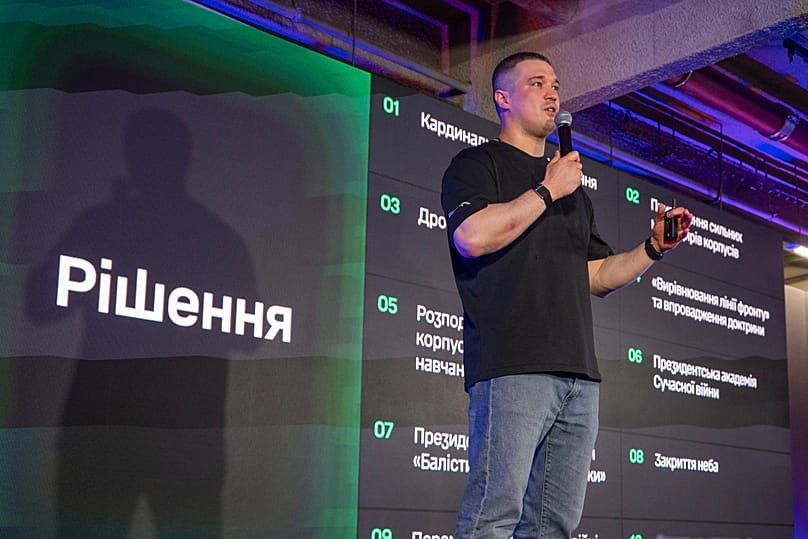
President Zelenskyy appointed Fedorov as defense minister on January 14, 2026, and on January 30 publicly outlined three main objectives: closing the airspace and strengthening air defense, resolving the problem of forced mobilization and so-called "busification" — a term referring to the controversial practice of forcibly conscripting men from the streets — and launching a fully functional contract-based army model. While drone development and technological substitution for artillery were mentioned separately, they were not listed among the three core tasks.
An assessment of Fedorov's performance reveals mixed results. The airspace was not fully closed, although the Ministry of Defense reported increased effectiveness in intercepting drones and cruise missiles. These figures, provided by Fedorov's own team, require independent verification. Structural reform of the Territorial Recruitment Centers (TCC), which handle mobilization, remained in the working stage at the time of his dismissal. One tangible achievement was the automation of approximately 90% of deferrals through the "Reserve+" system, but this does not equate to a comprehensive reform of the TCC or an end to abuses during mobilization. The new contract system was only launched on June 15–16, 2026, as a first-stage experimental project scheduled to run until 2028, making it premature to declare a fully established contract army.
Fedorov's focus during his tenure was heavily skewed toward technology and defense procurement rather than the core tasks. His final report listed 22 achievements, the majority of which related to drones and robotic systems, the Brave1 Market platform and combat points system, procurement of equipment and weapons, grants for manufacturers, long-range strikes and missile programs, defense exports, and artificial intelligence. Only one of the 22 points addressed the transformation of service conditions and contracts. The TCC and the "busification" problem were not directly mentioned in the list of accomplishments.
In a Telegram post, Fedorov stated that upon taking over the Ministry of Defense without the necessary budget, his team redirected funds originally allocated for monetary allowances at the end of the year toward drones and other technological directions. This claim requires separate financial scrutiny to determine the legal basis for the reallocation, the amounts involved, and who made the decision.
The scale of the financial and technological infrastructure built under Fedorov is substantial. According to official Ministry of Defense data, in less than a year through Brave1 Market, over 400 units ordered equipment worth more than 33 billion hryvnias, with over 500,000 drones ordered and more than 800 products in the catalog. Payment and delivery are handled by the state through DOT-Chain Defence. Data from DELTA, Mission Control, and other systems are used to form centralized procurement needs. This infrastructure connects data on unit combat effectiveness, point allocation, product selection, manufacturers, state payment, and future centralized purchases. While the existence of such a system does not indicate corruption, its scale necessitates audits of algorithms, conflicts of interest, manufacturer access, and the distribution of state funds.
A particularly contentious issue is Fedorov's public appropriation of credit for military operations. His final report included achievements such as the "logistical lockdown" of the Russian army and the beginning of the isolation of Crimea, increased interception rates of aerial targets, the "Ashan" operation that allegedly halted a mechanized offensive for six months, the return of initiative to Ukraine on the battlefield, and confirmed enemy losses and record results from drone units. These results, however, are the product of the General Staff, military command, Unmanned Systems Forces, SBU, GUR, Navy, specific units, and manufacturers — not the work of a single minister. The question arises: where does legitimate ministerial reporting on created infrastructure end, and personal appropriation of military operational results begin?
The conflict between Fedorov and military leadership escalated when, on July 16, Fedorov publicly confirmed that he had proposed replacing Commander-in-Chief Oleksandr Syrskyi to President Zelenskyy. The president did not agree. According to Fedorov, after this, most Ministry of Defense initiatives faced resistance, and the conflict ended with an ultimatum from the commander-in-chief. At the same time, Fedorov acknowledged Syrskyi's contributions to the defense of Kyiv, the Kharkiv operation, and the liberation of Kherson. This was not a rumor of personal animosity but a confirmed struggle over the direction of military policy and personnel control. The president ultimately chose between retaining the minister and preserving the existing vertical command of the army. According to sources from Ukrainska Pravda, the constant conflict between the Ministry of Defense and the military command was the main reason for not keeping Fedorov in the new government.
Fedorov's final report, published on July 15 at 18:17, served as the start of a media campaign. The post garnered millions of views. A separate text about what could not be achieved, ending with the phrase "To be continued," appeared a minute later, followed by a video at 19:13. This rapid publication sequence suggests a coordinated effort to shape public perception ahead of the dismissal announcement.