
How Football Turned Uncertainty Into a Global Industry
Football’s commercial network connects local identity to global broadcasters, sponsors, transfer markets and stadium businesses. Its central commodity is not a guaranteed result but repeatable, live uncertainty.
Football’s global economy can be understood as a network built around one unusually valuable input: an event whose ending nobody owns.
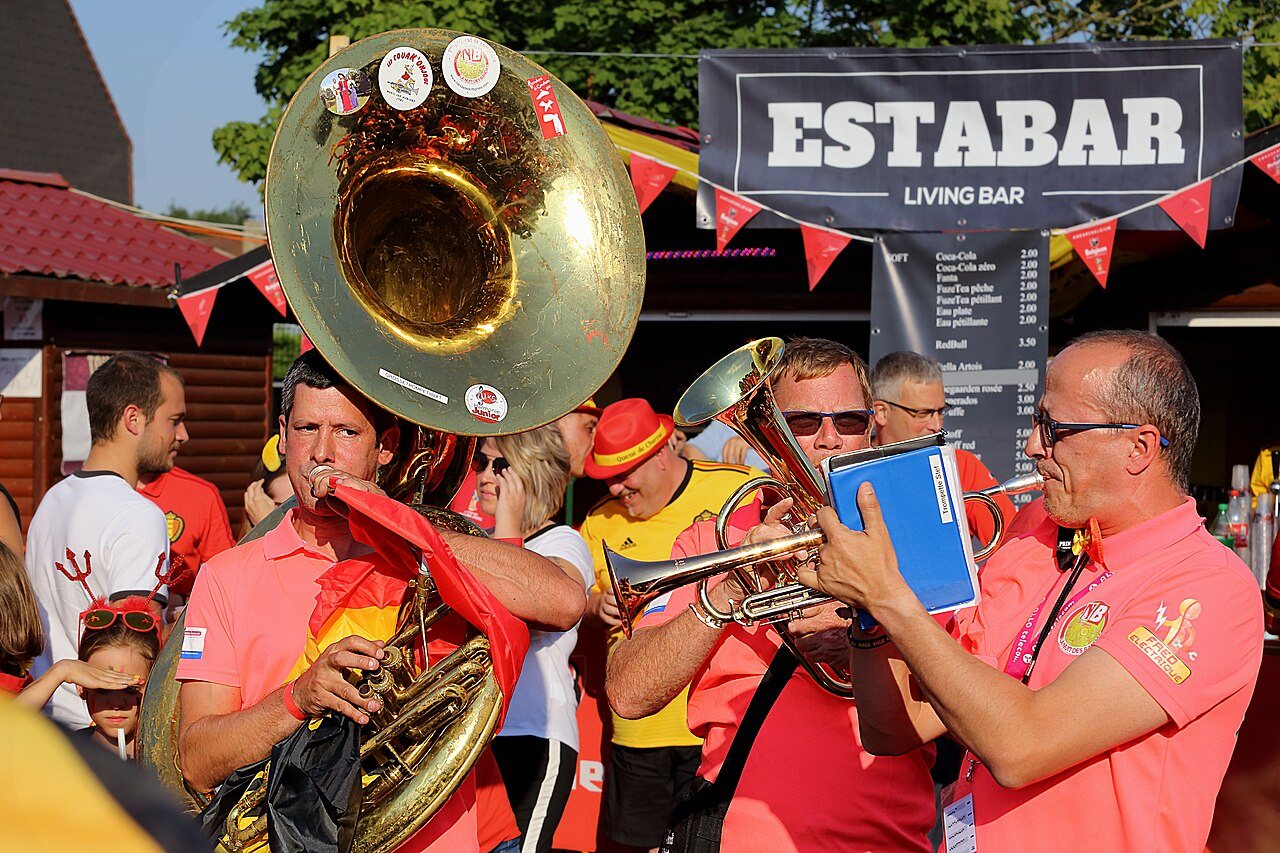
The game begins locally. A club represents a neighbourhood, city or community. The same club can then be distributed globally by broadcasters, followed through digital platforms, sold to sponsors as audience access and extended into shirts, hospitality, tours and branded experiences. What travels across those networks is not only sport. It is a social identity attached to a recurring live drama.
FIFA’s estimate that close to 1.5 billion people watched the 2022 World Cup final shows the reach of football’s largest nodes. Around 5 billion people engaged with that tournament across media. The commercial significance is obvious: a single competition can connect audiences across very different national advertising markets and media systems.
The network begins with identification
Football allegiance has a stickiness that ordinary consumer preference rarely achieves. The 1976 “basking in reflected glory” studies found that students displayed more university-identifying clothing after their football teams won and used “we” more readily after victories. Team success can become part of the supporter’s public identity despite the supporter having no role in producing the result.
A 2026 European study shows how those identities can expand. Survey data from Germany, Spain, Poland and Norway identified a distinct European fan identity alongside club and national attachments. Internationalised consumption — following football across borders — was associated with stronger identification with the wider fan community.
That matters commercially because global distribution does not necessarily dissolve local identity. It can stack identities. A supporter can belong to a hometown club, a national football culture and an international audience simultaneously.
Media rights monetise synchronised attention
The next part of the network is distribution. Research on close to 50,000 minute-by-minute Premier League television observations found that audience demand was partly driven by suspense and surprise, with “shock” also significant.
This makes live football different from most digital media. On-demand platforms train consumers to watch whenever they like. Football retains the power to gather audiences at a fixed time because delayed viewing destroys much of the informational value. Once the result is known, the suspense disappears.
The Premier League’s current domestic rights cycle demonstrates how valuable that synchronisation remains. Its agreements from 2025/26 through 2028/29 give Sky Sports at least 215 live matches a season and TNT Sports 52. BBC Sport reported the domestic package at £6.7 billion.
Rights are therefore not merely payment for pictures. They are payment for predictable access to unpredictable events.
Clubs have built businesses around the traffic
Deloitte’s 2026 Football Money League reports €12.4 billion in combined 2024/25 revenue for the 20 highest-earning clubs. Commercial income was €5.3 billion, broadcasting €4.7 billion and matchday revenue €2.4 billion.
The commercial lead is important. Elite clubs increasingly use audience scale as a platform for sponsorship, retail and direct relationships. Deloitte highlights the growing use of stadiums outside matchdays — restaurants, hotels, breweries and other entertainment — as clubs try to make physical infrastructure function continuously rather than a few dozen times a year.
The talent market forms another network. FIFA recorded 86,158 international transfers in 2025 and $13.08 billion in fees for men’s professional international transfers. Agent service fees paid by men’s clubs reached $1.37 billion. A player can move from one national league to another while the economic effects pass through clubs, agents, broadcasters, sponsors and supporters in several countries.
The system keeps expanding, but revenue growth is not identical to financial health. UEFA expects European top-division club revenue to have exceeded €30 billion in 2025, yet warns that rising costs can absorb the gains. Competition encourages clubs to spend because money can buy better players, better infrastructure and greater probability of sporting success.
Football’s global machine is therefore self-reinforcing and unstable at the same time. Identity creates loyal demand. Media turns that demand into global reach. Commercial partners pay to enter the relationship. Clubs recycle revenue into talent and facilities. The resulting competition produces the next round of suspense.
The comparison with show business works because football now has stars, global distribution, sponsorship, venues, merchandise and endless narrative. It fails at the most important point: nobody can approve the final script. The industry’s commercial power rests on preserving that uncertainty while making almost everything around it saleable.
61