Thousands March Through London in Pro-Palestinian Demonstration
A large crowd gathered on the Embankment before marching towards parliament, carrying Palestine flags and placards, with a two-minute silence held for lives lost in Gaza.
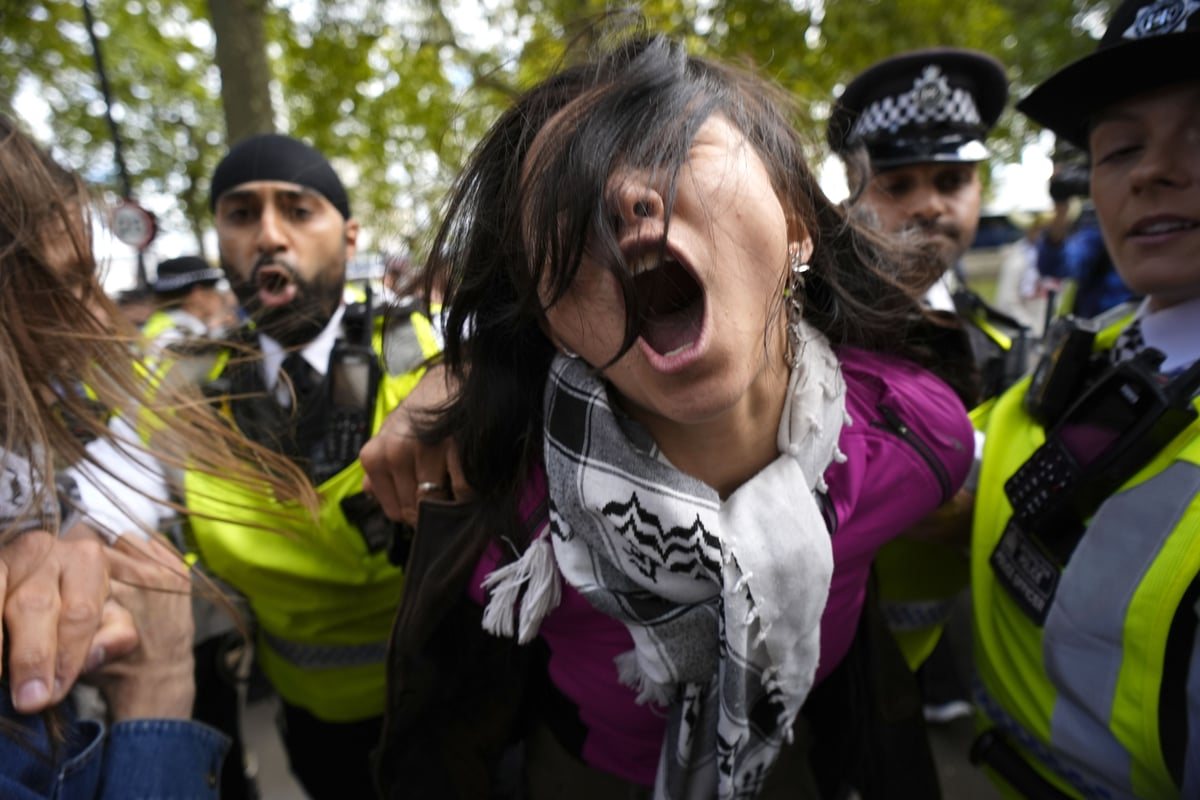
Thousands of people gathered in central London on Saturday to express support for Palestinians, marching from the Embankment towards parliament in a demonstration that organisers framed around three years of what they described as genocide carried out against Palestinians by Israel.
The demonstrators, many wearing keffiyehs and carrying Palestine flags, began assembling at midday. Some held placards reading «End the genocide» and «Free Palestine» as the crowd moved through the capital. A two-minute silence was held during the event to reflect on the lives lost in Gaza, and a bride and groom appeared to be among those taking part in the march.
The protest is the first of its kind since Ed Miliband declared that the UK's position was that Israel's occupation of the West Bank was unlawful. That shift in the stated British position has given the march added political weight, coming as it does after three years of conflict that have reshaped public debate in the UK and across Europe.
Saturday's gathering drew people from across the country, with the Metropolitan Police present as the march proceeded. The route from the Embankment towards parliament is a familiar one for large-scale demonstrations in London, and organisers had called on supporters to turn out in force. The crowd was dense enough to fill the riverside stretch where it began, and the procession moved slowly through the centre of the city.
The use of the term «genocide» by demonstrators reflects a wider argument that has been running in British public life for the past three years. While the UK government has not adopted that language, the declaration by Miliband on the legality of Israel's occupation of the West Bank marked a significant adjustment in official British policy. Campaigners have seized on that shift as evidence that pressure from the streets is having an effect on the political class.
Pro-Palestinian marches in London have become a recurring feature of weekends in the capital over the past three years, often drawing tens of thousands of participants and occasionally prompting counter-protests and heavy policing. Saturday's event passed without any immediate reports of disorder, and the focus remained on the message carried by those taking part.
The presence of a bride and groom among the demonstrators underlined the extent to which the cause has been taken up by people from a range of backgrounds. The two-minute silence, observed in the middle of the march, provided a sombre counterpoint to the chanting and placards that otherwise defined the afternoon.
For many of those who attended, the timing was significant. Three years on from the start of the most recent phase of the conflict, the humanitarian situation in Gaza remains a central concern for campaigners, who argue that not enough has been done by Western governments to halt the violence or to hold those responsible to account.
The march towards parliament was intended to send a direct message to lawmakers. By ending at the seat of British political power, demonstrators sought to link their demands to the decisions taken in Westminster, particularly in light of the changed position on the West Bank occupation set out by Miliband.
Whether the demonstration will translate into further policy movement remains uncertain. What is clear is that the issue continues to mobilise large numbers of people in the UK, and that the language of genocide, once confined to the margins of the debate, is now being used openly on the streets of the capital by those demanding an end to the violence and a change in British policy towards Israel.
7