
Greenlink's Dobby episode shows why route politics matters to cross-border infrastructure
A power link built to connect two national grids also had to negotiate a local film landmark. The Telegraph says fan pressure helped move the route at Freshwater West.
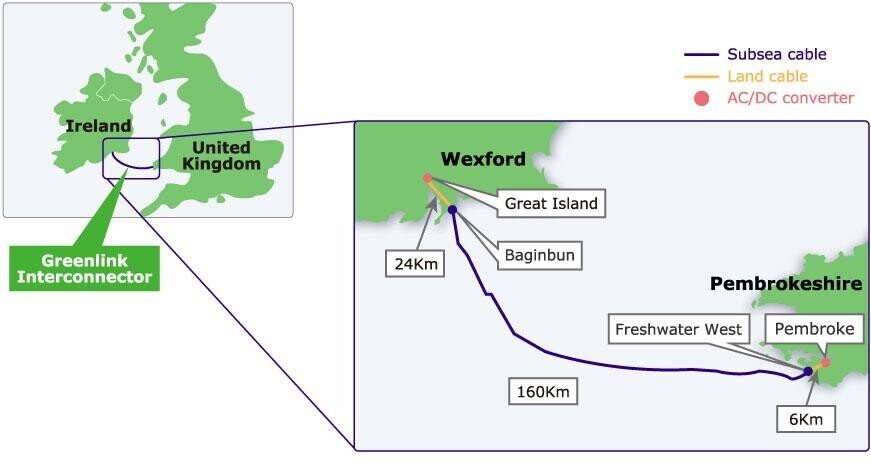
Cross-border infrastructure is built through a chain of local decisions. A project may be justified by national energy strategy and financed as a single asset, but each kilometer still passes through particular landscapes, communities and planning regimes. Greenlink, the electricity interconnector between Great Britain and Ireland, offers an unusually vivid example. The Telegraph reported that former project director Simon Ludlam said Harry Potter fans helped push the cable route away from the informal Dobby memorial at Freshwater West in Wales.
The anecdote sounds whimsical, but its institutional setting is serious. Greenlink’s official records show repeated public consultation in Pembrokeshire, assessment of several underground cable routes and an explicit willingness to refine the proposal in response to feedback. Ludlam said in 2018 that constructive responses from residents and stakeholders had already improved the plan. In 2019, after a petition about Freshwater West, the developer published further clarification and continued seeking views on the route.
The Dobby-specific explanation is not written into the official planning pages reviewed here. It comes from Ludlam’s later account as reported by The Telegraph. That distinction matters because infrastructure reporting should separate documentary evidence from retrospective recollection. What can be said with confidence is that the project had route optionality and a consultation process capable of accommodating concerns — precisely the conditions under which the kind of adjustment Ludlam describes could occur.
Freshwater West is Greenlink’s Welsh landfall, with the connection continuing underground toward the Pembroke substation. The engineering design also changed the physical relationship between infrastructure and the beach. Rather than excavating an open trench, Greenlink used horizontal directional drilling to install ducts beneath the beach and dune system. The company said this avoided impacts on the dunes and minimized disruption to beach users.
That coast matters far beyond energy. The National Trust identifies Freshwater West as the location used for Shell Cottage and Dobby’s death in Harry Potter and the Deathly Hallows. The film transformed a real beach into a point on a global cultural map. Fans built an unofficial memorial from stones, messages, socks and small tributes, turning a temporary screen location into a persistent destination.
For international project developers, this is a reminder that routes do not travel through empty space. A corridor can cross ecological designations, archaeological areas, tourism economies, local identities and cultural symbols. Each layer can produce a different group of stakeholders. Some are formal consultees; others are dispersed communities capable of generating media pressure. A project that recognizes those layers early can often adjust more efficiently than one forced into redesign after final approvals or procurement.
Greenlink’s ultimate outcome suggests that consultation and delivery were compatible. The Welsh onshore approvals were granted in 2020. The interconnector then moved through construction and entered commercial operation in 2025 with about 500 MW of capacity. Ireland’s government says the link increased the state’s electricity interconnection capacity and supports energy security by allowing power to move between systems when conditions require it.
The Telegraph headline describes the project as worth £430 million. That amount must not be misread as the cost of the Dobby detour. It is the newspaper’s figure for Greenlink as a whole, and the reviewed sources do not provide a separate price for changing the route near the memorial. The episode is therefore best understood as a route-management story, not a claim about hundreds of millions being spent on fan sentiment.
The local balancing act continues even after Greenlink’s completion. National Trust Cymru allowed the Dobby memorial to remain in the immediate term but asked fans to stop leaving socks, trinkets and painted stones because debris could enter the marine environment. Meanwhile the Trust has documented broader pressure from high visitor numbers at Freshwater West. Cultural tourism can therefore be both a value to protect and a source of environmental strain.
That duality mirrors a larger challenge in infrastructure governance. Strategic assets are expected to serve broad systems — energy markets, trade, transport or security — while planning decisions are experienced locally. Projects that frame local objections as obstacles to national goals often deepen conflict. Projects that treat them as design inputs can sometimes preserve both the system objective and the place people care about.
In Greenlink’s case, the international goal was achieved: the cable is operating across the Irish Sea. At Freshwater West, the landscape and memorial remain accessible. Ludlam’s account adds a memorable symbol to the planning history, but the larger lesson is structural. The route of a cross-border network is ultimately assembled from negotiations with the places it touches, and even a fictional character can become part of that real geography once enough people decide the place matters.
53