
EES exposes a bottleneck in Europe’s travel network
A digital border designed to improve security is now testing the capacity of airports, airlines and connecting networks as peak passport-control waits rise sharply.
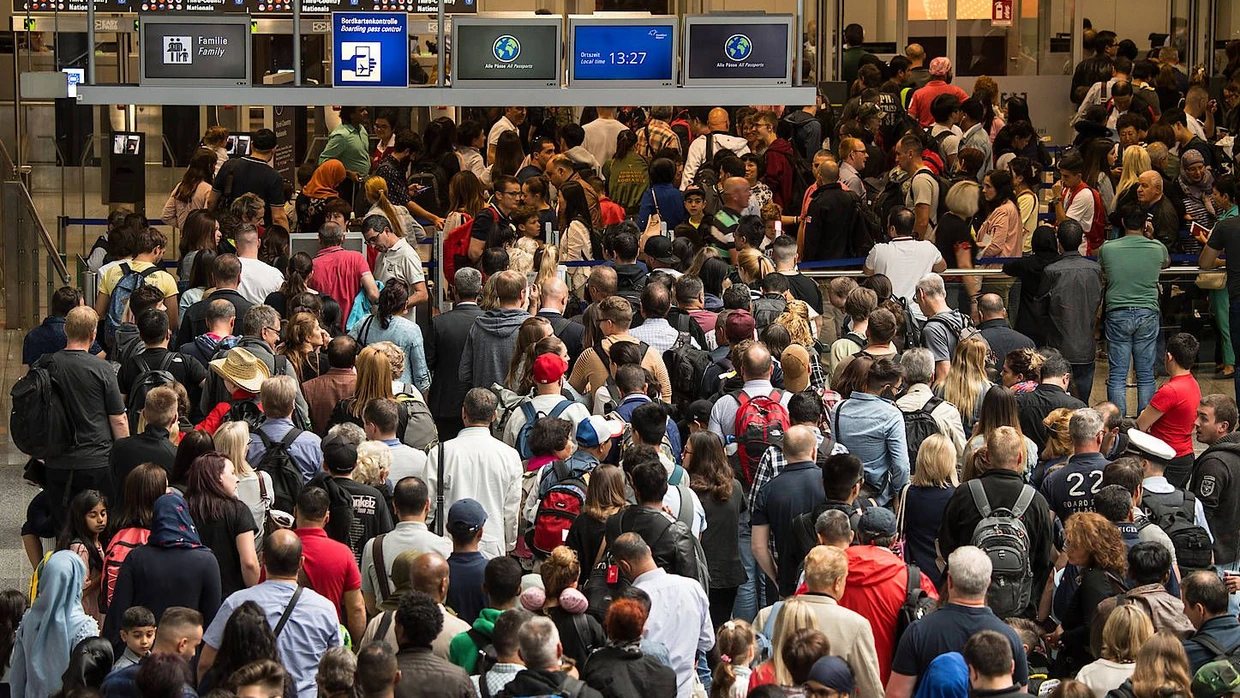
Europe has digitised a border function without yet digitising away its physical bottlenecks. The Entry/Exit System creates a common electronic record for short-stay non-EU travelers, but the data still have to be captured through kiosks, cameras, fingerprint scanners and border officers. In a major hub, that makes EES part of the transport network’s throughput equation.
Financial Times data from Qsensor show the consequences at the peak. Frankfurt’s maximum passport-control wait reached 120 minutes in July, double the 60 minutes recorded a year earlier. Munich moved from 31 to 60 minutes and Amsterdam from 80 to 120. The average passenger may experience much less, but network resilience is determined by what happens when multiple flights unload into the same processing system.
EES became fully operational on April 10 across 29 countries. It tracks short visits by non-EU nationals and replaces passport stamping with a digital entry and exit record. First-time visa-exempt visitors provide personal details, a facial image and four fingerprints. Short-stay visa holders already have fingerprints in the Visa Information System, while holders of residence permits and long-stay visas fall within exemptions.
The Commission’s benchmark is about 70 seconds for an average registration. That figure illustrates the tension between individual and network time. One minute is trivial to a traveler; one minute multiplied across a wave of arrivals can consume the spare capacity of a border hall. When the queue expands, it can disrupt onward flights, transfer windows and the timing of aircraft turns.
ACI Europe has already described peak waits of up to five hours at some airports and has asked for the ability to suspend EES procedures when passenger volumes exceed operational capacity. Its argument is strategic as much as operational: Europe’s aviation network depends on hubs where tightly timed connections make delay propagation more expensive than at a simple origin-and-destination airport.
Infrastructure investment is the obvious response, but it takes several forms. Schiphol has installed 161 EES self-service kiosks and extra passenger assistants. Fraport warned that the new requirements would lengthen border processing during the summer rush. Operators also need resilient links to national and central systems, enough border staff to open lanes, automated gates that work consistently and terminal space that can absorb surges without blocking adjacent functions.
The traveler mix adds another layer. British, American and Ukrainian short-stay visitors can be subject to EES even when they do not need a visa, while residents with qualifying long-term documents may be exempt. That creates different processing paths within the same arriving flight.
Europe has therefore turned a migration-management reform into a network-capacity question. Temporary flexibility has allowed authorities to ease some biometric requirements under stress, and the Financial Times reports that several governments want that flexibility extended beyond September. If it is withdrawn before the infrastructure gap closes, the cost will be paid in larger buffers: more machines, more staff, longer connection times and ultimately a less tightly optimised European air network.
88