US think tank suspects Iran rebuilding military research facility damaged in war
Satellite imagery suggests Iran is rebuilding a military research complex at Parchin that was damaged during the war, according to a US-based institute. The Taleghan complex has long been linked to past nuclear weapons-related work, raising concerns about Tehran's compliance with the framework agreement.
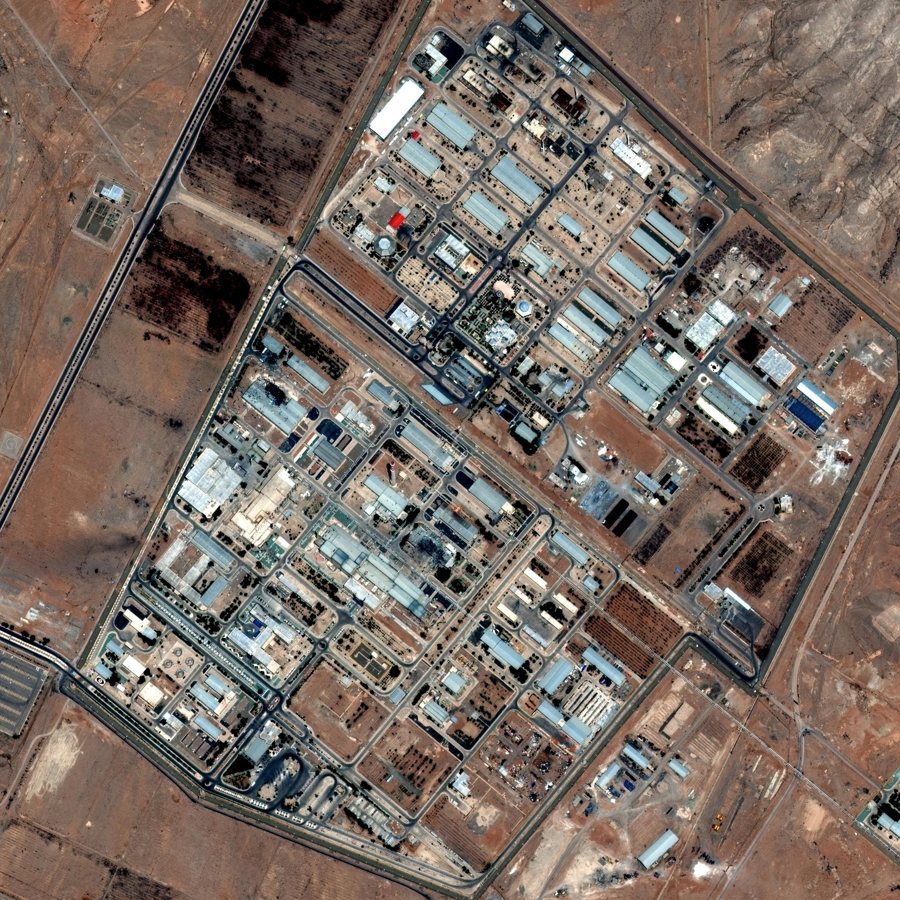
Satellite images analyzed by American researchers indicate that Iran may be rebuilding a military research facility that was heavily damaged during the war. The Institute for Science and International Security (ISIS), a non‑proliferation think tank, reported that recent activity at the Parchin military complex points to permanent repairs rather than mere cleanup. The findings come at a time when the United States and Iran are locked in a broader dispute over the Strait of Hormuz and the future of the nuclear deal.
The facility in question, known as the Taleghan complex, has long been a focus of international concern. According to the International Atomic Energy Agency (IAEA), the site was used as part of Iran’s Amad program until 2003 to develop technologies that could be applied to nuclear weapons. Specifically, the IAEA has stated that tests involving high explosives were conducted there to simulate the implosion of a nuclear warhead. Iran has consistently denied the existence of such a program.
ISIS researchers observed that satellite images taken in recent weeks show multiple concrete mixers and other equipment at the site, suggesting that the damage from earlier strikes is being permanently sealed. Earlier images had shown only debris removal, but the latest evidence indicates a shift toward reconstruction. The complex was hit several times during the early stages of the war, and the new activity has raised alarms among non‑proliferation experts.
CNN, which obtained the satellite imagery and analyzed it jointly with ISIS, reported that no suspicious activity was detected at Iran’s main uranium storage facility in Isfahan, nor at the enrichment sites in Natanz and Fordow. Those three facilities were bombed by the United States last summer. US President Donald Trump has repeatedly stated that his administration is closely monitoring those locations to ensure Iran complies with the framework agreement reached in June.
Under that agreement, Iran committed to maintaining the status quo of its nuclear program and pledged not to develop nuclear weapons. In exchange, Tehran was granted financial relief and the reopening of the Strait of Hormuz for international shipping. However, the deal has been fragile from the start. The ceasefire that took effect in early April was repeatedly violated, and Trump declared it over last week, while leaving the door open for further talks.
The dispute over the Strait of Hormuz has further complicated the situation. The United States has demanded that Iran publicly commit to keeping the waterway open and refrain from attacking commercial vessels. According to reports from Axios and The Wall Street Journal, US officials have warned of serious consequences if such a commitment is not made. Iran’s foreign ministry has denied seeking new negotiations with Washington, though it acknowledged a request by a regional mediator to discuss the situation.
The Wall Street Journal also reported that senior US officials now consider a comprehensive nuclear deal with Iran increasingly unlikely. This marks a rare admission that one of Trump’s key foreign policy objectives — curbing Iran’s nuclear ambitions through diplomacy — may not be achievable. The framework agreement had set a 60‑day deadline for finalizing a permanent deal, but progress has stalled amid mutual recriminations.
Iranian Foreign Minister Abbas Araghchi is expected to travel to Muscat, Oman, to discuss the Strait of Hormuz dispute with his Omani counterpart. Meanwhile, the satellite evidence from Parchin adds a new layer of urgency to the diplomatic efforts. If confirmed, the rebuilding of the Taleghan complex could be seen as a violation of the spirit, if not the letter, of the June framework agreement.
The IAEA has not yet commented on the latest satellite imagery. However, the agency has long maintained that Iran must provide full transparency regarding its past and present nuclear activities. The developments at Parchin are likely to feature prominently in the next round of talks between Iran and the international community.
76