Israelis vote in election seen as most consequential in country’s history
Israelis went to the polls as most surveys suggest Benjamin Netanyahu’s coalition could lose its majority, with Gadi Eisenkot the leading opposition challenger. Families bereaved in the 7 October attacks opened the day with a protest.
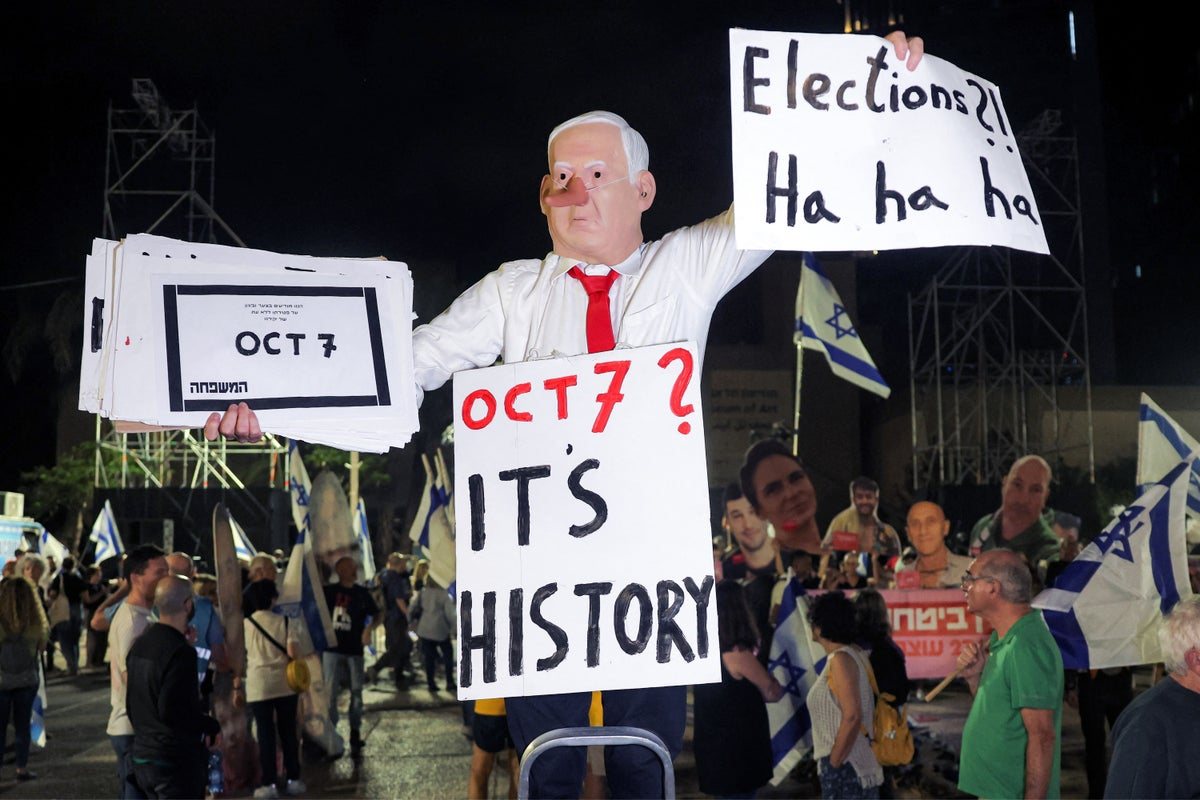
Israelis went to the polls on Tuesday in what many commentators describe as the most consequential election in the country’s history, with most polling suggesting that prime minister Benjamin Netanyahu’s coalition will lose its parliamentary majority. The leading opposition contender is Gadi Eisenkot, whose challenge has placed the vote at the centre of a national debate over security, leadership and the country’s future.
Families bereaved in the 7 October attacks began election day with a protest at 6.29am, the same time Hamas launched its assault just over three years ago. They gathered in the Tel Aviv plaza that has become known as “hostages square”, the focal point of demonstrations demanding the return of more than 200 captives taken into Gaza. The timing of the protest underlined how deeply the attacks continue to shape Israeli public life, and how many families still measure the government’s record by the fate of those held in the enclave.
The 2023 attacks loom over the campaign in a way few other issues do. One survey cited in coverage of the election found that two in three Israelis consider the Nova massacre central to their voting decision. It is the first national vote since the attacks, and for many voters the question is less one of ordinary party politics than of accountability for what happened that day and for how the government has conducted the war that followed.
For Netanyahu, the vote is widely described as a fight for his political future. His coalition has governed through the war in Gaza and its aftermath, and polling indicates it may no longer command the majority it has held. Eisenkot, a former military chief of staff who has positioned himself as the principal alternative to the current government, has become the focus of opposition hopes, drawing support from voters who want a change in leadership without necessarily sharing the same views on every policy question.
The campaign has also been shaped by the question of who gets to vote. Reports indicated that around 70,000 expatriate Israelis were eligible to cast ballots, a bloc that commentators suggested could matter in a closely contested race. Such figures are significant because even a small shift in turnout can alter the balance of seats in a parliament where coalitions are built through narrow margins and negotiation between parties.
Whatever the outcome, the result will determine not only who leads the next government but also the direction of Israel’s policy on Gaza, the remaining hostages and relations with its neighbours. Coalition talks that follow any vote are typically lengthy in Israel, meaning the final shape of the government may remain uncertain for weeks after polls close, even if the broad direction of the result becomes clear on election night.
7