
Trump declares truce «over» after Iran reports US strikes near nuclear plant
President Trump announced the end of a temporary truce with Iran as Iranian media reported explosions near the Bushehr nuclear plant, while Kuwait condemned Iranian attacks on its territory.
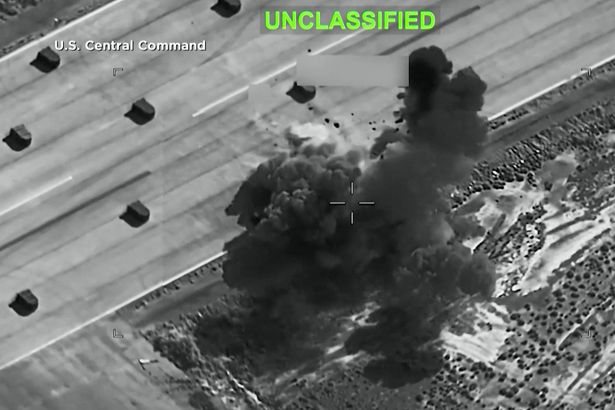
President Donald Trump has declared that the temporary truce with Iran is «over», hours after Iranian state media reported that US strikes had targeted areas near the Bushehr nuclear power plant in southern Iran. The announcement marks a dramatic escalation in hostilities between the two countries, which had seen a brief pause in fighting earlier this week.
Iranian news agencies said explosions were heard near the Bushehr facility, one of the country’s key nuclear sites, though no official confirmation of damage or casualties was immediately available. The reports came shortly after US Central Command (CENTCOM) confirmed it had conducted strikes on 90 Iranian military sites across the country, including targets near the capital Tehran.
In response, Iranian missile units launched attacks on several Gulf states, including Kuwait, Iraq, and Jordan, in what analysts describe as a near all-out regional war. The Iranian strikes targeted military and infrastructure sites, causing widespread disruption and prompting emergency responses from affected nations.
Kuwait’s foreign ministry issued a strongly worded statement condemning the Iranian attacks on its territory, emphasizing that the country’s sovereignty is «a red line». The statement, which closely mirrors a previous declaration from the Kuwaiti government, reserved the right to take all necessary measures to protect national security and preserve sovereignty. The Gulf state has been a key ally of the United States in the region and hosts American military personnel.
The escalation began after weeks of rising tensions between Washington and Tehran over Iran’s nuclear program and its regional military activities. The US had previously imposed severe economic sanctions and conducted a series of military exercises in the Persian Gulf, which Iran viewed as provocative. The brief truce, announced by Trump earlier this week, had raised hopes of de-escalation, but the latest strikes have shattered those expectations.
International air travel has been thrown into chaos as several airlines suspended flights to and from the region. Major carriers, including Emirates, Qatar Airways, and Turkish Airlines, announced cancellations and rerouting of flights to avoid the conflict zone. Passengers stranded at airports across the Middle East reported long delays and confusion as airlines scrambled to adjust schedules.
The United Nations Security Council held an emergency session to discuss the escalating crisis, with Secretary-General António Guterres calling for an immediate ceasefire and a return to diplomatic negotiations. However, both the US and Iran have shown little willingness to back down, with each side accusing the other of aggression.
Iran’s Foreign Ministry denounced the US strikes as a violation of international law and a threat to regional peace, vowing to respond with force. The Iranian military has been placed on high alert, and additional missile batteries have been deployed along the country’s southern coast. Meanwhile, the US has reinforced its naval presence in the Persian Gulf, with the aircraft carrier USS Dwight D. Eisenhower and its strike group operating in the region.
The conflict has also drawn in other regional actors. Iraq, which has been caught between its alliances with both the US and Iran, condemned the attacks on its territory and called for restraint. Jordan, a key US ally, reported that its air defenses intercepted several incoming missiles, preventing significant damage. The Jordanian government has declared a state of emergency and closed its airspace to civilian traffic.
The Bushehr nuclear plant, which is under the supervision of the International Atomic Energy Agency (IAEA), has been a focal point of international concern. The IAEA has called for immediate access to the site to assess any potential damage and ensure nuclear safety. Iran has stated that the facility remains operational and that no radioactive material has been released, but independent verification has not been possible due to the ongoing conflict.
Economic markets reacted sharply to the news, with oil prices surging above $120 per barrel amid fears of supply disruptions from the Strait of Hormuz, a critical chokepoint for global oil shipments. The strait, which Iran has threatened to close in the past, remains open but under heightened military surveillance. Stock markets in Asia and Europe fell sharply as investors fled to safe-haven assets.
The humanitarian situation in the region is deteriorating rapidly. Aid organizations report that thousands of civilians have been displaced by the fighting, particularly in southern Iran and the border areas of Iraq. Hospitals in affected areas are struggling to cope with casualties, and supplies of food, water, and medicine are running low. The International Committee of the Red Cross has appealed for safe corridors to deliver aid.
As the crisis deepens, diplomatic efforts appear stalled. European Union foreign policy chief Josep Borrell has offered to mediate between the parties, but neither Washington nor Tehran has accepted the proposal. Russia and China, both of which have veto power on the UN Security Council, have called for an end to hostilities but have not proposed concrete measures.
The coming days will be critical in determining whether the conflict spirals further into a full-scale regional war or whether diplomatic channels can be reopened. For now, the situation remains highly volatile, with both sides preparing for further military action.
84