The route through Hormuz is becoming the negotiation over the whole war
Iran has linked full maritime access to sanctions, compensation, U.S. forces and the blockade. The result is a strategic corridor where trade flows and political power are now being negotiated together.
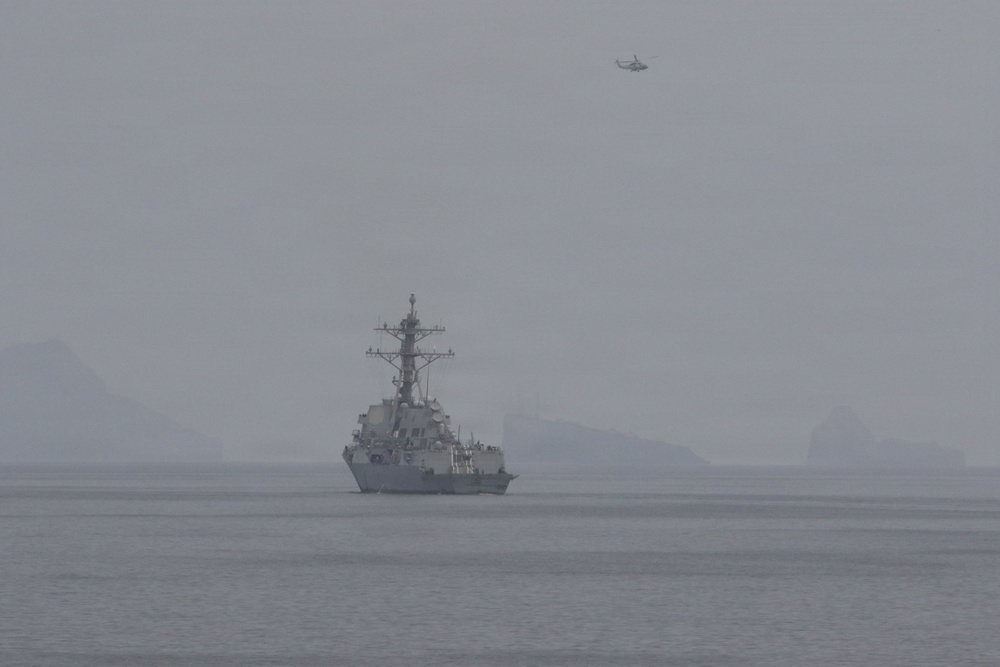
The Strait of Hormuz is a route, but in the current U.S.-Iran conflict it has become something larger: the mechanism through which the parties are bargaining over the war itself. The Wall Street Journal reports that President Donald Trump had been prepared to treat a fully reopened strait as a sufficient basis for leaving the conflict even without a nuclear agreement.
That approach would have separated two networks of power. One is nuclear and strategic, involving inspections, enrichment and long-term security. The other is commercial, involving tankers, shipping lanes, insurance and energy prices. Washington increasingly hoped it could stabilise the second without fully resolving the first.
Iran’s new demands reconnect those networks. On Saturday, its Supreme National Security Council said full reopening requires an end to U.S. threats, a permanent end to the war against Iran and its allies, the lifting of the naval blockade and the withdrawal of American forces from around Iran. It also demanded compensation, sanctions relief and the release of frozen funds.
Tehran is therefore treating Hormuz not simply as a channel for ships but as a bargaining asset across military, financial and diplomatic systems. The logic is clear: if the United States values predictable passage enough to use it as a victory condition, Iran can ask what that predictability is worth.
The answer matters because Hormuz sits inside a global economic network. U.S. Energy Information Administration data show that 14.6 million barrels per day of crude oil and petroleum liquids passed through the strait in the first quarter of 2026, compared with 20.7 million barrels per day in the fourth quarter of 2025. Earlier disruptions helped drive high and volatile oil prices.
A disruption therefore travels quickly. It begins as a security problem in a narrow waterway, becomes a shipping and insurance problem, moves into crude and refined-product prices, and then reaches transport costs and inflation in economies far outside the Gulf. That chain is why maritime access has such political value in Washington.
Yet the route is not simply closed. Axios reports that a U.S. official says about 8 million barrels of oil are moving out of the Gulf each day through the southern lane with U.S. military coordination. The Associated Press reports that Iran and Oman are close to an arrangement over new maritime routes.
The distinction between those routes and “full reopening” is central. Iran says the technical arrangement does not settle the political status of Hormuz. This gives Tehran an ability to allow enough trade to prevent maximum damage while preserving the larger leverage of full normalisation.
The United States has its own networked pressure. The naval blockade reinstated in July restricts Iranian commerce and contributes to economic strain. Sanctions isolate finance. Military forces maintain coercive capacity. Tehran’s demands target all of those nodes at once.
Trump’s comments to Axios on Sunday indicate that Washington is trying to avoid being rushed into a trade. He said the United States was “low-keying it” and only “semi-negotiating,” while emphasising Iran’s economic weakness. Rather than escalating immediately, the White House appears willing to let economic pressure continue.
This creates a contest between two routes of pressure. Iran can disrupt or condition access through a physical chokepoint. The United States can constrict Iran through financial and maritime enforcement. Each side is trying to make the other’s network more costly to operate.
Gregory Brew of Eurasia Group told the Journal that Iranian leaders believe Trump wants out and is focused on opening the strait. That perception is strategically significant because bargaining power is partly a function of believed alternatives. If Tehran thinks Washington lacks a good alternative to reopening, it will demand more.
Washington’s task is to create alternatives. Partial flows, new routes with Oman and increased coordination can reduce the marginal value of a full Iranian concession. Economic pressure can raise the cost to Tehran of waiting. A credible military option can add another layer, though using it risks reversing any gains in shipping stability.
For international business, the preferred outcome is much simpler than the political problem: predictable rules. Companies can manage high prices or longer routes better than they can manage rules that change after every round of military escalation. The strategic value of a durable Hormuz agreement therefore lies in reducing uncertainty, not merely increasing today’s throughput.
The present talks show why modern geopolitical power is often exercised through infrastructure. A narrow sea passage, financial sanctions, military patrols and energy markets are all part of the same bargaining system. Trump hoped one route could provide a way out of the war. Iran is trying to ensure that the route cannot be separated from the rest of the system. Whether the two sides can compartmentalise those networks will determine whether Hormuz becomes a bridge to de-escalation or the mechanism that prolongs the conflict.
54