
Taiwan's defense budget redraws the Indo-Pacific risk map
A proposed 16% increase above NT$1.1 trillion links military deterrence with industrial resilience, U.S. procurement and the security of networks around the Taiwan Strait.
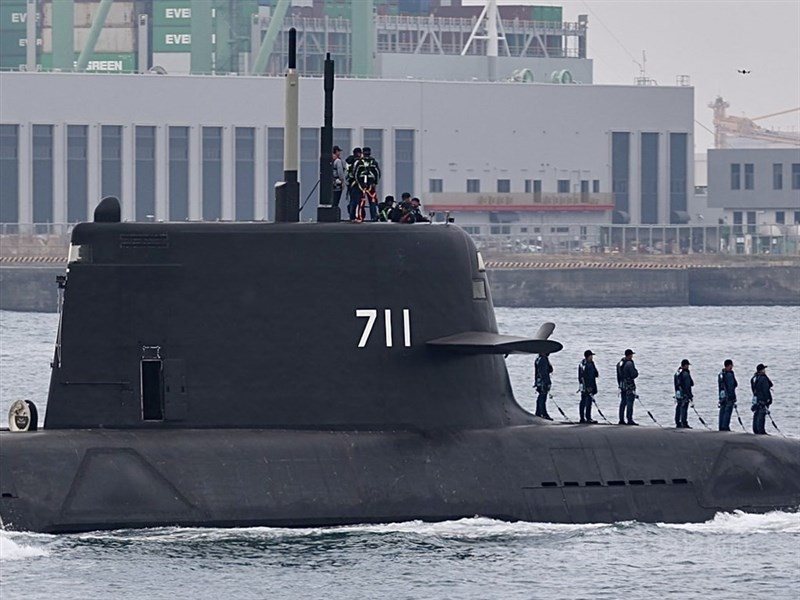
Taiwan’s plan to raise defense-related spending by about 16% in 2027 is more than a national budget story. It sits at the intersection of military deterrence, U.S. arms supply, industrial policy and the wider networks that make the Indo-Pacific economically central. Reuters reported that the Cabinet’s broad NATO-style defense total is expected to exceed NT$1.1 trillion for the first time, with the full proposal due on Aug. 20.
The underlying 2026 figure is NT$949.5 billion, or 3.32% of GDP, according to Taiwan’s Ministry of National Defense. That calculation includes veterans’ retirement payments and Coast Guard expenditure, while the MND’s own budget is NT$806 billion. Taiwan’s stated policy is to maintain defense spending at no less than 3% of GDP and sustain growth, turning security into a recurring claim on national resources.
The geography explains why the implications travel. Taiwan sits on the first island chain and along sea and air routes that connect Northeast and Southeast Asia. The European Union, although geographically distant, describes peace and stability across the Taiwan Strait as strategically important for global security and prosperity and identifies Taiwan as an important participant in global value chains. The Strait is therefore both a military space and a node in the international economic system.
Taiwan’s defense policy increasingly reflects this network logic. The MND’s special 2026–2033 concept includes not only weapons but the systems that keep a force connected and supplied: AI-assisted C5ISR, sustainment equipment, distributed unmanned platforms and counter-drone capabilities. Precision artillery, long-range missiles and layered air defense are designed to deny an adversary freedom of action, while communications and logistics are intended to preserve the network after it is attacked.
The industrial side is equally strategic. Taiwan’s ministry says one objective is to strengthen the national defense industry and build supply chains that are less exposed to China. That means the security problem cannot be solved only by importing finished systems. A force that depends entirely on external resupply is vulnerable if shipping or air links are disrupted during a crisis.
At the same time, U.S. procurement remains central. Taiwan’s legislature in May approved a special arms framework capped at NT$780 billion for American military equipment. The MND said the legislation was narrower than its original proposal and did not cover some domestic commissioned production and direct commercial purchases. The final mix of imported and locally produced systems will affect both operational resilience and the distribution of economic benefits.
The indigenous submarine program shows how long those choices can run. Taiwan plans seven follow-on submarines after the Hai Kun prototype, with a project budget of NT$284.0808 billion extending through 2038. Undersea capability matters because it creates uncertainty around maritime approaches and complicates planning for any force trying to control the waters around the island. Industrially, the program also anchors a network of shipbuilders, electronics firms and systems integrators.
Beijing sees the political issue through a different lens. Chinese authorities say Taiwan is part of China and reject steps they describe as separatist. Taiwan’s MND says PRC military pressure has compressed warning times and justifies stronger self-defense. The result is a security dilemma in which one side’s attempt to strengthen deterrence can be interpreted by the other as a hostile political signal.
That makes the composition of the 2027 budget important internationally. More money for mobile defensive systems, stockpiles and resilience sends a different signal from an emphasis on prestige platforms alone. Greater Coast Guard funding also matters because many confrontations below the threshold of war occur in maritime gray zones rather than through conventional combat.
The Aug. 20 proposal will reveal whether Taiwan continues moving toward a distributed defense architecture or reallocates the increase elsewhere. Lawmakers can still reshape the package, as they did with the U.S.-arms framework, so the final budget will reflect domestic political bargaining as well as strategic planning.
For the wider Indo-Pacific, Taiwan’s spending trajectory is a measure of how the region is adapting to persistent uncertainty. The island is committing more of its economy to the proposition that resilience can deter coercion. Whether that proposition succeeds will depend not only on weapons inventories but on the durability of political institutions, supply networks and partnerships that connect Taiwan to the rest of the world.
The network perspective also changes what counts as a defense asset. Ports, communications links, repair capacity and inventories are not secondary to the weapons themselves; they are what allow those weapons to remain relevant after disruption. A strategy centered on resilience therefore spreads defense spending across a wider economic base. That is one reason the broad national-security measure can tell a different story from the ministry’s core procurement budget.
International partners will watch the sequencing as closely as the amount. If Taiwan uses the additional resources to close vulnerabilities that partners have repeatedly identified — sustainment, distributed command and stockpiles — the budget will strengthen the credibility of shared planning. If spending is concentrated in systems with long delivery horizons but immediate gaps remain, the headline increase may do less to change near-term risk. The 2027 package will be read as a map of Taipei’s priorities across both time and geography.
82