Silicon Valley’s Growing Influence Under Trump Raises Questions About Tech Elite’s Ambitions
A Stanford professor’s analysis reveals that Silicon Valley billionaires like Elon Musk and Mark Zuckerberg are increasingly shaping U.S. policy, seeking control over the state while displaying a paradoxical mix of arrogance and insecurity.
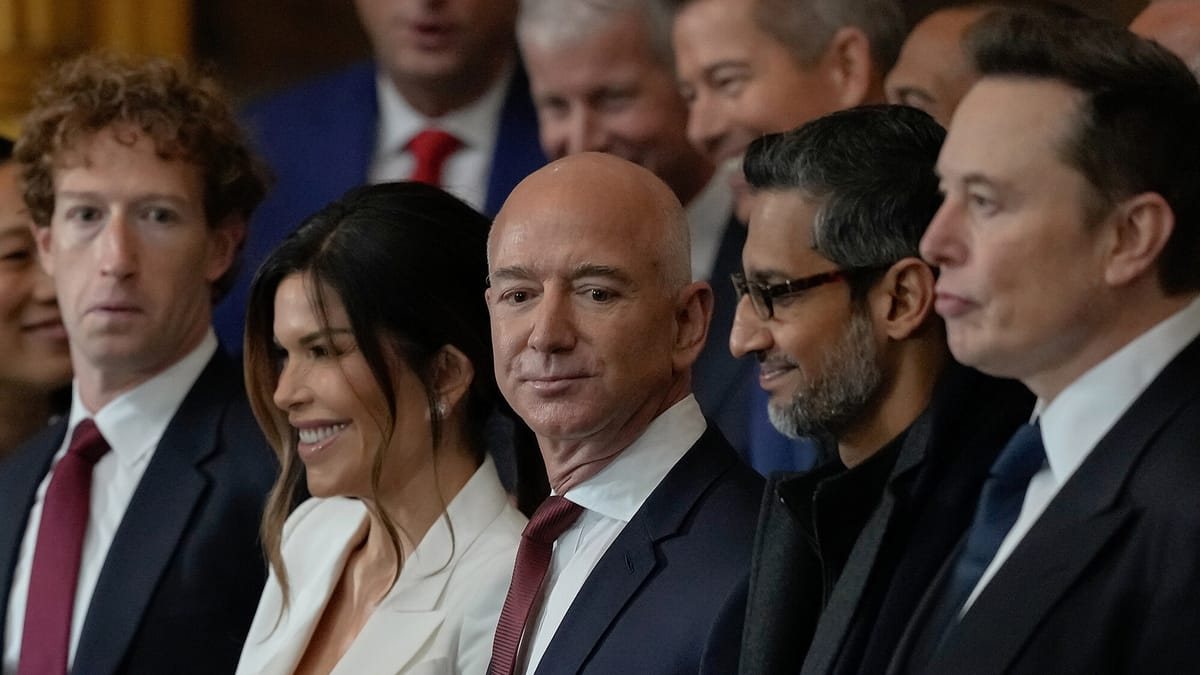
The tech elite of Silicon Valley have emerged as a dominant force in American politics, wielding unprecedented wealth and influence over the direction of the country. According to Adrian Daub, a professor at Stanford University and author of the book «Was das Valley herrschen nennt» (What the Valley Calls Ruling), figures like Elon Musk and Mark Zuckerberg are not merely participating in governance but are actively reshaping it to serve their interests. In a recent interview, Daub argued that while Donald Trump occupies the White House, the real power in the United States now lies with tech conglomerates such as Meta and Palantir, as well as individual billionaires who dictate what policies are implemented—and, more importantly, what is blocked.
Daub’s analysis highlights a fundamental paradox at the heart of Silicon Valley’s political engagement. These tech moguls, he explains, are not interested in governing in the traditional sense. Instead, they seek control—defending privileges, maintaining hierarchies, and exercising authority over key sectors like artificial intelligence. «What they want is control,» Daub said. «That is what the Valley calls ruling: it is about the defense of privileges and hierarchies.» This mindset, he noted, is rooted in a libertarian ideology that views the state as both an obstacle and a necessary tool for self-preservation.
The alliance between Silicon Valley and Trump, however, is fraught with tension. Daub described Trump as an unpredictable partner, noting that the tech billionaires made a significant miscalculation by tying themselves so closely to a leader he characterized as an autocrat, possibly even a fascist. With Trump’s approval ratings hovering around 30 percent and even his core supporters—white evangelicals—showing signs of disenchantment, the durability of this partnership is uncertain. «Political alliances are usually temporary,» Daub observed. «When Trump eventually fades from the scene, how will history judge those who served as his enablers?»
Musk’s role in the Trump administration has been particularly visible. During the 2024 election campaign, Musk provided substantial financial support to Trump, and later, through the so-called Department of Government Efficiency (DOGE), he wielded a proverbial «chainsaw» against parts of the federal bureaucracy that the tech sector found objectionable. Daub argues that this reflects a broader ambition among Silicon Valley leaders to eventually replace the state altogether. «In their thinking, many of these people want to replace the state,» he said. «But that will not be easy for them. People like Musk, Zuckerberg, and Marc Andreessen think in libertarian terms—precisely because of that, they need the state as a counterpoint to position themselves against.»
Daub pointed to Musk’s 2013 Hyperloop proposal as a telling example of this dynamic. The idea, he said, was not born out of a genuine desire to improve transportation but rather from Musk’s disdain for California’s high-speed rail project. «A guy like Elon Musk always wants to show that he can do it better,» Daub explained. «Now he and others have entered a new phase: they want to take over the state.» This drive to demonstrate superiority, Daub suggested, is a recurring theme among tech billionaires, who are simultaneously convinced of their innate right to rule and deeply insecure about their own legitimacy.
The professor described these «alpha males» as thin-skinned and uncertain, a trait that manifests in their companies as well. Despite their immense power, tech giants often portray themselves as underdogs when faced with regulatory scrutiny. «Look at how powerful the big tech companies are, and how they act like victims as soon as there is a little headwind,» Daub said. «That is hardly sovereign.» This dual posture—projecting omnipotence while claiming vulnerability—is a key strategy, particularly in debates over AI regulation. Tech firms argue that regulation would stifle innovation and allow China to overtake the U.S., even as they aggressively defend their intellectual property through litigation.
Daub’s research suggests that this behavior stems from a deep-seated inferiority complex. «Men like these have a sense of who deserves power,» he said. «In this case, they become victims of their own thinking: they are unsure whether they themselves deserve such power.» This insecurity, he warned, makes them even more dangerous, as it fuels a relentless pursuit of control without the maturity or stability required for responsible governance. As Silicon Valley’s influence continues to grow, the question of what these tech titans truly want—and whether they are capable of wielding power wisely—remains a pressing concern for American democracy.
92