
Serbia opens another route into Ukraine’s energy recovery
The €2 million transformer package links Belgrade to a wider network of European and UN-led reconstruction financing while Serbia continues to hedge between EU integration and Russian energy ties.
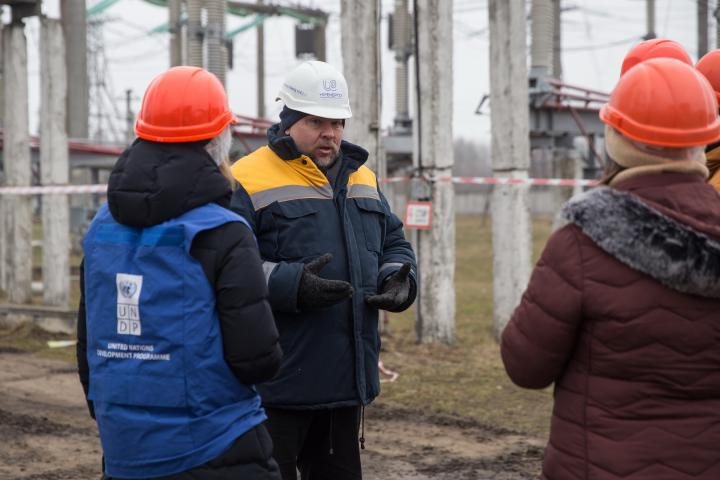
Ukraine’s energy recovery is being built through a web of financing routes rather than a single reconstruction fund. Serbia’s €2 million agreement with the United Nations Development Programme adds another small but politically significant channel to that network.
Signed on April 3, 2026, the agreement is designed to finance high-voltage transformers for Ukraine’s electricity transmission system. The equipment will be procured and delivered under UNDP’s Green Energy Recovery Programme.
The structure is important. Instead of transferring money into an undefined pool, Serbia is funding a specific class of physical infrastructure. That allows the contribution to move through an established international procurement mechanism and ties the political pledge to a measurable technical outcome.
High-voltage transformers are critical nodes in any national grid. They enable the movement of electricity across long distances and between voltage levels. Their destruction can isolate parts of the network or reduce the amount of power that can be transmitted, even when generation capacity exists elsewhere.
They are also difficult to replace. The U.S. Department of Energy describes large power transformers as expensive, difficult to transport and typically custom-made, with procurement lead times of one year or longer. In a war environment, those constraints become part of the strategic geography of recovery.
UNDP says the Serbian-backed equipment is intended to restore transmission capacity and protect access to essential services. Electricity is needed not only for households but for hospitals, schools, municipal water systems and heating. The project was explicitly linked to preparation for the next heating season.
Ukraine’s overall need dwarfs the Serbian contribution. UNDP cited the Fifth Rapid Damage and Needs Assessment estimate of $88.2 billion in energy-sector losses, including roughly $17.1 billion in the power subsector. The European Commission has announced about €922 million in energy support for the 2026-27 winter.
In June, the Commission, Ukraine’s Energy Ministry and the Energy Community Secretariat sought another €650 million from donors for the Ukraine Energy Support Fund. This illustrates the layered financing model now taking shape: major EU packages, dedicated funds, bilateral contributions and UN-led procurement programs operating at the same time.
Serbia’s entry into that system matters because of its geopolitical position. Belgrade is pursuing EU membership while refusing to align fully with the bloc’s sanctions on Russia. It also maintains longstanding Russian energy ties, including gas cooperation that Serbian officials reaffirmed in June.
Yet Serbia has also expanded practical engagement with Ukraine. President Volodymyr Zelenskyy’s first official visit to Belgrade in August included talks on EU integration, economic relations, security and broader bilateral cooperation. The transformer agreement predates that visit, so it should not be presented as a new August concession.
From a strategic perspective, the timeline is significant. Infrastructure agreements operate on a different clock from political headlines. A transformer may take a year to procure; a diplomatic meeting may last hours. The April commitment therefore belongs to a long-cycle reconstruction network that can outlast the news cycle around any single visit.
Reconstruction networks can also reshape bilateral relationships over time. Procurement creates institutional contact. Institutional contact can lead to technical cooperation, standards alignment, commercial familiarity and, potentially, larger projects. None of that is guaranteed, but a concrete procurement channel is more consequential than an unsigned declaration of intent.
For Serbia, participation allows it to demonstrate constructive engagement with Ukraine and European recovery priorities without making the more politically costly move of joining sanctions against Russia. For Kyiv, accepting that limited form of cooperation expands the number of governments with a practical stake in Ukraine’s resilience.
The arrangement also shows how smaller states can participate without trying to match the scale of major EU donors. A two-million-euro commitment can be routed to a specific bottleneck while broader funds cover other needs. That division of labor is likely to remain important as Ukraine’s reconstruction stretches across years and multiple infrastructure sectors.
The risks are clear. A €2 million package can be delayed by procurement problems, production lead times, transport constraints or renewed attacks. The value is not realized when an agreement is signed; it is realized when the equipment is installed and transmitting power.
The primary source also sets a limit on interpretation. UNDP confirms transformer procurement and support for areas affected by infrastructure damage; it does not describe a general program for unspecified backup generation. Maintaining that distinction is essential when a technical project is being read through a geopolitical lens.
Still, the route itself is significant. Ukraine’s recovery will require not only very large donors but a broad network of states willing to fund specific pieces of the system. Serbia’s transformer contribution shows how one more country can enter that network without first resolving every geopolitical disagreement surrounding the war.
90