Russia’s escalation ladder is widening, but the nuclear threshold remains unbroken
Bloomberg reports growing discussion among Russian officials of tactical nuclear use as a last resort. The stronger near-term signal is Moscow’s reported consideration of heavier conventional missile strikes on Ukraine.
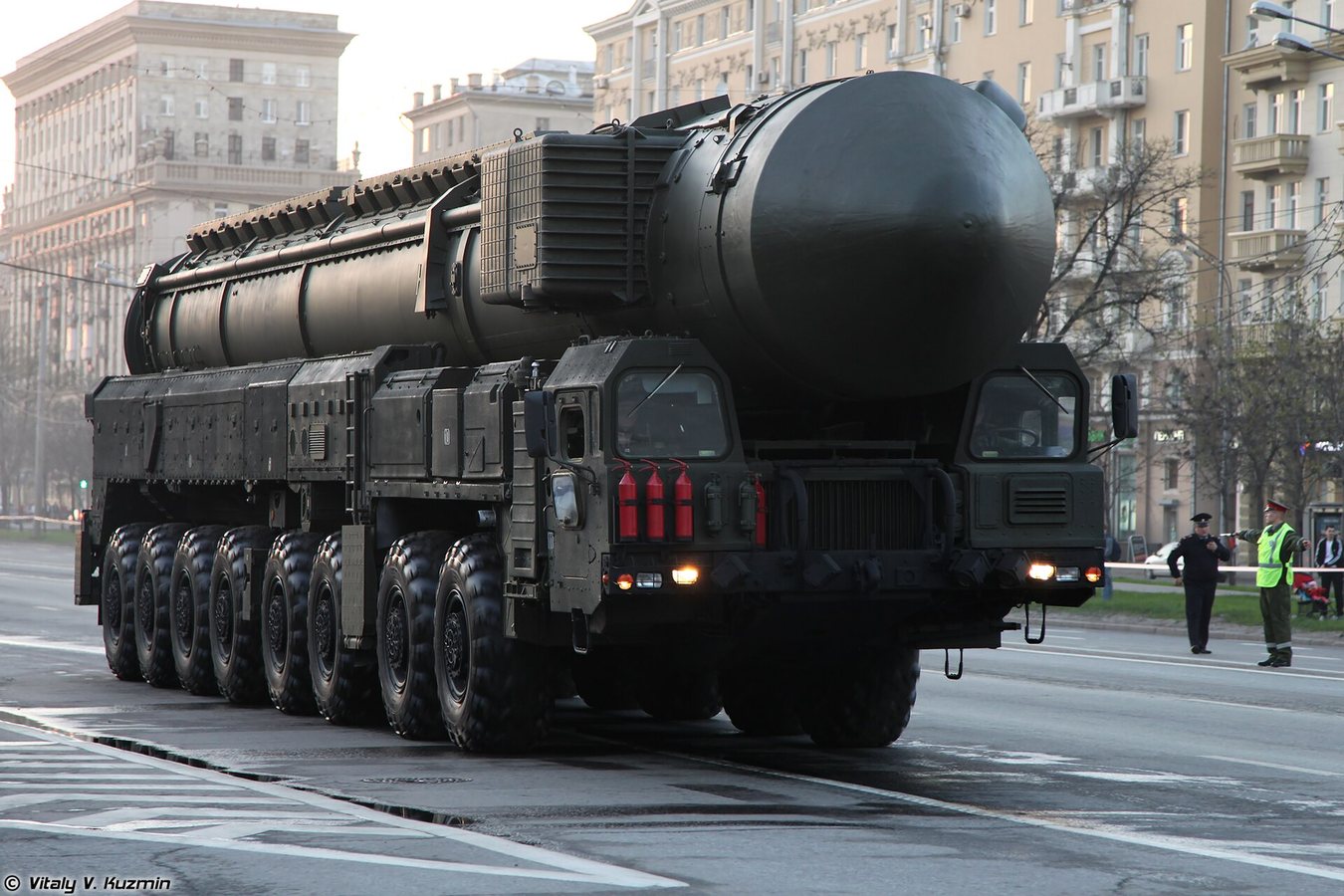
The war in Ukraine is producing a wider Russian escalation ladder, but the most dangerous rung has not been crossed. Bloomberg, citing people close to the Kremlin, reports that a growing number of Russian officials believe Vladimir Putin could eventually resort to tactical nuclear weapons in Ukraine if other options fail. The report describes a change in elite expectations; it does not establish a decision to use a nuclear weapon.
Bloomberg’s own caveat is decisive. It says there are no signs Russia is preparing to employ tactical nuclear weapons. No publicly cited evidence points to an operational order or to a transition from strategic signaling into an imminent nuclear-use posture. That leaves a large gap between what some officials may now consider plausible and what the Russian state is demonstrably preparing to do.
The more visible route runs through conventional firepower. The same sources say Russia is considering stronger ballistic-missile strikes on Kyiv, potentially including central areas, and on infrastructure in other Ukrainian cities. They describe Moscow as concluding that peace mechanisms have failed and that it has few alternatives to further escalation if it wants to pursue its military objectives.
That logic intersects with a domestic network of hawkish pressure. Reuters reported in June that Russian nationalists were demanding an end to diplomacy and a sharper war effort after Ukrainian strikes inside Russia. Some called for tactical nuclear use. At the time, the Kremlin resisted the most extreme prescriptions, showing that the political ecosystem around Putin can generate radical proposals without those proposals becoming policy.
Russia’s formal doctrine nonetheless provides an institutional channel for nuclear coercion. In November 2024, Putin approved revised Basic Principles of State Policy on Nuclear Deterrence, defining the conditions under which Russia says nuclear use may be considered. These principles are part of Moscow’s strategic messaging to Ukraine and NATO. They matter because they shape assumptions and red lines, but they cannot resolve the central uncertainty: what Putin would actually order in a future crisis.
The material picture is similarly mixed. The Bulletin of the Atomic Scientists estimates a Russian military stockpile of about 4,400 nuclear warheads, with roughly 1,800 nonstrategic weapons. Yet it also reports no indication that nonstrategic warheads are routinely mated to delivery systems in peacetime. The existence of a large arsenal therefore establishes capability, not imminent intent.
Alexander Gabuev of the Carnegie Russia Eurasia Center judges the current risk of tactical nuclear use to be extremely low. A battlefield nuclear strike could offer limited military value against dispersed forces while imposing an enormous political cost and breaking a taboo that has held for more than eight decades. As long as Russia can intensify attacks using conventional missiles and drones, escalation below the nuclear threshold remains a more controllable route.
For the international system, the danger lies partly in the interaction between these layers. Hard-line rhetoric can narrow political space; doctrine can make threats sound more credible; conventional attacks can create pressure for retaliation; and repeated signaling can increase the risk of miscalculation. But deterrence policy becomes weaker, not stronger, if every alarming report is treated as proof of an imminent strike. The next meaningful shift will come from observable military or political action. Until then, the nuclear option is a worsening strategic possibility, not an established operational plan.
106