
Russia’s Dispersed Drone Network Extends Pressure Beyond Ukraine
A growing launch network gives Moscow more capacity for the current war and more leverage in any future confrontation with NATO, without proving that an Allied attack is planned.
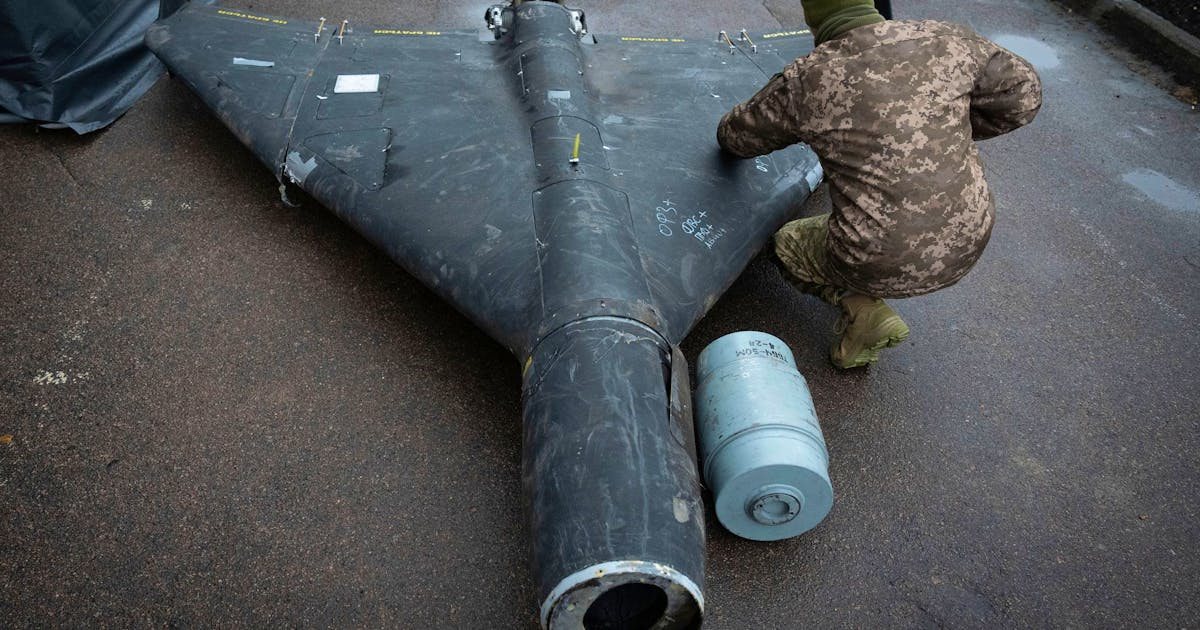
Russia’s new long-range drone infrastructure is best read as a network, not a single weapon system. The significance lies in dispersion: more launch sites give Moscow additional ways to sustain pressure on Ukraine while also complicating NATO’s calculations on the eastern flank.
Open-source reporting based on commercial satellite imagery and DroneSec analysis identified at least 10 Russian sites with new or expanded launch infrastructure near Ukraine and Belarus. Analysts counted dozens of launch rails. The War Zone reported that open-source tracking connected seven of the 10 sites to attacks on Ukraine.
That current use anchors the assessment. The Institute for the Study of War says the most likely near-term purpose is to increase the scale and resilience of Russian long-range strike packages against Ukraine. A claim that these facilities exist only to attack NATO therefore goes beyond the evidence. Russia is already using the network in the conflict for which it has spent years expanding drone production and strike tactics.
Yet networks create options. Launch capacity dispersed across western Russia can support different routes, timings and concentrations of attacks, and public assessments say it also places additional NATO territory within potential reach. That does not mean Moscow has decided to strike the Alliance. It means NATO planners must treat the infrastructure as a capability that could be redirected in a crisis.
The intelligence environment is already pushing governments in that direction. Reuters reported that Poland and the Baltic states have increased security around critical infrastructure after allied warnings about possible Russian provocations. Officials described false-flag scenarios in which Ukrainian-made or captured drones might be used to confuse attribution. The warnings did not establish an approved or imminent operation, while the Kremlin dismissed the claims.
Recent U.S. intelligence assessments reported by CNN similarly consider whether Vladimir Putin might test NATO unity with a limited attack over the next several years. The scenarios include cyber operations or a small military incursion, not a forecast of a specific attack on Warsaw or another city.
NATO’s public response emphasizes preparedness rather than prediction. After recent Russian airspace violations affecting Poland and Romania, the Alliance said it was reinforcing integrated air and missile defense across the eastern flank. A NATO official separately said the Alliance is monitoring Russia’s long-range strike capabilities and has the forces and authorities to deter and defend.
The strategic shift is therefore broader than the discovery of a few new pads. Russia is building a distributed strike ecosystem that serves today’s campaign in Ukraine and preserves options for future coercion. The response for NATO is also networked: early warning, resilient infrastructure, layered air defense and political clarity about how provocations would be attributed and answered.
60