Plauru Fire Puts Russia-Ukraine Drone Spillover Back on NATO’s Border
A suspected drone explosion near Romania's Plauru has renewed concern over the Danube security corridor. The current device has not yet been identified as Russian or as a Shahed/Geran.
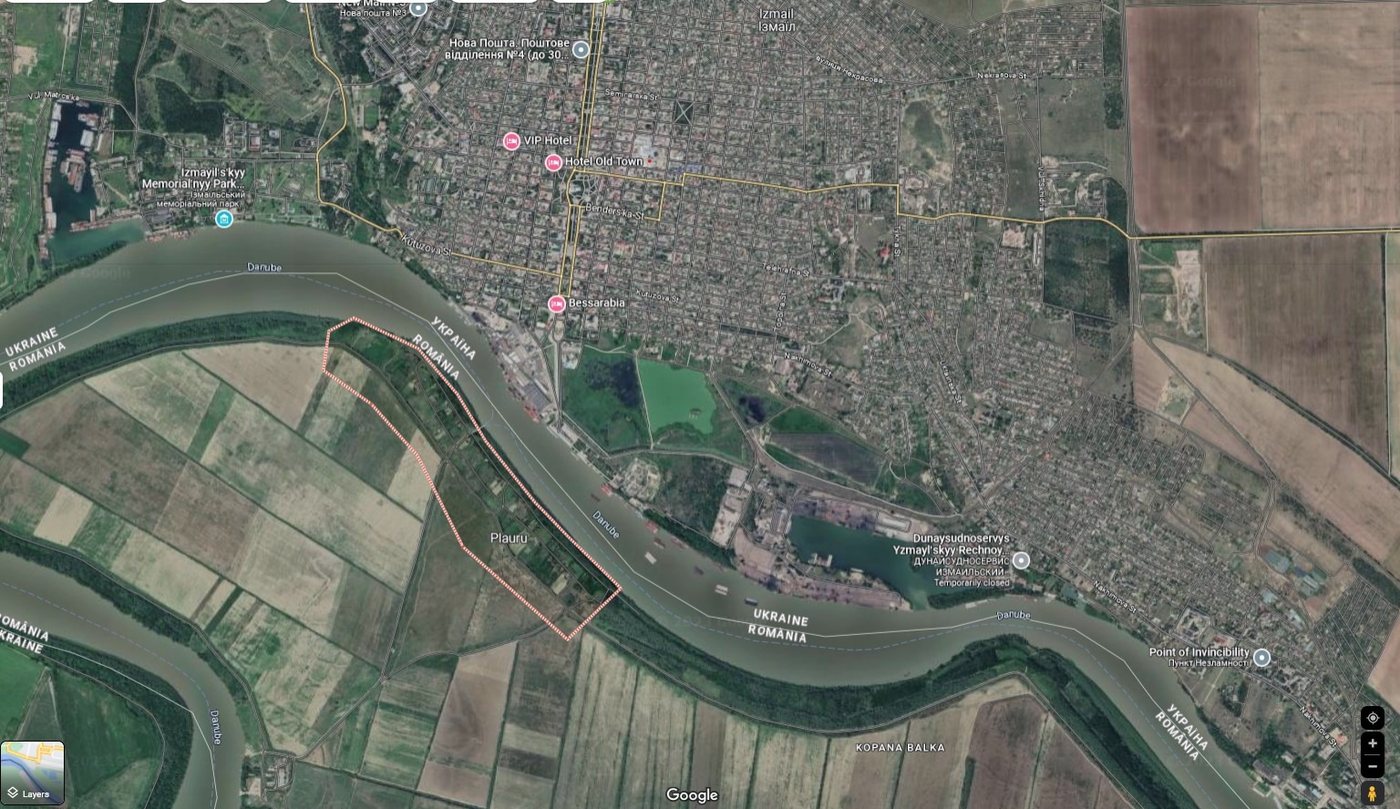
A fire at Plauru on Romania's Danube frontier has again exposed the narrow margin separating Russia's drone campaign against Ukraine from NATO territory. The immediate facts are straightforward. Romania's state forestry administration said a woodland fire started near Plauru at about 5:50 p.m. Wednesday and initially affected around half a hectare. Residents said they heard an explosion and believed a drone was the most likely cause.
The strategic interpretation is less settled. Romanian public authorities have not yet identified a drone model or origin in the Plauru incident. The available statements do not name a Shahed or Geran, and they do not establish that Russia deliberately struck Romania. That distinction is central because the same physical outcome — an explosion and fire on Romanian soil — can result from very different chains of events.
Plauru is almost a textbook case of geographic exposure. It sits roughly 200 meters from Ukraine's port of Izmail across the Danube. Izmail is part of the export and logistics network that Russia has repeatedly targeted with drones. The river that supports trade also acts as the state border. When Russian attacks are launched against the port, navigation errors, interceptions and falling debris can all become Romanian security problems within seconds.
The air picture was already active on Wednesday. Earlier in the day, Romanian military radar detected an aerial target around eight kilometers north of Vylkove on Ukrainian territory, close to the border. An IAR-330 PUMA SOCAT helicopter was launched, and a RO-Alert warning was sent to residents in northern and eastern Tulcea County around 1:15 p.m. The alert ended at 2:44 p.m. Romania's Defense Ministry said no penetration of Romanian airspace had been reported in that earlier episode. There is no public evidence linking the target to the later fire.
Ukraine's Izmail district had also reported an enemy aerial attack overnight into Aug. 26. Local authorities said air defenses prevented hostile drones from reaching their targets during that nighttime attack. This does not establish what happened near Plauru hours later, but it shows the tempo of drone operations around the same cross-border logistics corridor.
At the fire scene, ISU Delta sent nine firefighters by boat. Forestry personnel, municipal volunteers and local residents joined the response. Officials later said the blaze had been localized and that about 2,000 square meters of dry vegetation were affected at that point.
Romania's concern is shaped by recent precedent. On Aug. 16, its Defense Ministry said a drone entered Romanian airspace from Moldova and was shot down by a Spanish F-18 operating in an air-policing role. Earlier investigations near Plauru have recovered Russian-origin Geran1/2 drone debris. Those events show that spillover is no longer hypothetical; Romania has had to move from warning systems toward active interception and forensic recovery.
What they do not show is the intent behind Wednesday's suspected blast. For NATO, the difference between an intentional strike on allied territory and an errant or damaged drone is not semantic. It affects diplomatic attribution, force posture and the proportionality of any response. That is why the investigation of the burn site matters more than immediate online labeling.
If investigators recover airframe sections, navigation hardware or explosive residue, they may be able to establish both type and origin. Until then, Plauru is a serious border-security incident within a larger pattern of Russian pressure on Ukraine's Danube route, but not yet a confirmed Russian Shahed strike on Romania. The next layer of evidence will determine whether this episode remains a case of spillover risk or becomes something more consequential.
51