Miliband boycotts G20 photocall after refusing to pose with Russian foreign minister
Foreign Secretary Ed Miliband refused to be photographed with Russian foreign minister Sergei Lavrov at a G20 foreign ministers' meeting, leading to the cancellation of the photocall.
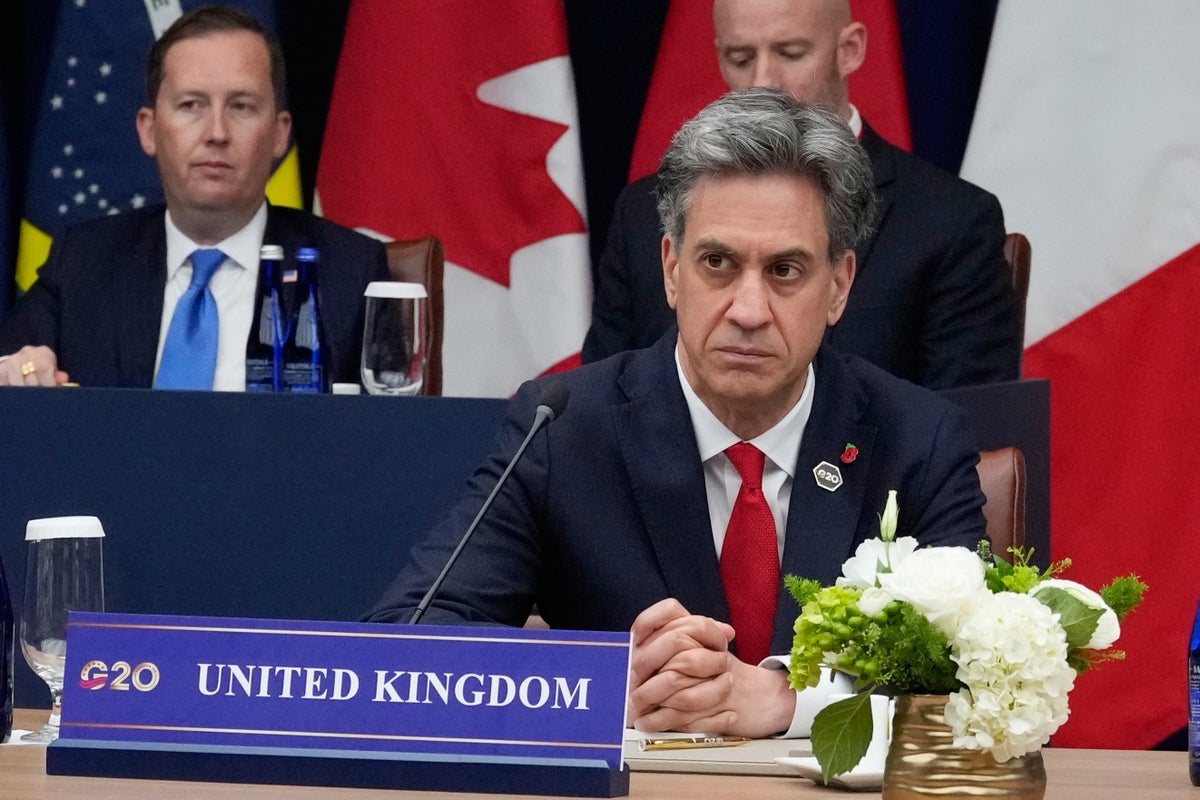
A planned group photograph at a G20 foreign ministers' meeting was cancelled after Foreign Secretary Ed Miliband refused to be pictured alongside Russia's foreign minister, Sergei Lavrov, over Moscow's war in Ukraine. Reports from the gathering say Miliband and other ministers declined to take part, prompting organisers to scrap the photocall altogether.
The incident took place at the G20 foreign ministers' meeting in Atlanta, where a photograph of the attending ministers had been planned. Miliband did not stay silent during the exchanges. He told the Russian foreign minister directly that Moscow was not winning the war, and said that everyone in the room knew Russia was the aggressor. In his remarks, the Foreign Secretary also stressed the need to deprive Vladimir Putin of the revenues that, in his words, perpetuate what he called a barbaric war.
The standoff underlines the depth of the divisions within the G20 over a conflict that began more than four years ago with Moscow's invasion of Ukraine. Forums that bring together major economies and their foreign ministers have struggled to present a common front on the war, and the cancelled photograph shows how even routine diplomatic rituals have become a point of friction. Reports describe the decision not to be pictured with Lavrov as a deliberate choice by several ministers, not a logistical failure of the event.
Western ministers have consistently argued that isolating Russia diplomatically and economically is necessary to pressure the Kremlin. Moscow, for its part, has treated its participation in multilateral settings as a matter of continued dialogue, and Lavrov's presence at the meeting reflected that position. The refusal to be photographed with him therefore sent a visible signal that the UK and some of its partners do not regard ordinary diplomatic courtesies as appropriate while the war continues.
The episode is a small but telling example of the wider strain on multilateral diplomacy. Gatherings such as the G20 remain among the few settings in which Russian and Western officials sit in the same room, yet the optics of those encounters are now closely watched and politically charged. Whether the cancelled photocall will affect future G20 arrangements has not been made clear in the reporting, but it has already become one of the more visible markers of the rift over Ukraine.
7