
From pantry shelves to war books, Britain is rebuilding the civilian side of deterrence
A new resilience campaign will encourage British households to keep basic emergency supplies. Behind the practical advice is a strategic shift: London is reconnecting civilian preparedness, critical infrastructure and defence planning for a possible wider conflict.
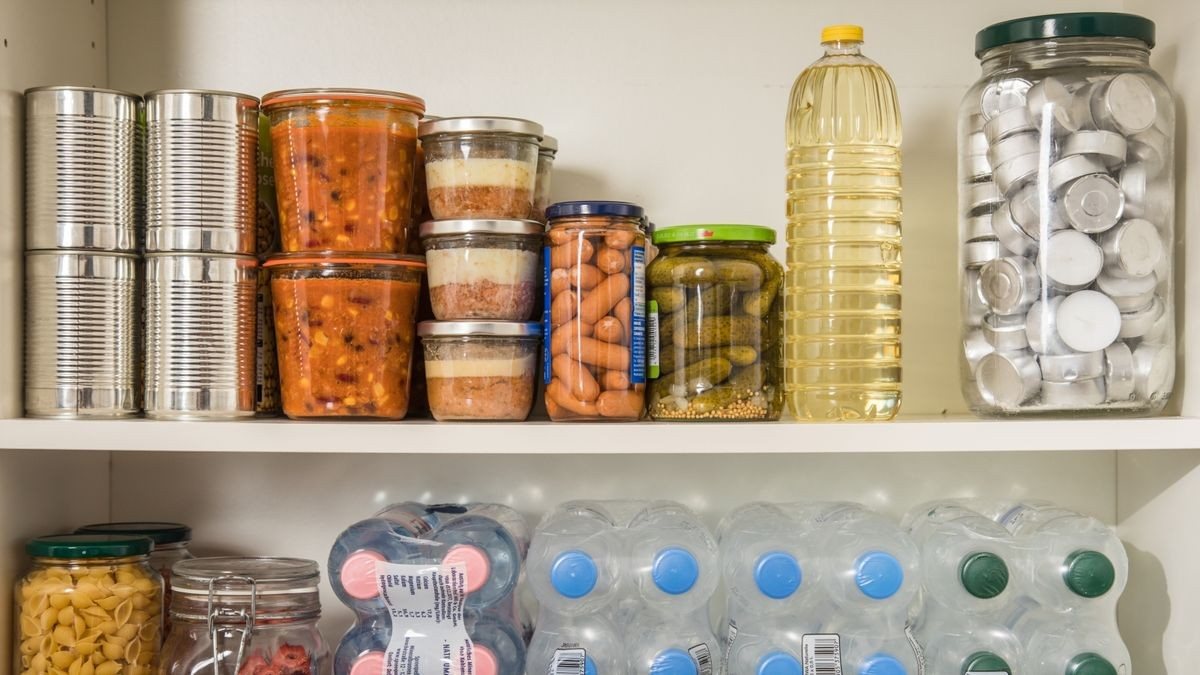
Britain’s renewed interest in household emergency supplies is easy to reduce to a shopping list: bottled water, tins, batteries, a torch, a radio and medicine. The more important story is the architecture being built around that list.
The government’s Prepare service recommends enough bottled water and ready-to-eat food to get through a short emergency. It cites 2.5 to 3 litres of drinking water per person per day as a minimum for survival and suggests that about 10 litres allows for basic cooking and hygiene. Reports this week say the next phase of the public campaign will put tinned food and bottled water at the centre of a broader push to strengthen household resilience.
On its own, that is standard civil-protection policy. The United Kingdom is exposed to floods, heat, drought, power cuts and water interruptions. A simple emergency stock reduces immediate pressure on local authorities and allows responders to concentrate on people who need direct help.
The strategic significance appears when the same campaign is placed beside the government’s Home Defence Programme. The 2026 Resilience Action Plan implementation report defines Home Defence as planning that aligns civilian and military effort during international hostilities affecting the UK. It says central crisis protocols known as “War Books” are being updated and a national exercise will test home-defence arrangements in 2027.
This is more than a communications initiative. It is an attempt to close the space between military deterrence and the civilian systems that make deterrence credible. A state may possess capable armed forces but still be vulnerable if energy networks, ports, telecommunications, logistics, hospitals or payment systems fail under pressure.
The Strategic Defence Review makes that connection explicit. It calls for credible preparation for war, home defence and industrial mobilisation and says Britain should exercise for an armed attack on the country or NATO allies. It also points to Ukraine’s experience and to Nordic and Baltic allies as sources of lessons for a whole-of-society approach.
The National Security Strategy describes the underlying reason: Britain must now prepare for the possibility that its homeland could come under direct threat, potentially in a wartime scenario. It names Russian aggression, cyber activity and sabotage as part of a security environment in which the line between foreign confrontation and domestic disruption is increasingly thin.
A cyberattack on electricity illustrates the logic. Britain’s National Risk Register models a severe scenario in which the national grid fails and telecommunications, water, sewage, fuel and gas are disrupted in turn. The first strategic task would be restoring critical systems. The first household task would be much simpler: drink, eat, stay informed and keep essential devices running.
That is how a pantry becomes part of deterrence. Household self-sufficiency for a few days does not stop an adversary, but it reduces the social impact of disruption and gives the state more room to manage a crisis. The concept is now common across Europe, where the EU Preparedness Union strategy encourages at least 72 hours of civilian self-sufficiency and stronger civil-military coordination.
None of this means London has concluded that a world war is approaching. The official guidance is deliberately all-hazards, and Britain faces immediate non-military risks as well, including widespread drought this summer. A campaign built only around war would be both less accurate and less useful.
The important change is that war is no longer excluded from the planning assumptions. A major-power confrontation could reach Britain through cables, code, shipping routes and energy systems before it reaches British streets through conventional attack. The country’s resilience policy is being redesigned for that spectrum.
The tins and water are therefore the visible end of a much larger system. The war books, exercises, infrastructure plans and household guidance all point toward the same goal: making society harder to paralyse, so that a crisis is less likely to become a strategic defeat.
53