France denies asylum to Wagner disinformation whistleblower from Central African Republic
France has rejected the asylum application of Ephrem Yalike-Ngonzo, a former participant in Russia's Wagner-linked disinformation campaign in Africa who later became a whistleblower, raising questions about the protection of those who expose covert influence operations.
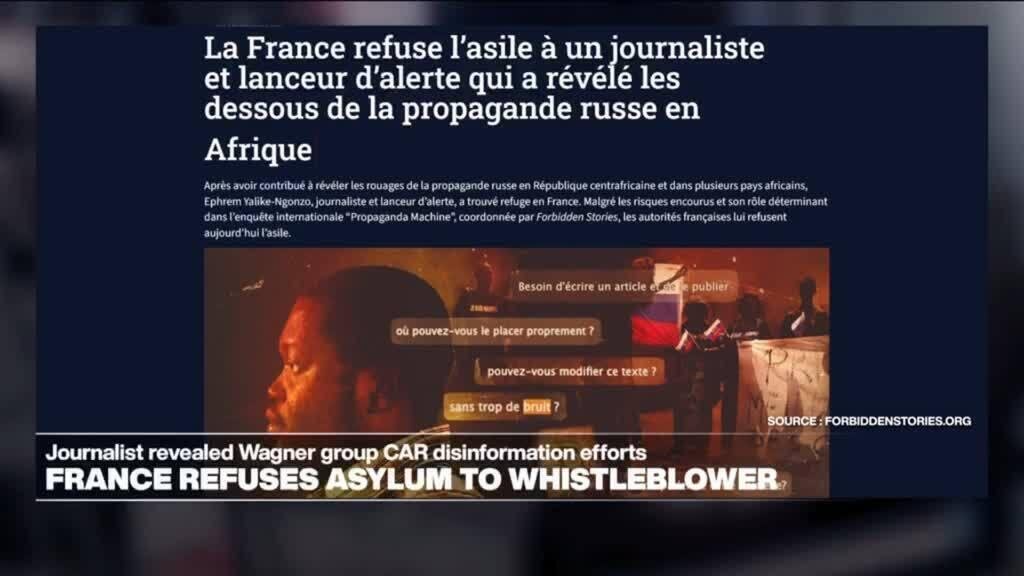
France has denied asylum to Ephrem Yalike-Ngonzo, a former insider in Russia's disinformation network in the Central African Republic who turned whistleblower and provided crucial testimony that helped uncover the operations of the Wagner-linked propaganda machine across Africa. The decision, which reversed an earlier intervention reportedly supported by the French presidency to evacuate him and his family from imminent danger, has sparked debate about the contradictions in France's asylum policy and its commitment to protecting those who expose covert authoritarian influence operations.
Yalike-Ngonzo, a Central African national, was a participant in Russia's disinformation campaign in the Central African Republic before deciding to cooperate with investigators. His testimony was instrumental in revealing how the Wagner Group, a Russian private military company with close ties to the Kremlin, operated a sophisticated disinformation network across several African countries. The network aimed to spread pro-Russian narratives, undermine Western influence, and destabilize governments that did not align with Moscow's interests.
According to Lea Perruchon, a journalist with the investigative consortium Forbidden Stories who worked on the case, Yalike-Ngonzo's cooperation came at great personal risk. After he provided evidence to journalists and investigators, his safety was threatened, prompting an intervention that involved French authorities evacuating him and his family from the Central African Republic. The evacuation was reportedly supported at the highest levels of the French government, including the presidency.
However, despite this initial protection, French authorities later changed course and abruptly rejected Yalike-Ngonzo's asylum application. The reasons for the rejection remain unclear, as French officials have not publicly detailed the rationale behind the decision. Perruchon described the case as a collision of competing interests: journalism, France's national security, and its complex asylum policy.
The case highlights a broader dilemma for democratic states. Yalike-Ngonzo's testimony contributed to investigations of significant public interest and helped corroborate subsequent international sanctions against individuals and entities linked to the Wagner Group's disinformation activities. Yet the same testimony that was valuable for exposing covert influence operations now appears to have become entangled in an asylum process whose reasoning remains opaque.
Perruchon framed the situation not simply as an individual immigration dispute but as a test of whether democratic states are willing to protect those who expose covert authoritarian influence operations. She noted that the case raises fundamental questions about how liberal democracies reconcile security concerns, legal consistency, investigative journalism, and the strategic importance of encouraging and protecting future whistleblowers.
The Wagner Group, which has been active in several African countries including the Central African Republic, Mali, and Sudan, has been accused by Western governments and human rights organizations of committing human rights abuses, exploiting natural resources, and spreading disinformation to advance Russian geopolitical interests. The group's activities in Africa have drawn increasing scrutiny from international bodies, with the European Union and the United States imposing sanctions on Wagner-linked entities and individuals.
Yalike-Ngonzo's case is particularly significant because it exposes the inner workings of the Wagner disinformation network from the perspective of a former participant. His testimony provided details on how the network operated, including the use of fake news websites, social media bots, and paid commentators to amplify pro-Russian messages and attack critics of the Kremlin and its allies in Africa.
The French government's decision to deny asylum to Yalike-Ngonzo has been criticized by human rights advocates and journalists who argue that it sends a chilling message to potential whistleblowers. If those who risk their lives to expose covert influence operations cannot rely on protection from democratic states, they warn, fewer individuals may come forward in the future, leaving such operations undetected.
For now, Yalike-Ngonzo's fate remains uncertain. The rejection of his asylum application leaves him in a precarious position, potentially facing return to the Central African Republic, where he could be at risk of retaliation from Wagner-linked elements or local authorities aligned with Russian interests. The case continues to draw attention from international media and human rights organizations, which are calling on French authorities to reconsider their decision and provide clarity on the reasons for the rejection.
The broader implications of the case extend beyond one individual. As Perruchon noted, the outcome will be watched closely by other potential whistleblowers in authoritarian contexts, as well as by governments and organizations that rely on insider testimony to counter disinformation and covert influence operations. The question of whether democratic states will protect those who help expose such operations remains unresolved.
88