FIFA defends decision to let Balogun play despite red card, citing disciplinary precedent
FIFA President Gianni Infantino has justified the decision to allow United States striker Folarin Balogun to play in the World Cup round of 16 match against Belgium, despite his red card in the previous game, arguing that reviewing the consequences of red cards is common in modern football. The Belgian Football Federation had protested the decision and explored legal avenues, but FIFA’s disciplinary committee imposed a suspended one-match ban and a fine, allowing Balogun to feature in the crucial knockout fixture.
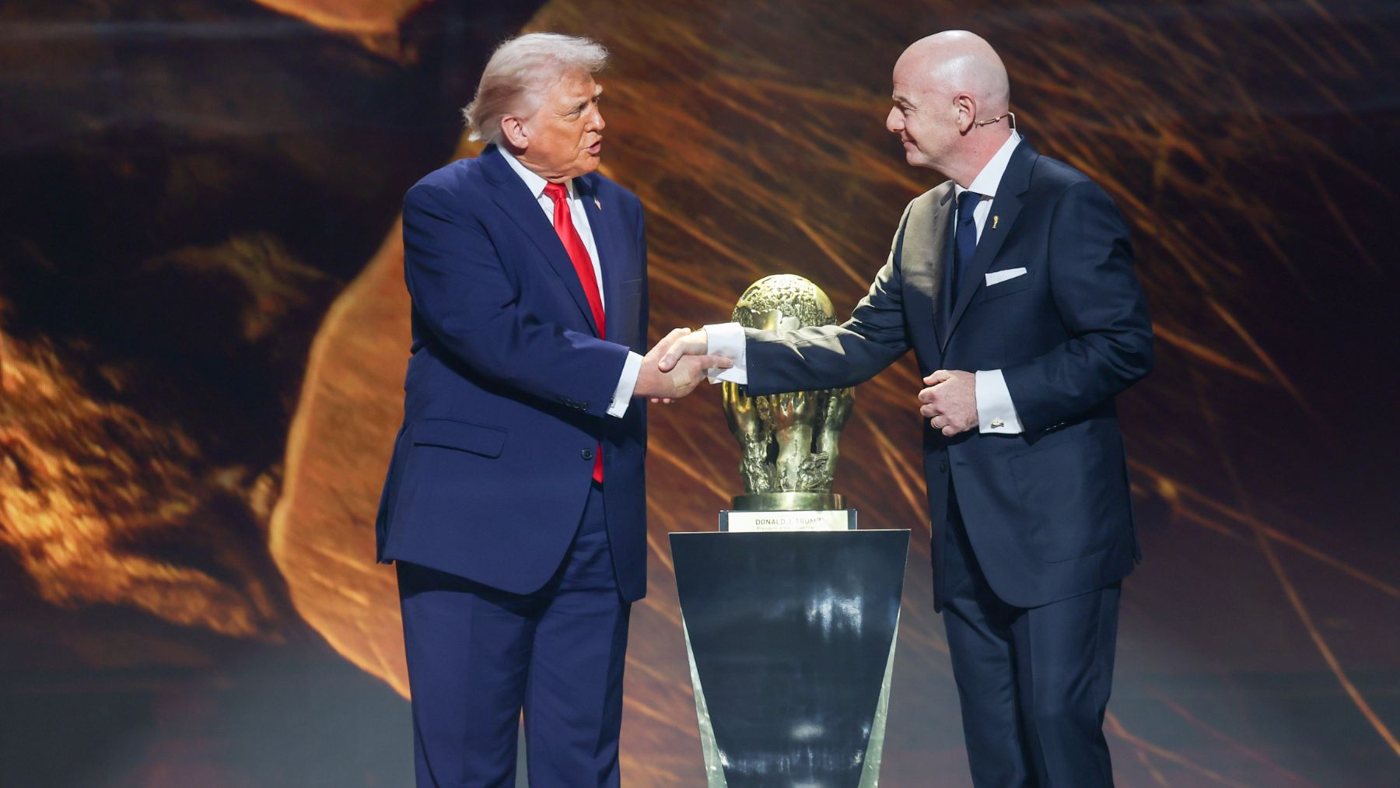
FIFA has defended its controversial decision to allow United States striker Folarin Balogun to play in the World Cup round of 16 match against Belgium, with President Gianni Infantino arguing that reviewing the consequences of red cards is not new in modern football. The Belgian Football Federation had formally protested the decision and warned it would explore all legal avenues to challenge Balogun’s participation, but FIFA’s disciplinary committee ruled that the player could take the field after imposing a suspended one-match ban and a fine.
In a statement issued just three hours before the match in Seattle, Infantino, who also serves as president of FIFA’s disciplinary committee, addressed the controversy directly. He stated that the decision to suspend the execution of Balogun’s one-match suspension was based on a discretionary power under Article 27 of the FIFA Disciplinary Code, which allows the committee to suspend the enforcement of any disciplinary measure. The committee argued that this approach is more balanced than revoking the red card itself, which it did not do.
The controversy began on July 1, 2026, during the round of 32 match between the United States and Bosnia and Herzegovina. Balogun was shown a straight red card in the 64th minute for serious foul play after a VAR review. After the match, he entered the field to celebrate with his teammates despite having been sent off. FIFA opened disciplinary proceedings against him on July 2, citing potential violations of Article 66 (red card and match suspension) and Article 14 (misconduct related to celebration) of its disciplinary code.
On July 5, the FIFA disciplinary committee found Balogun guilty of both violations. It imposed a one-match suspension, but immediately suspended the execution of that suspension for a probationary period of one year. In practical terms, this meant Balogun was not required to serve the suspension immediately and could play in the next match against Belgium. The committee also imposed a fine of $40,000, with half attributed to the Article 14 violation and half to the Article 66 violation. The United States Soccer Federation was declared jointly liable for the payment of the fine under Article 6.5 of the disciplinary code.
Infantino’s statement emphasized that the disciplinary committee did not revoke the red card issued by the referee. Instead, it confirmed the automatic one-match suspension that would normally result from a red card, but then used its discretionary power to suspend the enforcement of that suspension. The committee argued that this is a standard practice in football, citing examples from top-tier leagues affiliated with UEFA where the revocation of red cards is a common disciplinary measure.
«Reviewing the legal consequences of red cards in football is not something new in modern football,» Infantino wrote in the statement. «For example, in most top-tier leagues belonging to member associations affiliated with UEFA, the revocation of red cards is a common disciplinary measure, and this has never raised concerns about crossing any ‘red line’.» He added that the committee’s decision was based on an express provision of the applicable regulations and was a more balanced measure than revoking the card entirely.
The Belgian Football Federation had formally contested the match and warned it would pursue any available legal channels to denounce Balogun’s presence on the field. The federation argued that FIFA’s decision violated its own regulations, which state that a red card automatically results in a one-match suspension. However, FIFA’s disciplinary committee maintained that its decision was lawful and within its discretionary powers.
The incident has sparked widespread debate about the consistency and transparency of FIFA’s disciplinary processes, particularly in high-stakes World Cup matches. Critics argue that the decision undermines the integrity of the competition and sets a dangerous precedent, while FIFA insists that it followed established procedures and that the decision was made by an independent judicial body.
The match between the United States and Belgium took place on July 6, 2026, in Seattle, with Balogun available for selection. The outcome of the game and any further disciplinary actions remain to be seen, but the controversy has already cast a shadow over the tournament and raised questions about the enforcement of football’s disciplinary rules at the highest level.
87