
Epiphanius links Ukrainian church unity to a wider European religious role
The Orthodox Church of Ukraine’s primate is preaching internal unity after a summer of European engagement in Brussels and Berlin, where Ukrainian religious institutions discussed their public role.
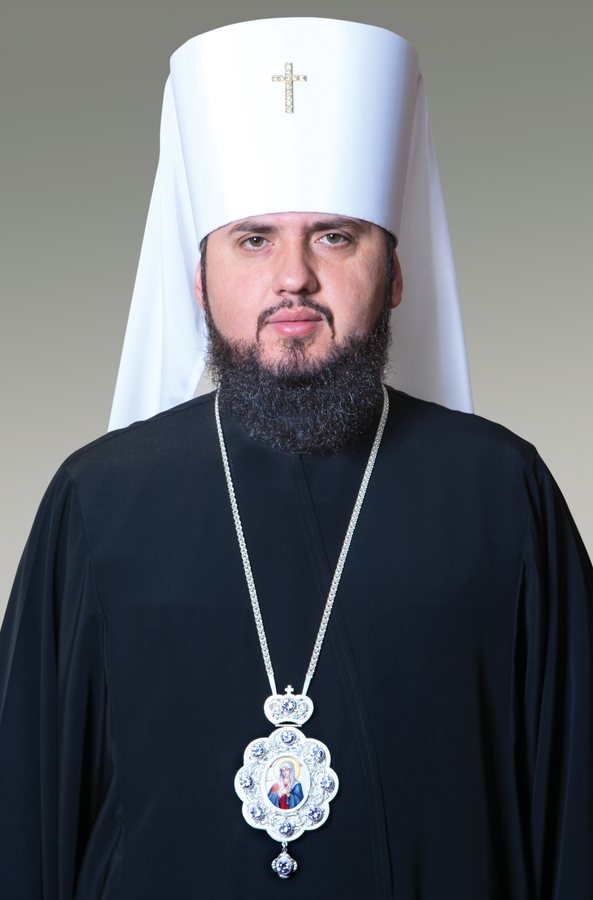
Metropolitan Epiphanius of Kyiv and All Ukraine has urged believers to hold firmly to the unity of the Church in Christ, listen to its fathers and teachers, and avoid temptation. The sermon, delivered for the tenth Sunday after Pentecost, fell on August 9 in the 2026 liturgical cycle.
The message is inward-looking, but it arrives after a period in which the Orthodox Church of Ukraine has been increasingly visible in European religious and institutional networks. In June, Epiphanius took part in meetings in Brussels and Berlin as part of broader Ukrainian interreligious engagement. The discussions included the role of Ukrainian churches during the war and in the postwar period, as well as religious freedom.
In Berlin, Epiphanius participated in a public event focused on faith, war and responsibility and met Germany’s federal commissioner for freedom of religion and belief. Those contacts are significant because they place Ukrainian religious institutions inside a wider European conversation about civil society, public ethics and the protection of religious communities.
The August sermon does not directly address European policy, but it speaks to the internal coherence required for any institution that expands its external role. Epiphanius puts Christ, rather than a leader or faction, at the center of unity. That claim establishes a principle for how the Church is supposed to carry its identity across political borders and into new institutional relationships.
He made the same point on June 29 through the example of Peter and Paul. The apostles represent different biographies and missions, yet their joint commemoration shows, he argued, that the Church is neither Peter’s nor Paul’s but Christ’s. In strategic terms, the identity of the institution is not meant to depend on the personal brand of whichever leader is most visible at a particular moment.
The second part of the sermon — listening to the fathers and teachers — provides a mechanism of continuity. International engagement creates pressure to translate an institution’s language for new audiences. Translation can make ideas accessible, but it also raises a question: what can adapt and what must remain stable? Tradition is the Orthodox answer to that problem of continuity.
Epiphanius had emphasized true church teaching, apostolic continuity and sacramental life in March. The message is that the Church does not define itself from scratch every time it enters a new political or cultural environment. Its public language may change, but the underlying faith is expected to remain connected to a received body of teaching.
That is particularly relevant for a church serving Ukrainians who now live across Europe. Migration disperses communities, exposes believers to different legal and religious systems, and creates new relationships with other churches and governments. Institutional networks become more international even when worship and spiritual identity remain rooted in a national experience.
The third part of Epiphanius’s sermon — avoiding temptation — introduces the risk of losing internal purpose while gaining external visibility. Institutions can become preoccupied with recognition, access or influence. Religious groups can also become defensive, interpreting every question from outside as hostility. The language of discernment asks whether external activity still serves the faith the institution claims to represent.
In April, Epiphanius described the Church as a spiritual unity of believers with one another and with Christ, linking that unity to personal growth in faith. That framing is important for international strategy because it makes community life, not institutional prestige, the measure of success. Diplomatic access or public attention has limited value if believers themselves become fragmented.
The Orthodox Church of Ukraine held an expanded Bishops’ Council in July under Epiphanius’s chairmanship. The council is a formal mechanism of internal governance. It sits alongside the Church’s external engagement as another part of institutional development: one manages internal order, the other relationships beyond the institution.
The August sermon connects those levels by focusing on legitimacy. Christ provides the theological center. The fathers and teachers provide continuity. Discernment provides a way to test whether actions and loyalties remain aligned with that center. An institution can therefore change its geography and public partnerships without necessarily changing the basis on which it understands itself.
For European readers, the broader significance lies in the changing map of Ukrainian religious life. Churches that once operated primarily inside Ukraine now interact more frequently with European governments, foundations, civil society and diaspora communities. Their ability to speak consistently across those settings depends on having a clear account of identity that can survive translation.
Epiphanius’s sermon offers such an account in compact form. It is not a geopolitical manifesto and should not be treated as one. But it explains the internal logic behind a church that is simultaneously deepening European relationships and insisting that its primary unity is spiritual rather than political. The route outward, in this model, depends on maintaining a center within.
78