
Dutch Riot Police Break Up Far-Right Protest in The Hague
Dutch riot police dispersed several hundred far-right protesters in The Hague after violence erupted at the Malieveld park, with 24 arrests reported and a planned anti-immigration march banned by local authorities.
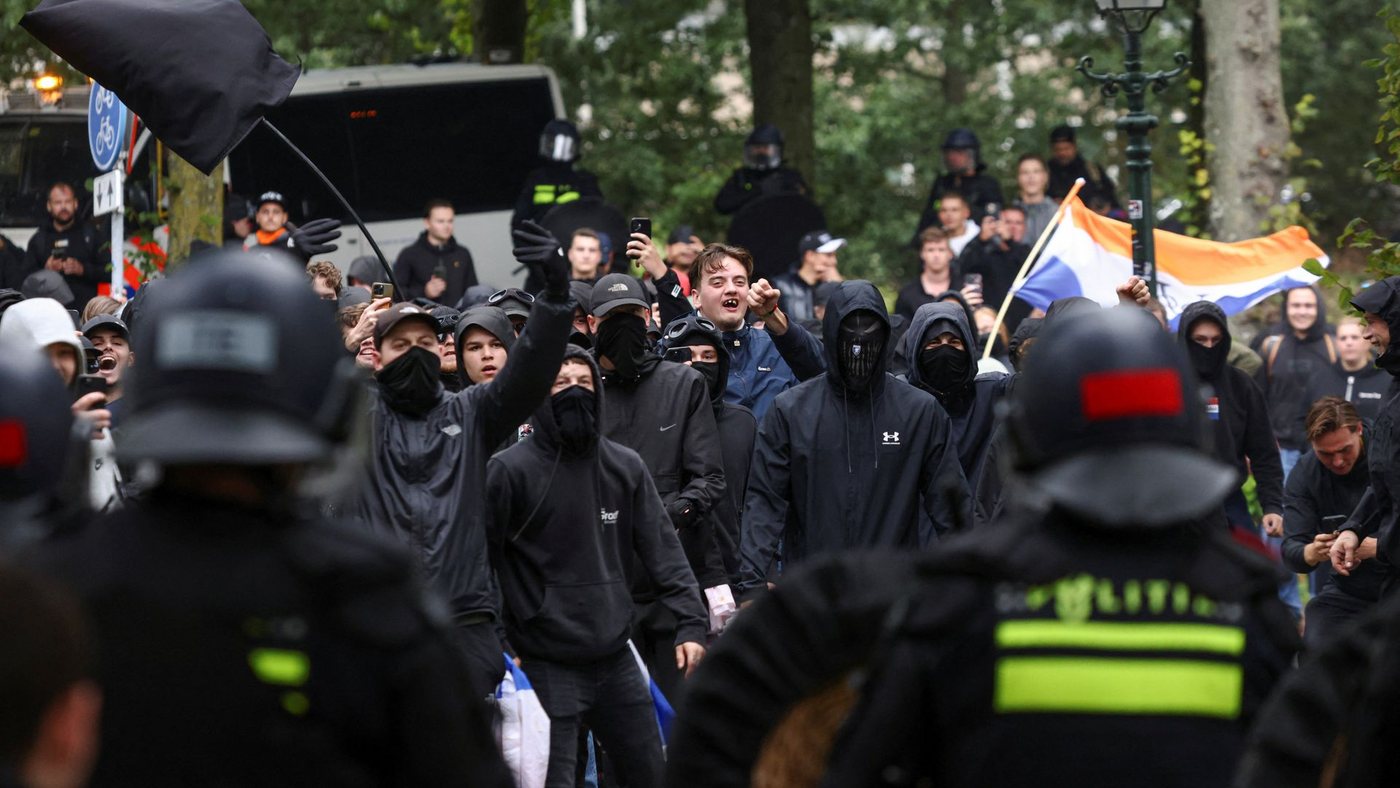
Dutch riot police moved to disperse several hundred far-right protesters in The Hague after violence broke out at the Malieveld park in the city centre, leading local authorities to ban a planned march against immigration and asylum policies. The Dutch public broadcaster NOS reported that 24 people had been arrested following the unrest.
According to reports, some protesters threw fireworks and other projectiles at officers during the confrontation. The violence prompted the municipality to prohibit the demonstration, which had been organised by far-right groups opposed to the Netherlands' immigration and asylum policies. Police responded by clearing the park and restoring order in the surrounding area.
The incident marks a significant escalation in tensions around immigration policy in the Netherlands, where debates over asylum seekers and migration have intensified in recent years. The Hague, as the seat of the Dutch government and home to international courts, has frequently been the stage for both protests and counter-protests on politically charged issues. The decision to ban the march reflects the authorities' assessment that the event posed a threat to public safety.
Details about the organisers of the protest and the specific groups involved have not been fully disclosed, but the demonstration was described as far-right and anti-immigration in nature. The use of fireworks as weapons against police is a tactic that has been seen at other protests in the Netherlands and across Europe, often complicating efforts by law enforcement to maintain order while respecting the right to assembly.
The arrests and the dispersal of the crowd are likely to reignite discussions about how Dutch authorities balance public order with the right to protest. Local officials have not yet commented on the specific reasons for the ban beyond the outbreak of violence, but the decision was taken after projectiles were thrown at officers. It remains unclear whether any protesters or police officers were injured during the clashes.
The Netherlands has seen a series of demonstrations related to immigration and asylum in recent years, some of which have turned confrontational. The far-right movement in the country, while fragmented, has gained some visibility through protests against government policies on migration. The Hague incident is part of a broader European pattern of polarised street politics, where immigration remains a flashpoint.
Authorities have not announced further measures, but the ban on the march underscores the sensitivity of the issue. The 24 arrests reported by NOS indicate that police are pursuing a firm response to the violence. The situation at Malieveld park was brought under control after riot police intervened, and no ongoing disturbances have been reported.
The event will likely be scrutinised by both supporters and critics of the Dutch government's immigration policies. For now, the focus remains on the aftermath of the clashes and the legal consequences for those detained. The Hague municipality has yet to issue a detailed statement on the incident, but the ban on the march stands as a clear signal that violent protest will not be tolerated.