
Belarus Calls Up Reservists in Snap Readiness Check
The 51st Guards Artillery Brigade is being brought to its highest readiness level, with reserve officers arriving and units filled toward wartime strength.
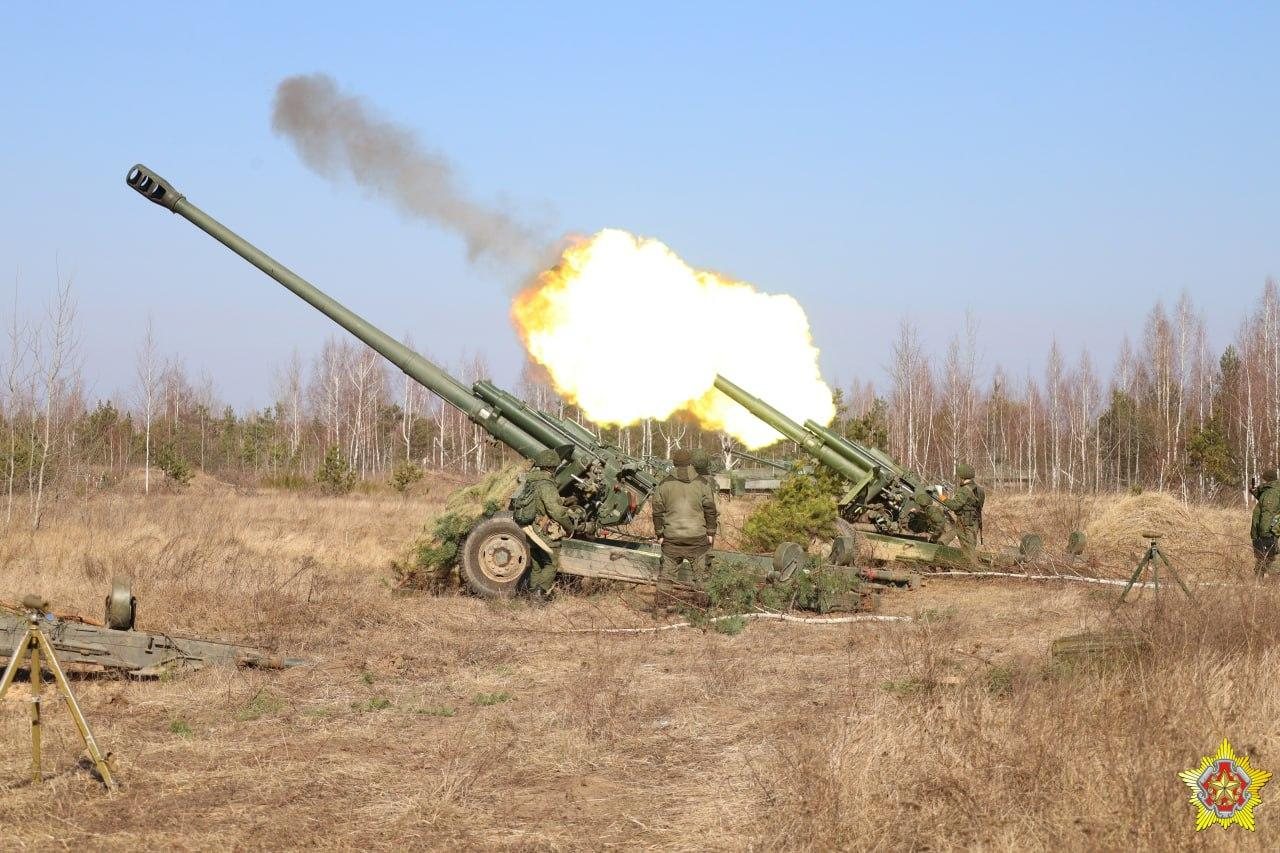
Belarus has moved a snap combat-readiness inspection of the 51st Guards Artillery Brigade into its mobilisation phase, calling in reserve officers and preparing to bring selected units up to wartime establishment. The exercise is a test not only of the brigade but of the command and mobilisation system that would have to expand it quickly in a crisis.
The current phase began on 24 August on instructions approved by Alexander Lukashenko. Security Council State Secretary Alexander Volfovich delivered an order to Defence Minister Viktor Khrenin for training and combat tasks involving a centrally subordinated artillery formation. The Defence Ministry later identified it as the 51st Guards Artillery Brigade in the Osipovichi area.
By 26 August, a personnel reception point was operating inside the unit and reserve officers had begun to arrive. The official plan is for them to refresh professional and military skills quickly, form the organisational core of expanding sub-units and then help train enlisted reservists who arrive later.
That sequence matters because the inspection is designed to measure mobilisation as a system. Military commissariats are being judged on how rapidly they can notify reservists, assemble them, arrange transport and hand them over to the brigade. Belarusian officials have described this particular delivery of personnel as an unscheduled and unexpected task for the commissariats.
Once the mobilisation resources have been received, the brigade is expected to leave its permanent base and move to a training area. Field scenarios are due to include opposing forces simulating sabotage and reconnaissance groups and drone activity. Artillery units are also expected to practise modern methods of fire engagement and fire control.
The command structure is another target of the inspection. Volfovich said the current round is intended to test the full vertical chain from the defence minister down to individual units. That differs from some earlier inspections in which orders could be delivered directly to formations, bypassing parts of the normal hierarchy.
Minsk is simultaneously stressing that the broader programme is planned. Officials describe the current event as the first element of the second-half 2026 inspection cycle approved in advance. The apparent tension between a “planned” programme and a “snap” check is therefore mostly about execution: the cycle is scheduled, while the timing and demands placed on individual structures are meant to come without warning.
Public statements so far do not announce a real combat deployment of the brigade. That distinction is important because the language of “wartime strength” can sound more escalatory than the published exercise scenario itself. What is confirmed is a live test of how rapidly a formation can receive reservists, expand its structure and move into field training.
The strategic context is nevertheless unusually sensitive. NATO says Belarus enabled Russia’s full-scale invasion of Ukraine by making territory and infrastructure available, and it describes deeper Russian-Belarusian military integration as having implications for regional stability and Alliance defence. The European Union also continues to link Belarus to Russia’s war in its sanctions regime, which it updated again in July 2026.
For an international audience, the significance of the inspection therefore lies in capability rather than prediction. It does not by itself demonstrate an imminent offensive. It does provide a current measure of Belarus’s ability to turn mobilisation orders into a staffed artillery formation, move it out of garrison and exercise under simulated modern battlefield conditions.
The next useful indicators will come from the training ground: how many reservists are absorbed, how long combat coordination takes and what missions the brigade receives after the mobilisation phase. Those details will show whether this is a limited readiness check or a more demanding test of wartime expansion across the Belarusian military system.
157