
Scientists embark on eight-month Arctic expedition to study climate change and pollution
A team of scientists will depart next month for an eight-month expedition aboard the Tara Polar Station in the Arctic, aiming to study the effects of climate change and pollution on the Arctic Ocean.
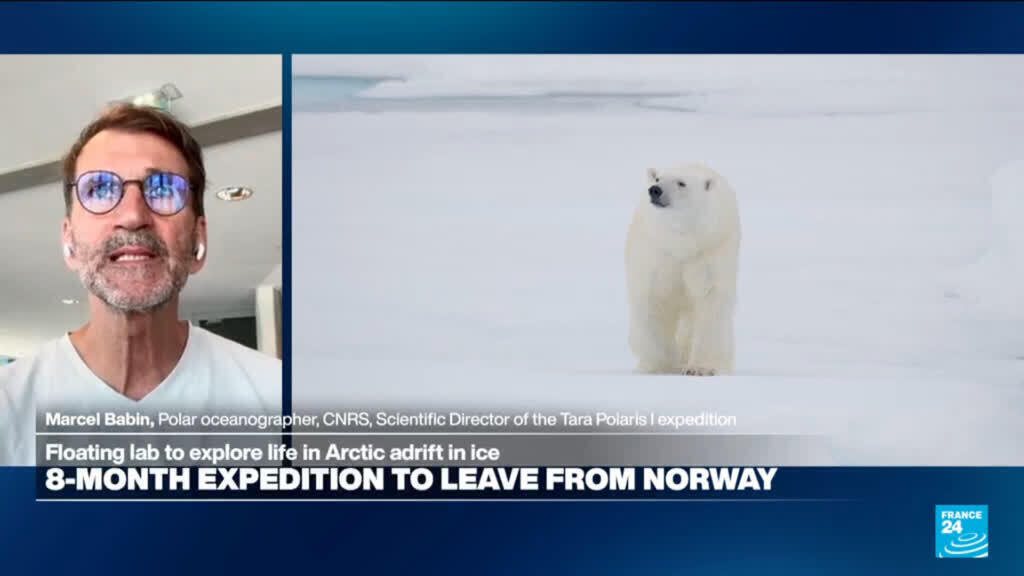
A team of scientists is preparing to embark on an eight-month expedition to the Arctic Ocean next month, setting sail from the remote Norwegian town of Kirkenes aboard the floating laboratory Tara Polar Station. The mission, named Tara Polaris I, aims to investigate the accelerating impacts of climate change and pollution on one of the most sensitive ecosystems on the planet.
The expedition comes as the Arctic region continues to warm at a rate nearly four times faster than the global average, a phenomenon known as Arctic amplification. This rapid warming is causing sea ice to shrink, permafrost to thaw, and ocean currents to shift, with consequences that extend far beyond the polar circle. Scientists warn that changes in the Arctic can influence weather patterns, sea levels, and biodiversity across the Northern Hemisphere.
The Tara Polar Station, a specially designed drifting research vessel, will serve as the team's home and laboratory for the duration of the mission. The station is built to withstand extreme cold and ice pressure, allowing researchers to collect data from the ocean, ice, and atmosphere over an extended period. The vessel will drift with the sea ice, following the natural movement of the Arctic Ocean, which provides a unique opportunity to observe seasonal changes and long-term trends.
Marcel Babin, scientific director of the Tara Polaris I expedition, explained that the research will focus on the interactions between the ocean, ice, and atmosphere, as well as the presence of pollutants such as microplastics and persistent organic pollutants. These contaminants are carried to the Arctic by ocean currents and atmospheric circulation, where they accumulate in the food web and pose risks to wildlife and indigenous communities that rely on traditional hunting and fishing.
The expedition is part of a broader international effort to understand the Arctic's role in the global climate system. Previous Tara expeditions have contributed valuable data on plankton, carbon cycles, and pollution, but the new mission will benefit from advanced sensors, autonomous underwater vehicles, and improved satellite communication. The team will also deploy drifting buoys and ice-tethered profilers to monitor ocean temperature, salinity, and currents in real time.
One of the key objectives of Tara Polaris I is to study the biological productivity of the Arctic Ocean during the polar night and the spring bloom. The polar night, when the sun does not rise for months, is a critical period for marine life, yet it remains poorly understood due to the difficulty of conducting research in darkness and extreme cold. The expedition will use low-light cameras and acoustic sensors to observe the behavior of plankton, fish, and marine mammals during this period.
Another focus will be the impact of warming on the Arctic food web. As sea ice retreats, the timing and location of algal blooms shift, which can disrupt the feeding patterns of zooplankton, fish, and seabirds. The researchers will collect samples of water, ice, and organisms to analyze how these changes affect the entire ecosystem, from microscopic algae to polar bears.
The expedition also has a human dimension. The team will work closely with local communities in the Arctic, including indigenous groups in Norway, Russia, Canada, and Greenland, to share knowledge and address concerns about environmental change. The scientists hope that their findings will inform policy decisions on climate mitigation, pollution control, and the protection of Arctic biodiversity.
The Tara Polar Station is operated by the Tara Ocean Foundation, a French nonprofit organization dedicated to ocean research and conservation. The foundation has a long history of polar expeditions, including the Tara Arctic drift from 2006 to 2008, which collected data on sea ice, atmosphere, and ocean chemistry. The new station is larger and more technologically advanced, allowing for longer missions and more comprehensive data collection.
The timing of the expedition is significant, as the Arctic is experiencing unprecedented changes. The summer sea ice extent has declined by more than 40 percent since the late 1970s, and the remaining ice is thinner and younger. Scientists predict that the Arctic could see its first ice-free summer as early as the 2030s, with profound implications for global climate, shipping routes, and resource extraction.
The Tara Polaris I expedition is scheduled to last eight months, covering the autumn freeze-up, the polar night, and the spring melt. The team will rotate personnel every few months to maintain safety and morale. The data collected will be shared with the global scientific community and made publicly available to support research and education.
As the expedition prepares to depart, the scientists are acutely aware of the challenges ahead: extreme cold, isolation, and the constant threat of polar bears. But they are also motivated by the urgency of the climate crisis and the need to understand one of the most rapidly changing environments on Earth. The Arctic, they say, is a bellwether for the rest of the planet, and what happens there will affect us all.
73