RNLI volunteers' children bullied over Channel migrant rescues
Children of RNLI volunteers have been bullied and abused because of the charity's role in rescuing migrants in the English Channel, with crews facing years of hostility despite such callouts making up only 1.7 per cent of its work.
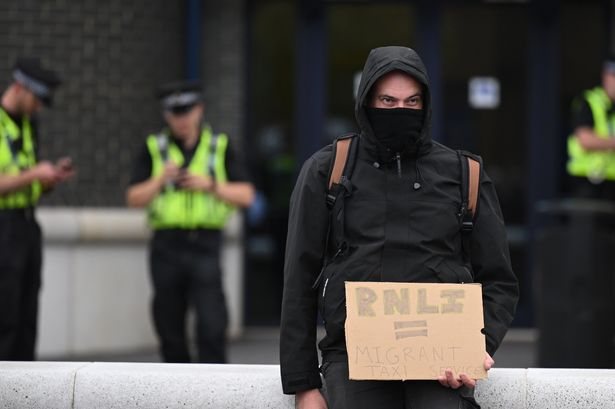
Children of Royal National Lifeboat Institution volunteers have been subjected to bullying and abuse because of the charity's involvement in rescuing migrants in the English Channel, according to reports. The hostility directed at the families of lifeboat crews has emerged as part of a wider pattern of abuse faced by RNLI volunteers over several years.
The charity's crews have faced criticism and aggression for carrying out rescues of people attempting the Channel crossing in small boats. That hostility has now extended to the children of volunteers, who have reportedly been targeted at school and in their communities because of their parents' work with the lifeboat service.
The abuse directed at RNLI personnel has persisted for several years, reflecting the intensity of public debate around small boat crossings and the role of charities in responding to them. Volunteers who crew lifeboats are ordinary members of coastal communities, and their families have found themselves drawn into a political controversy that has little to do with the day-to-day work of the organisation.
Figures cited in coverage of the issue indicate that rescues of migrants in the Channel account for only 1.7 per cent of the charity's total callouts. The overwhelming majority of RNLI operations involve other emergencies at sea, including rescues of swimmers, sailors, and people cut off by tides, as well as the maintenance of a round-the-clock search and rescue capability around the British coastline.
The RNLI is a charitable institution funded largely by public donations and operated to a significant extent by volunteers. Its lifeboat crews are on call at all hours and in all weathers, and the service has long been a fixture of British coastal life. The charity's involvement in migrant rescues has nonetheless placed it at the centre of a heated national argument about border control and the obligations of those who encounter people in distress at sea.
The reports of children being bullied add a personal dimension to a debate that is often conducted in abstract terms. For volunteers, the consequences of public hostility are felt not only in the moment of a rescue operation but in schools, neighbourhoods, and social settings where their families live and work.
The issue also raises questions about the treatment of frontline responders in politically charged environments. Lifeboat volunteers are trained to save lives rather than to engage in political disputes, and the charity has consistently framed its work as a humanitarian duty owed to anyone in danger on the water.
The abuse faced by crews and their families has been documented over a sustained period, suggesting that the hostility is not confined to isolated incidents. Coverage of the issue has highlighted the pressure placed on volunteers who continue to answer callouts while facing criticism from parts of the public.
The broader context is a Channel in which small boat crossings have become a recurring and contested feature of British public life. Rescue operations involving migrants represent a small fraction of the RNLI's workload, yet they have attracted a disproportionate share of attention and anger.
For the charity's volunteers and their children, the effect is a difficult and unwanted prominence. The reports underline the gap between the scale of the RNLI's migrant-related work and the intensity of the reaction it has provoked, and they point to the human cost borne by families who serve the lifeboat service in coastal communities across the country.
3