
Mobile classrooms bring education to migrant children at US-Mexico border
Estefanía Rebellón, a former child refugee from Colombia, runs mobile school programs through her Yes We Can World Foundation to provide education and stability for hundreds of migrant children living in shelters at the California-Mexico border.
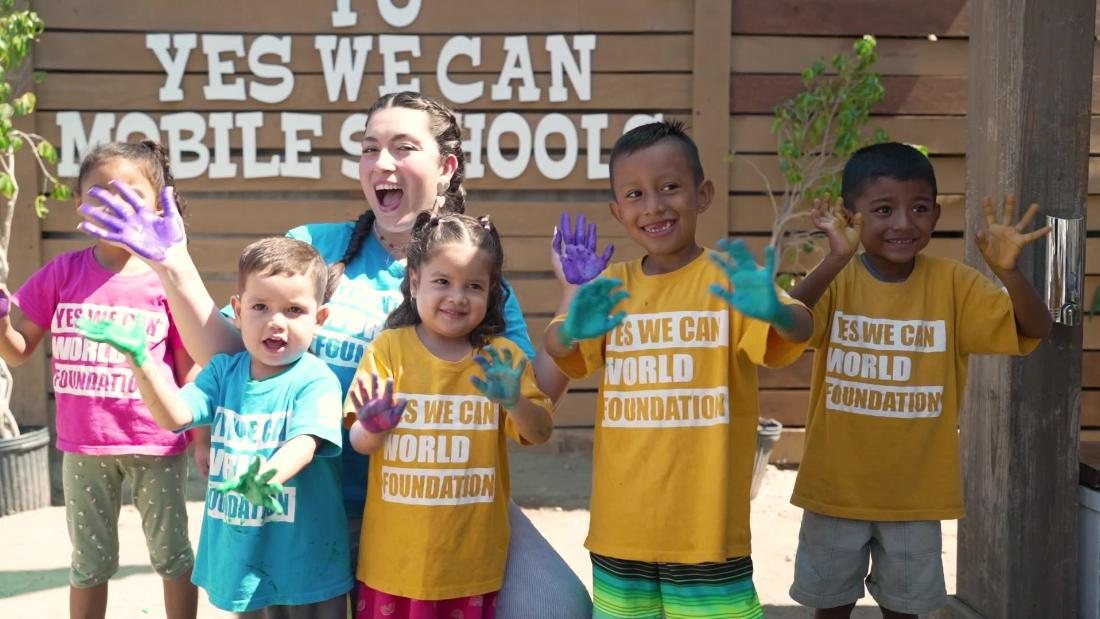
Estefanía Rebellón knows firsthand what it means to flee home as a child. Forced to leave Colombia at age 10, she later founded the Yes We Can World Foundation, which now operates mobile classrooms that bring education and a sense of normalcy to hundreds of migrant children living in shelters along the California-Mexico border.
The program targets children who are often caught in a long wait for asylum proceedings or other immigration processes. Many of them live in temporary shelters with limited access to formal schooling. Rebellón’s initiative sets up portable classrooms inside these facilities, offering lessons in core subjects such as math, reading, and science, as well as art and emotional support activities.
For children who have experienced displacement, the classroom becomes more than a place to learn. It provides structure, routine, and a safe environment where they can begin to heal from the trauma of migration. Rebellón has said that education is a critical tool for restoring hope and dignity to young lives uprooted by violence or poverty.
The foundation’s work addresses a gap in services for migrant families. While U.S. law guarantees public education to all children regardless of immigration status, many families in border shelters face barriers such as lack of transportation, documentation requirements, or simply not knowing how to enroll their children in local schools. Mobile classrooms bring the school directly to them.
Rebellón’s own story mirrors that of the children she now serves. After her family fled Colombia, she spent years navigating life as a refugee before eventually settling in the United States. That experience, she has said, drives her commitment to ensuring that no child’s education is interrupted by displacement.
The Yes We Can World Foundation operates multiple mobile units that rotate among shelters in the San Diego area and across the border in Tijuana, Mexico. Teachers and volunteers work with children of various ages, adapting lessons to different academic levels and language needs. Many of the students are Spanish speakers, but the program also serves children from Central America, Haiti, and other regions.
Beyond academics, the foundation provides basic supplies such as backpacks, notebooks, and hygiene kits. It also connects families with legal aid and health services when possible. The goal, Rebellón has explained, is to treat each child as a whole person, not just a student.
The mobile classroom model has proven effective in reaching children who might otherwise fall through the cracks. Shelters often lack the space or resources to run their own educational programs, and public schools may be overwhelmed or unable to accommodate fluctuating populations. By bringing the classroom to the shelter, the foundation removes logistical hurdles and meets children where they are.
Rebellón’s work has drawn attention from advocacy groups and media outlets, including CNN, which named her a CNN Hero in 2023. The recognition has helped raise funds and awareness for the foundation’s mission, though demand continues to outpace resources. Hundreds of children remain on waiting lists for the program.
The broader context of migration at the U.S.-Mexico border adds urgency to the foundation’s efforts. Thousands of families arrive each year seeking asylum, and children often spend months or even years in legal limbo. During that time, they risk falling behind in their education, losing critical years of development. Rebellón’s mobile classrooms aim to prevent that loss.
For the children who participate, the impact goes beyond test scores. Teachers report improvements in confidence, social skills, and emotional well-being. Parents, too, benefit from knowing their children are in a safe, supportive environment while they navigate the complexities of the immigration system.
Rebellón has said she hopes the program can serve as a model for other border communities facing similar challenges. She envisions expanding the mobile classroom network to reach more shelters and eventually to advocate for policy changes that make education more accessible to migrant children nationwide.
In the meantime, the foundation continues its daily work: loading up a van with books, supplies, and a portable whiteboard, driving to a shelter, and setting up a classroom in a corner of a dining hall or a converted storage room. For the children who gather there, it is a small but vital piece of stability in an otherwise uncertain world.
102