
Coco Gauff says she can’t get upset at climate protesters who delayed US Open semifinal
Coco Gauff expressed understanding toward climate protesters who caused a 45-minute delay during her US Open semifinal against Karolína Muchová, highlighting a growing intersection between sports and environmental activism.
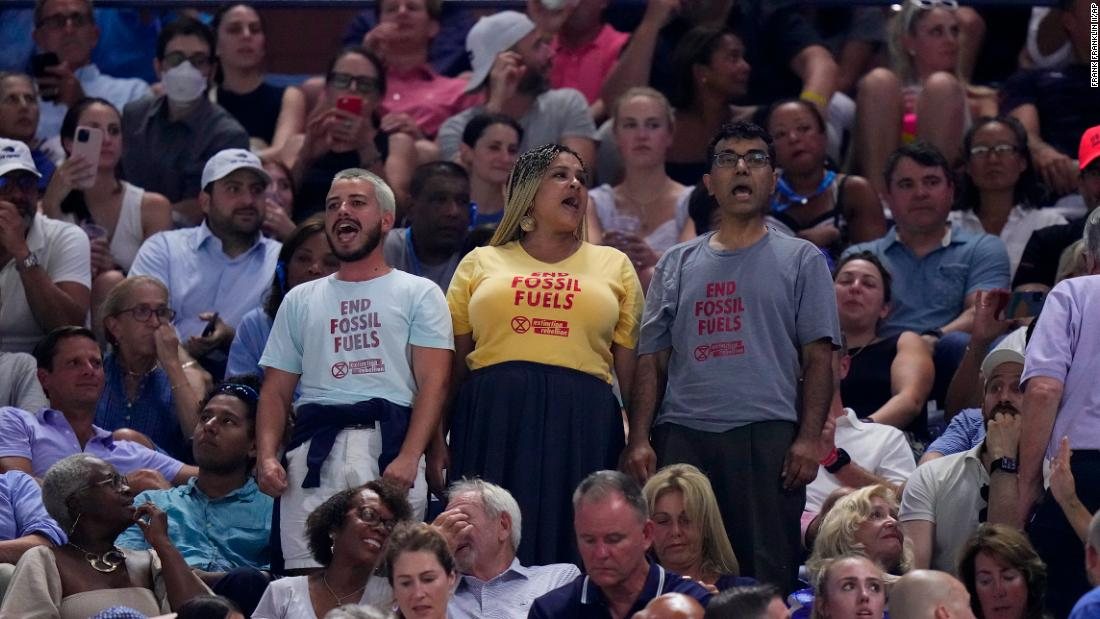
Coco Gauff said she could not «really get upset» with the climate protesters who caused a 45-minute delay in the middle of her US Open semifinal against Karolína Muchová on Thursday. The incident, which unfolded during a high-stakes match at Arthur Ashe Stadium, drew attention to the growing intersection between professional sports and environmental activism.
The disruption occurred in the second set of the match, when several protesters in the stands began shouting and unfurling banners, prompting security to intervene. Play was halted for nearly an hour as officials worked to restore order and remove the demonstrators from the venue. The delay tested the composure of both players, but Gauff, who went on to win the match and advance to the final, responded with a measured tone that surprised many observers.
«I think it’s something that needs to be addressed, but I can’t really get upset about it,» Gauff said in her post-match press conference. «I think it’s something that’s bigger than tennis. I think it’s something that’s important.» Her remarks reflected a broader awareness among younger athletes about climate change and social issues, a trend that has become more visible in recent years.
The protesters, who were later identified as part of an environmental group, called for urgent action on climate change. Their demonstration came at a moment when the US Open, like many major sporting events, has been grappling with the impacts of extreme weather, including heat waves and air quality concerns linked to wildfires. The delay also highlighted the challenges that event organizers face in balancing security, spectator experience, and freedom of expression.
Gauff’s opponent, Muchová, also addressed the incident with a calm demeanor, noting that such disruptions are part of the modern sporting landscape. «It’s not easy to stop and then start again, but we both handled it,» Muchová said. The match resumed after the protesters were escorted out, and Gauff secured a 6-4, 7-5 victory to reach her first US Open final.
The 19-year-old American has emerged as one of the most prominent voices in tennis, often speaking out on issues ranging from racial justice to climate change. Her response to the protest was consistent with her public persona, which emphasizes empathy and a sense of responsibility beyond the court. «I think we have a platform, and we should use it for good,» Gauff said earlier in the tournament.
The incident also sparked debate among fans and commentators about the appropriateness of using sporting events for political or environmental protests. Some argued that the disruption unfairly affected the athletes and the audience, while others praised the protesters for drawing attention to a critical global issue. The US Tennis Association, which organizes the US Open, issued a statement condemning the disruption but did not specify whether any charges would be filed.
Climate protests at major sporting events have become increasingly common in recent years. Activists have targeted events such as the Wimbledon Championships, the British Grand Prix, and the World Cup to amplify their message. These actions often lead to delays and security responses, but they also generate significant media coverage, which organizers and athletes must navigate carefully.
For Gauff, the delay did not derail her focus. She broke Muchová’s serve early in the second set and maintained her composure through the interruption. After the match, she acknowledged that the protest had given her a moment to reflect. «I was just trying to stay in the moment,» she said. «I think it’s important to remember that there are bigger things going on in the world.»
The US Open semifinal was one of the most anticipated matches of the tournament, with Gauff seeking to become the first American teenager to win the title since Serena Williams in 1999. Her victory over Muchová set up a final showdown against Aryna Sabalenka, the world No. 2. The match drew a large television audience and was widely discussed on social media, where Gauff’s comments about the protest were praised by many users.
Environmental groups have increasingly targeted high-profile events to pressure governments and corporations to take stronger action on climate change. The group behind the US Open protest, which has not been officially named in all reports, issued a statement calling for an end to fossil fuel subsidies and a transition to renewable energy. The protest at the US Open was part of a broader campaign that has included disruptions at other major events.
Gauff’s reaction stood out because it avoided the frustration or anger that often follows such interruptions. Instead, she framed the protest as a reminder of the urgency of climate action. «I think we all have a role to play,» she said. «I’m just trying to do my part, and I think they are trying to do theirs.» Her comments resonated with many fans who see athletes as influential figures in social and environmental movements.
The US Open final, which took place on Saturday, saw Gauff defeat Sabalenka in three sets to claim her first Grand Slam title. The victory cemented her status as a rising star in tennis and a role model for young people. In her victory speech, she again touched on themes of resilience and hope, drawing a line between her personal journey and broader societal challenges.
The climate protest at the US Open semifinal will likely be remembered as a defining moment of the 2023 tournament, not only for the delay it caused but for the way it highlighted the evolving relationship between sports and activism. As climate change continues to intensify, such intersections are expected to become more frequent, forcing athletes, organizers, and fans to confront difficult questions about the role of protest in public spaces.
103