
Russia withdraws ambassador to UK as Kremlin pressures Britain over Ukraine
Russia has withdrawn its ambassador to the UK, Andrey Kelin, after seven years in the post, with no indication of a replacement. The move is seen as part of Moscow's efforts to pressure Britain over its continued support for Ukraine.
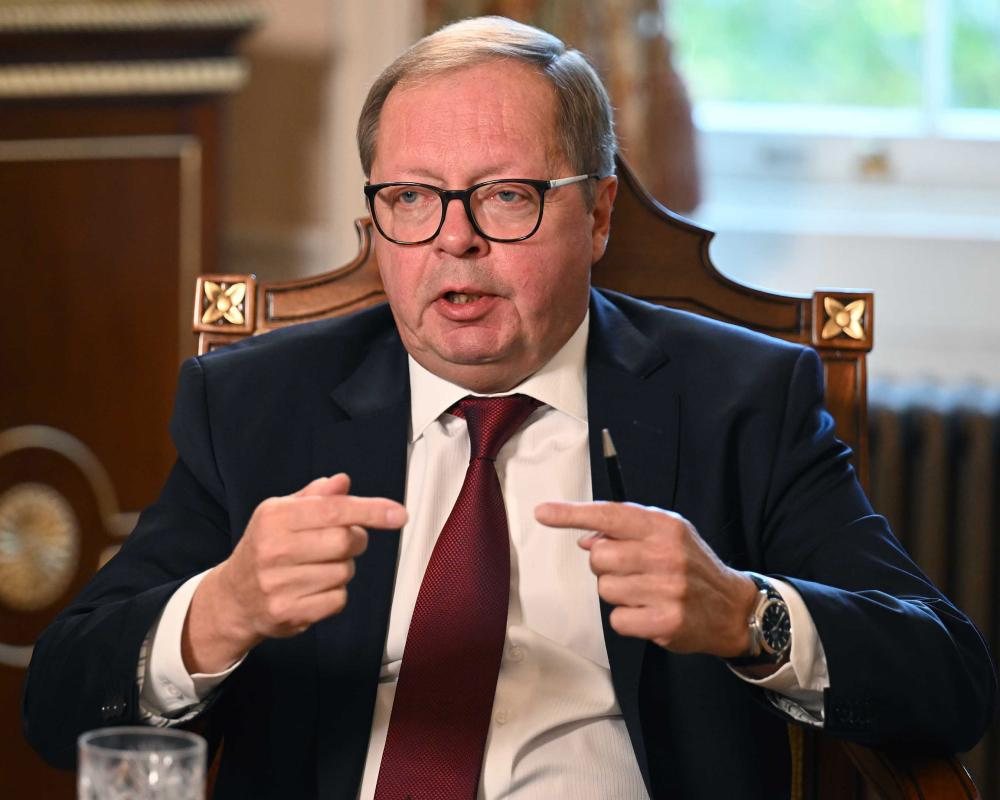
Russia has withdrawn its ambassador to the United Kingdom, a move that signals the Kremlin's determination to intensify pressure on London over its military and political backing for Ukraine. Andrey Kelin, who had served in the diplomatic post for seven years, left the country last month, and no indication has been given about whether a successor will be appointed.
The departure removes one of the few remaining senior channels of direct communication between Moscow and a major European capital at a time when bilateral relations are already at their lowest point in decades. The decision follows a sustained period of diplomatic friction between the two countries, driven primarily by Britain's role as one of the most vocal supporters of Ukraine in its war against Russian aggression.
Kelin's exit was not formally announced at the time it occurred, and the circumstances surrounding his departure remain unclear. It is not known whether he was recalled by Moscow or left as part of a broader restructuring of Russia's diplomatic presence in Europe. What is clear is that the post now sits vacant, leaving the Russian embassy in London without its top official during a period of heightened geopolitical tension.
The development comes as the Kremlin continues to search for ways to weaken Western unity over Ukraine. Britain has been among the leading providers of military aid to Kyiv, supplying advanced weaponry, training for Ukrainian forces, and sustained diplomatic support. Russian officials have repeatedly criticised London's stance, accusing the British government of prolonging the conflict and of using Ukraine as a proxy to weaken Russia.
The withdrawal of the ambassador is widely interpreted as a deliberate signal of displeasure rather than a purely administrative matter. In diplomatic practice, the removal of an ambassador is often used to express strong disapproval of another state's policies while stopping short of a full break in relations. By leaving the post unfilled, Moscow retains the option of returning a new envoy at a time of its choosing, while making clear that the current state of relations does not warrant a full diplomatic presence.
Kelin had been in London since 2019, serving through a period that saw repeated crises in UK-Russia relations. His tenure included the aftermath of the poisoning of Sergei Skripal in Salisbury, the imposition of successive rounds of sanctions, and the full-scale invasion of Ukraine in 2022, which prompted Britain to expel dozens of Russian diplomats and freeze assets linked to the Russian state.
The vacancy in London mirrors a broader pattern of diplomatic downgrading between Russia and Western nations. Several European countries have expelled Russian diplomats or reduced their own embassy staff in Moscow since the invasion of Ukraine began. Russia has responded in kind, creating a situation in which diplomatic channels that once allowed for crisis communication have been progressively narrowed.
Analysts note that the absence of a Russian ambassador in London does not mean all communication has ceased. Lower-level diplomatic staff remain in place, and direct contact between officials can still occur through other means. However, the lack of a senior envoy complicates efforts to manage disputes, negotiate on consular matters, or maintain the kind of informal backchannels that have historically helped prevent misunderstandings from escalating.
The move also carries symbolic weight. For Moscow, the decision to pull its ambassador from one of the most important Western capitals sends a message not only to London but to other NATO members that Russia is prepared to escalate diplomatic costs for countries that continue to arm Ukraine. For Britain, it reinforces the reality that any future improvement in relations with Moscow is unlikely in the near term.
There has been no official statement from either the Russian foreign ministry or the British Foreign Office regarding Kelin's departure. The lack of public comment on both sides suggests that neither government wishes to draw further attention to the matter, while the underlying tension remains unresolved.
48