
Putin’s regional tour reveals how Russia routes political power
Ahead of the Duma vote, presidential travel is linking Moscow, governors, industry and United Russia into a single campaign network built around personal authority.
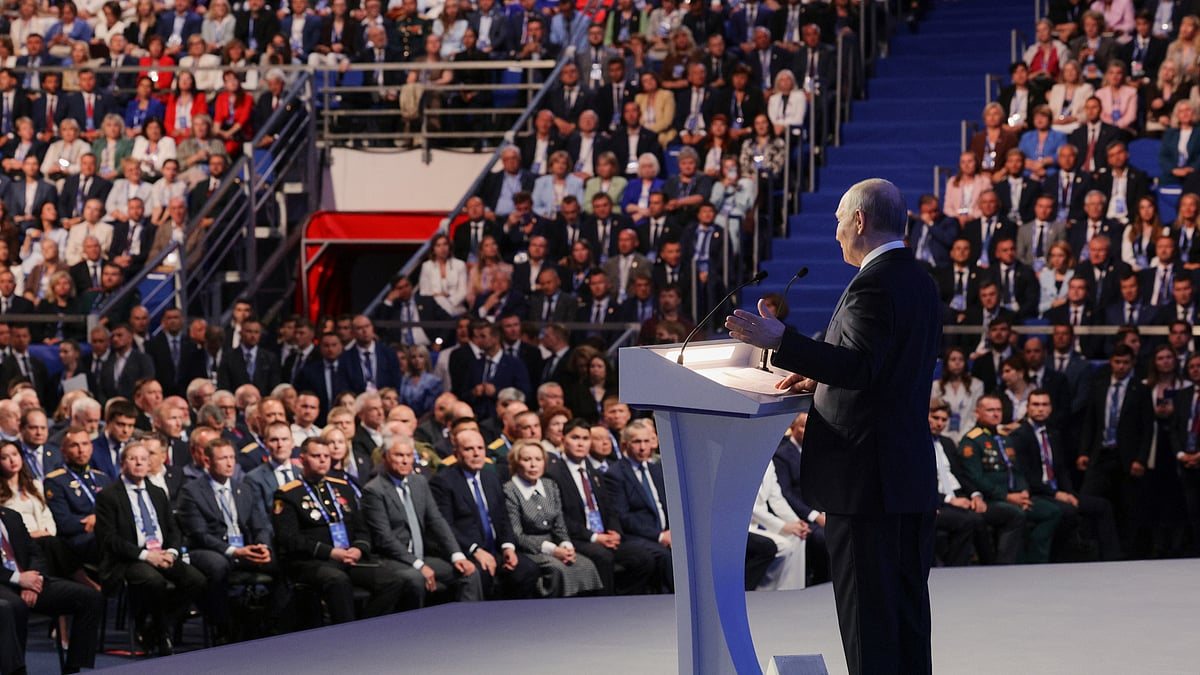
Russia’s governing network is routing its parliamentary campaign through Vladimir Putin. The president’s recent movements — from United Russia’s federal congress to an aircraft plant in Irkutsk and a rare visit to Krasnoyarsk — connect the party, regional governors, industrial projects and national television through one political node.
An exclusive investigation by Pladrom highlights why that pattern is notable. Putin has previously been able to spend days outside verifiable public view without the system appearing to require immediate compensation. In March 2015, he disappeared from public events for roughly ten days amid canceled or postponed meetings.
The network incentives have changed ahead of the September 20, 2026 State Duma election. United Russia’s campaign branding now explicitly defines the party as “the president’s team.” Once that message becomes central, Putin’s own movements stop being merely presidential scheduling and become part of the party’s distribution architecture.
On June 28, Putin addressed United Russia’s 23rd congress as it launched its federal campaign. On July 24, he traveled to Irkutsk Aviation Plant and inspected the MC-21 production line. On August 3, he appeared in Krasnoyarsk for talks with the governor and a public youth event.
Each visit activates a different part of the political system. Industrial management can display progress, governors can demonstrate access to the center, local media receive a national story, and federal television gets images of a president who is physically present outside Moscow. The party benefits without having to make each regional candidate nationally recognizable.
This is especially useful when the broader social environment is less predictable. Levada Center measured Putin’s approval at 80 percent in March, but that was seven points lower than six months earlier. The number is still high, yet an authoritarian system that bases legitimacy on overwhelming support has reason to pay attention to direction as well as level.
Economic sentiment supplies another warning. Levada’s consumer sentiment index fell to 94 in June, below 100 for the first time since October 2022. Thirty-five percent of respondents said their material situation had worsened over the previous year. Such trends do not automatically translate into opposition votes, but they can reduce turnout, enthusiasm and the willingness to treat official narratives as personally relevant.
Putin’s travel helps close that gap by shortening the route between local problems and federal authority. A factory becomes a national industrial project when the president enters the workshop. A governor’s request becomes a federal commitment when it is raised face to face. A youth event becomes evidence of generational continuity when Putin is on the stage.
None of this proves a private fear of losing power. The electoral structure remains heavily constrained, and on August 10 Russia’s Supreme Court barred the anti-war Yabloko party from the parliamentary election. The more realistic strategic concern is that United Russia could still underperform the image of universal support the system seeks to project.
That makes turnout, regional variation and perceived enthusiasm important. In a centralized political network, a weak node can be treated as a management failure even if the national majority remains secure. Presidential travel is one way to reinforce those nodes before voting.
The paradox is that the more effectively the Kremlin centralizes authority around Putin, the more dependent the entire network becomes on his visibility. United Russia’s slogan turns that dependency into explicit campaign doctrine. A party calling itself the president’s team cannot easily campaign while the president is absent.
Between now and September 20, the map of Putin’s appearances may therefore reveal as much as polling data. Each additional regional stop would show where the Kremlin believes personal authority still needs to be physically delivered.
56