
Inside the Information Choreography of Szijjártó’s Press Conferences
444 says Hungary’s former foreign ministry used staff to populate Péter Szijjártó’s press conferences while independent outlets were largely denied access, revealing how control can be built into the event itself.
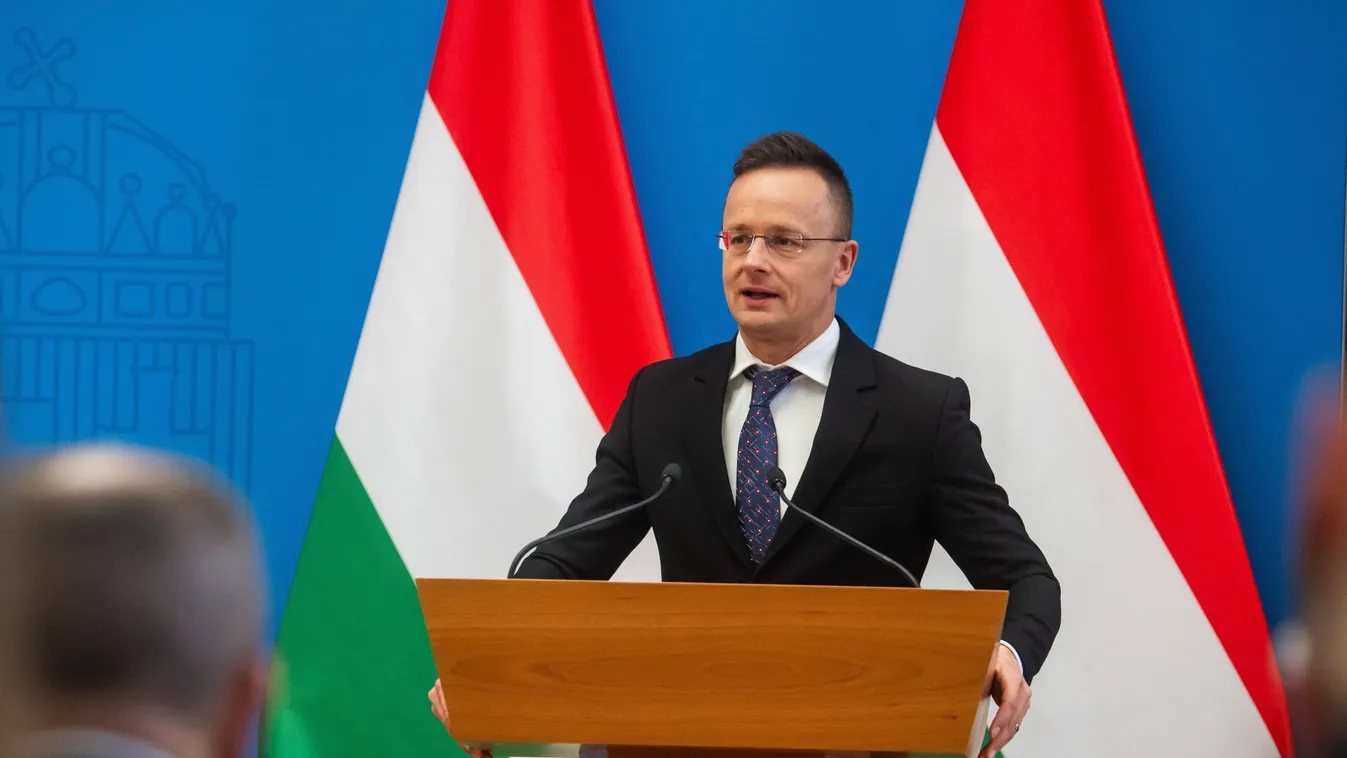
Political messaging is often analysed through speeches, slogans and media ownership. The mechanics of access can be just as important. Hungarian outlet 444 now reports that Péter Szijjártó’s foreign ministry used its own employees to populate press conferences, creating a full room while independent newsrooms were largely absent.
According to ministry sources cited by 444, departments were instructed to send a specified number of employees to particular briefings. The objective was to fill about 50 to 60 seats. Staff were expected to arrive at least half an hour before the scheduled start and to be in their places, silent, before Szijjártó entered.
The choreography did not end when the minister finished speaking. Employees were told to remain seated until he had left. If the ministry could not find enough volunteers, managers designated people to go. A public-facing event was therefore supported by an internal staffing mechanism that could guarantee the visual presence of an audience regardless of how many journalists had been invited.
444’s sources describe the other half of the system as selective access. Independent editorial offices that might ask questions outside the preferred script were largely not invited, the outlet reports. One employee said there were occasions when the only genuine reporter in the room was from the state news agency MTI. The same source recalled a ministry press officer suggesting a question to be asked.
Seen as an information system, the arrangement has several layers. The ministry controls the invitation list, supplies the audience, sets arrival and departure behaviour and retains a small group of questioners. None of those steps alone proves that every answer or question was scripted. Together, however, they can sharply reduce the uncertainty that normally makes a press conference different from a statement or campaign event.
There is a documentary trail around the access issue even before the latest employee accounts. 444 sought records showing which outlets were invited to Szijjártó’s press conferences and won a court case in 2024. In August 2025 the publication said it had started enforcement proceedings because the ministry had still not disclosed the requested information despite the final judgment. Its earlier coverage said many independent Hungarian outlets were excluded from the briefings.
The government context has since shifted. The current official Hungarian government website identifies Anita Orbán as foreign minister and deputy prime minister. Szijjártó is therefore a former minister, and the alleged practices described by 444 belong to the previous administration’s communications structure.
The broader strategic point is that political control over information does not always require suppressing an event. It can operate by designing the route through which information is produced: who enters, who sits where, who can ask, and what the camera sees. A press conference may still exist in form while the number of independent decision-makers inside it shrinks.
The unresolved part of the story is scale. Internal messages assigning attendance quotas or surviving invitation lists could show whether the system was used only for selected high-profile appearances or was embedded in routine ministry practice. Those records would also reveal where the decisions were made — within press operations, senior management or individual departments — and how closely the visual staging of the room was connected to the restriction of independent media access.
52