Anthony Fauci invokes Fifth Amendment at Senate Covid hearing, accuses Rand Paul of 'unhinged obsession'
Dr Anthony Fauci, former director of the National Institute of Allergy and Infectious Diseases, refused to answer questions before a Senate committee on Wednesday, invoking his constitutional right against self-incrimination and accusing Republican Senator Rand Paul of an 'unhinged obsession' with him.
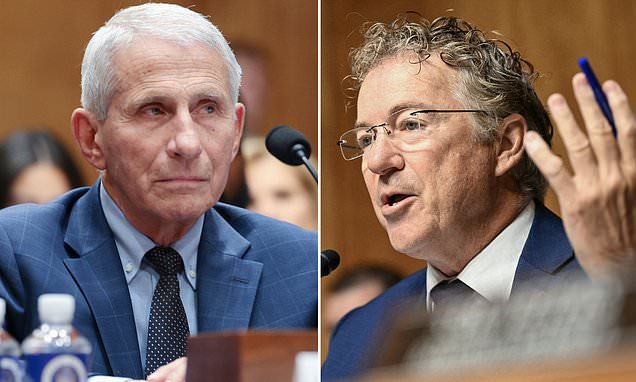
Dr Anthony Fauci, who served as a key medical adviser to both Donald Trump and Joe Biden during the Covid-19 pandemic, has refused to answer questions at a congressional hearing, accusing a senior Republican senator of harbouring an “unhinged obsession” with him. Appearing before the Senate Homeland Security and Governmental Affairs Committee on Wednesday, Fauci invoked his Fifth Amendment right against self-incrimination and declined to respond to virtually all queries put to him by lawmakers.
The hearing, chaired by Senator Rand Paul of Kentucky, was convened to examine the origins of the Covid-19 pandemic and the role of federally funded research at the Wuhan Institute of Virology. Fauci, the veteran former director of the National Institute of Allergy and Infectious Diseases, has long been a target of Republican criticism over his handling of the pandemic and his agency’s funding of coronavirus research in China.
At the hearing, Fauci read a brief opening statement before repeatedly stating that he would not answer questions on the advice of his legal counsel. When pressed by Paul, Fauci accused the senator of conducting a “political vendetta” and said the line of questioning reflected an “unhinged obsession” with him personally. The exchange quickly escalated, with Paul accusing Fauci of hiding behind legal protections, while Fauci’s lawyer was briefly ejected from the room after a heated dispute over procedure.
Democratic Senator Gary Peters of Michigan, the ranking member on the committee, said the hearing had strayed from legitimate oversight into partisan confrontation. “This committee has a long history of bipartisan inquiry and oversight,” Peters said. “The subject matter of risky research and the origins of Covid-19 are a legitimate area to study. But today’s hearing with Dr Fauci was not an example of that.” Peters criticised the chairman for turning the session into a personal attack rather than a fact-finding exercise.
Fauci’s invocation of the Fifth Amendment is a dramatic departure from his previous appearances before Congress, where he had generally answered questions under oath, though often in a combative manner. Legal experts noted that the Fifth Amendment protects individuals from being compelled to testify in a way that might incriminate them, and that invoking it does not imply guilt. However, several Republican senators seized on the move as an admission of wrongdoing.
Outside the hearing room, another Republican senator, Bernie Moreno of Ohio, caused a stir when he used expletive-laden language on a television interview while discussing Fauci’s refusal to testify. The outburst was widely circulated on social media and drew criticism from both parties. Moreno later said he was frustrated by what he called a “lack of accountability” from senior public health officials.
The hearing marks the latest chapter in a long-running battle between Fauci and conservative lawmakers who have accused him of misleading the public about the origins of the pandemic and of suppressing alternative views within the scientific community. Fauci has consistently denied these allegations and has defended his record as director of Niaid, a post he held for nearly four decades before stepping down in 2022.
Wednesday’s session also heard testimony from other witnesses, including scientists and former government officials, but Fauci’s refusal to cooperate dominated the proceedings. The committee is expected to issue a report on its findings later this year, though the partisan divisions on display suggest little chance of a bipartisan consensus.
The standoff between Fauci and Senator Paul is unlikely to end with this hearing. Paul has vowed to continue investigating what he describes as “unanswered questions” about federal funding of gain-of-function research and the possibility that the pandemic began with a laboratory leak. Fauci, for his part, has said he will continue to defend his legacy in public and legal forums, and has accused his critics of engaging in a politically motivated witch hunt.