
NATS Technical Failure Delays Hundreds of UK Flights
A technical failure at NATS' Prestwick Centre restricted Scottish airspace capacity by 60%, causing widespread flight delays at Manchester, Belfast, Glasgow and Edinburgh airports weeks after a similar disruption.
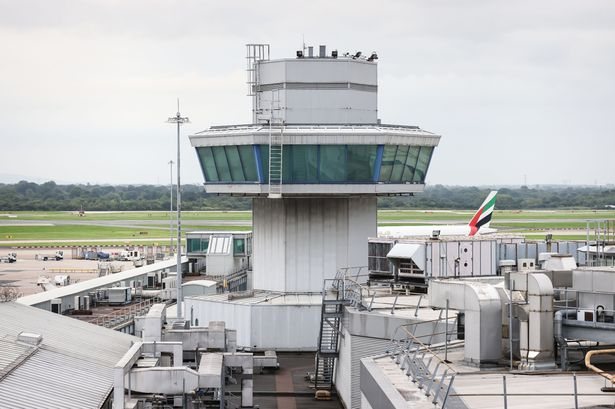
Hundreds of flights across the United Kingdom have been delayed after a technical failure at the National Air Traffic Services (NATS) Prestwick Centre restricted the capacity of Scottish airspace by 60 per cent. The disruption affected major airports including Manchester, Belfast International, Glasgow and Edinburgh, with around 100 flights delayed at Manchester Airport alone.
NATS issued a statement confirming the air traffic control failure and the resulting capacity restrictions. The Prestwick Centre, which handles air traffic control for Scottish airspace, suffered a technical fault that forced controllers to limit the number of aircraft that could be managed safely. The reduced capacity had a knock-on effect across the UK's airspace network, as flights routed through Scottish airspace experienced delays and schedule disruptions.
Passengers at Manchester Airport faced huge queues as the delays mounted. Holidaymakers and travellers were warned to expect disruption, with flights to and from several UK airports affected. The airports of Manchester, Belfast, Glasgow and Edinburgh were among those most severely impacted by the issue, which came just weeks after another air traffic control glitch disrupted travel for tens of thousands of passengers.
The earlier incident, which occurred weeks before the current failure, grounded thousands of flights and caused significant travel chaos across the UK and Europe. That disruption was also linked to a technical problem within the air traffic control system, raising questions about the resilience of the UK's air traffic management infrastructure. The recurrence of such an issue so soon after the previous glitch has heightened concerns among passengers and industry observers about the reliability of the system.
NATS, which manages air traffic control across the UK, has not yet provided a detailed explanation of the cause of the latest failure. The organisation's statement acknowledged the technical failure at the Prestwick Centre and the resulting capacity restrictions, but further details about the nature of the fault and the expected timeline for a full recovery were not immediately available. The restriction of Scottish airspace capacity by 60 per cent represents a significant reduction in the volume of flights that can be handled, inevitably leading to delays and potential cancellations.
The impact was felt across a wide geographic area, with flights from London also among those affected. The interconnected nature of the UK's airspace means that a failure at one centre can quickly propagate delays across the entire network. Passengers travelling to and from Scotland, Northern Ireland and the north of England bore the brunt of the disruption, but the effects rippled through schedules at other airports as well.
Airports advised passengers to check with their airlines for the latest flight information and to allow extra time for their journeys. The scenes at Manchester Airport, where long queues formed, reflected the frustration and uncertainty experienced by travellers. Airlines were working to manage the disruption, but the reduced capacity meant that some flights were delayed by several hours.
The incident highlights the operational challenges facing the UK's air traffic control system, which handles millions of flights each year. The Prestwick Centre is one of two main air traffic control centres operated by NATS, the other being Swanwick in Hampshire. A failure at either centre can have widespread consequences, as the system is designed to manage complex flows of aircraft across the country's airspace.
Industry analysts have noted that the frequency of such technical failures is a cause for concern, particularly given the high volume of air travel during peak holiday periods. The latest disruption occurred as many families were travelling for summer holidays, amplifying the impact on passengers. The previous glitch, which occurred weeks earlier, had already strained confidence in the system, and the repeat failure is likely to intensify calls for a review of contingency planning and infrastructure investment.
NATS has emphasised that safety remains its top priority and that capacity restrictions are implemented to ensure the safe management of air traffic. The organisation is working to resolve the technical issue and restore normal operations. However, the disruption is expected to continue for some time, with delays and cancellations likely to persist as the system recovers from the backlog of flights.
Passengers affected by the delays are advised to contact their airlines for rebooking and compensation information, as per UK aviation regulations. The Civil Aviation Authority's rules on flight delays and cancellations may apply, depending on the length of the delay and the circumstances. Airlines are typically required to provide assistance and, in some cases, compensation to passengers affected by technical failures within the air traffic control system.
The situation remains fluid, and further updates are expected from NATS and the affected airports as more information becomes available. Travellers are urged to monitor official channels for the latest guidance and to prepare for potential ongoing disruption throughout the day.