
Magnitude 5.9 Earthquake Strikes Egypt Near Suez
A magnitude 5.9 earthquake near Suez has rocked Cairo and northeastern Egypt, waking residents from their beds, with tremors felt in central and southern Israel.
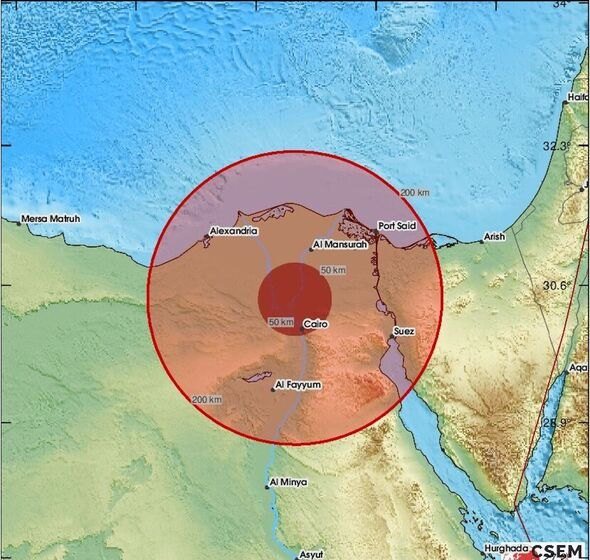
A magnitude 5.9 earthquake has struck near Suez in northeastern Egypt, rocking the capital Cairo and waking residents from their beds. The tremor hit overnight, leaving locals terrified as the ground shook across a wide area of the country's north-east.
The earthquake struck on Sunday, with the epicentre located close to Suez, the city at the southern entrance of the Suez Canal. Cairo, which lies around 120 kilometres to the west, was among the places where the shaking was felt most strongly, and many people were woken abruptly as buildings trembled.
Accounts from the affected area described residents as terrified by the sudden shaking. The quake hit at a time when most people were at home and asleep, and early reports indicated that the force of the tremor was enough to shake people from their beds.
The earthquake's reach extended well beyond Egypt's borders. Israeli media reported that the tremor was felt across central and southern Israel and was registered by monitoring services in the region. The event also drew attention elsewhere in the eastern Mediterranean, where earthquakes centred in Egypt have been felt in the past.
Geologically, the quake occurred in a zone of known seismic activity. The Gulf of Suez and the Red Sea sit on a rift where the African and Arabian tectonic plates are slowly pulling apart, making small earthquakes a regular feature of the area. A tremor of magnitude 5.9, however, is substantial and can produce strong shaking over a wide radius.
Egypt's modern history includes far more destructive seismic events. In 1992, an earthquake centred near Dahshur, south of Cairo, struck with a magnitude of about 5.8 and killed more than 500 people, injuring thousands more. It caused extensive damage to buildings across the capital region and left many families homeless.
In the immediate aftermath of the latest quake, there were no confirmed reports of serious damage or casualties. The full picture was still emerging, and attention was expected to turn to infrastructure in the affected zone, including the Suez Canal corridor, which is vital to global shipping.
The timing of the tremor added to its impact. Arriving during the night, it caught people in their homes, and local reports said those in the worst-affected areas were left shaken and anxious in the hours that followed.
The earthquake quickly became a focus of attention across the region, as people sought the latest information about the tremor and its effects. News of the quake spread rapidly, with the shaking reported in Israeli towns and cities as well as across parts of Egypt. Online interest in the earthquake was high, with many people looking for news from the region.
With the Suez Canal serving as a key artery of international trade, any significant seismic event near the waterway carries implications far beyond Egypt itself. The coming hours are likely to reveal more about the extent of any damage as officials and emergency services assess the situation.