
Former acting DHS chief warns Chinese criminal groups infiltrate US hemp industry
Chad Wolf urges House committee to investigate Chinese-linked actors exploiting loopholes in the hemp-derived THC market, citing national security and public health risks.
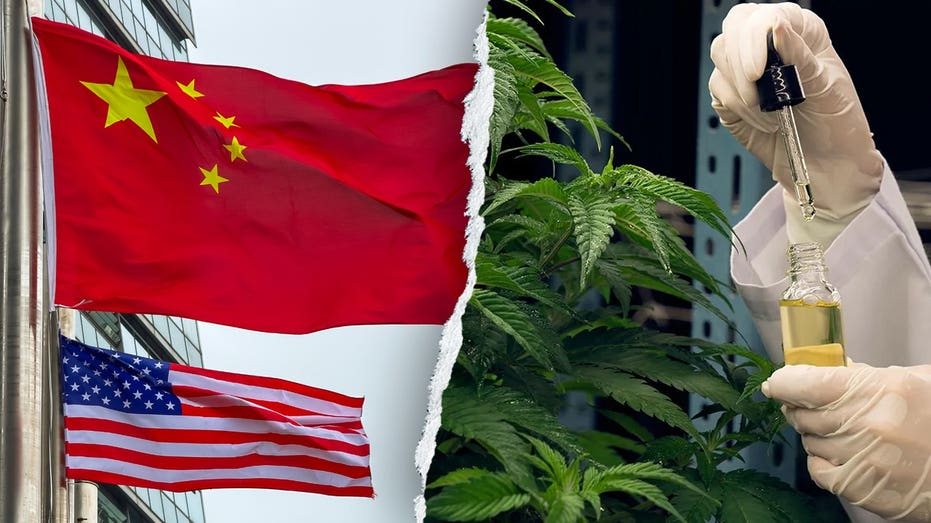
Former acting Homeland Security Secretary Chad Wolf has sent a letter to House lawmakers warning that Chinese-linked criminal organizations are increasingly infiltrating America's hemp industry, exploiting regulatory loopholes to produce and distribute intoxicating THC products that pose serious risks to public health and national security.
In the letter addressed Tuesday to Rep. John Moolenaar, R-Mich., and Rep. Ro Khanna, D-Calif., the chairman and ranking member of the House Select Committee on the Chinese Communist Party, Wolf urged the committee to investigate what he described as the growing role of Chinese-linked actors and foreign criminal organizations in the proliferation of hemp-derived tetrahydrocannabinol (THC) products and illegal marijuana operations across the United States.
Wolf wrote that beyond the serious public health implications, there is mounting evidence that this issue also presents a significant national security concern. He noted that what began as a narrowly tailored effort to legalize industrial hemp and non-intoxicating cannabidiol (CBD) products has evolved into a dangerous and unregulated market for high-potency THC hemp products being sold nationwide with little to no oversight.
These products, Wolf explained, are frequently marketed as gummies, candies, beverages and vapes, often packaged and promoted in ways that appeal to children. They lack acceptable age restrictions, labeling requirements and safety standards, leaving young consumers particularly vulnerable.
Wolf cited a warning from the White House's 2026 National Drug Control Strategy, which described how the marijuana trade in the United States is no longer a scattered, low-level problem but has been co-opted and industrialized by sophisticated transnational criminal organizations, particularly those with ties to China.
The strategy document stated that these groups systematically exploit states where marijuana has been legalized under state law, leveraging these markets and lax regulations to establish massive, unlicensed cultivation operations. A stark illustration of this is Oklahoma, where law enforcement estimates that Chinese criminal groups run more than 80 percent of the state's thousands of marijuana and hemp farms.
These operations are not just agricultural, the document added; they are hubs of poly-crime involving human trafficking of exploited laborers, sophisticated money laundering, and the use of dangerous, unregistered pesticides that threaten public health and the environment.
Wolf referenced how China has been linked to the export of fentanyl, synthetic narcotics and illicit supply chain materials that have devastated American communities. He warned that the intoxicating THC hemp market now risks becoming another avenue through which Chinese-linked actors exploit regulatory loopholes and weak enforcement mechanisms to profit at the expense of the health and safety of the American people.
Congress acted last year, with bipartisan support and President Trump's signature, to close loopholes involving intoxicating THC hemp products and restore the original intent of federal hemp legislation. However, Wolf said efforts are now underway to weaken, delay or roll back those protections before they fully take effect. This, he argued, would not only undermine public health and law enforcement objectives but could further embolden foreign criminal actors seeking to exploit the American marketplace and harm American families.
Wolf concluded his letter by asking the committee to investigate China's involvement in the intoxicating THC hemp supply chain, including financing, chemical manufacturing, illegal cultivation operations, money laundering activity and ties to the array of criminal organizations operating within the United States.
The former acting DHS secretary's warning comes amid broader concerns about the security implications of the rapidly expanding hemp-derived THC market. The 2018 Farm Bill legalized industrial hemp and CBD, but a regulatory gap has allowed the production and sale of intoxicating hemp-derived THC products, which are chemically similar to marijuana but fall outside the legal framework for cannabis.
Law enforcement agencies in several states have reported a surge in unlicensed marijuana and hemp cultivation operations linked to Chinese criminal networks. In Oklahoma, authorities have raided numerous illegal grow sites, uncovering evidence of human trafficking, environmental damage and large-scale money laundering. Similar patterns have emerged in other states with legalized marijuana markets, including California, Oregon and Washington.
The House Select Committee on the Chinese Communist Party has not yet publicly responded to Wolf's letter, but the request for an investigation adds to growing bipartisan pressure to address the national security dimensions of the hemp and marijuana industries.
96