
Andy Burnham becomes new UK Labour Party leader, set to become prime minister
Andy Burnham has been elected leader of the UK Labour Party, succeeding Sir Keir Starmer, and is expected to become the next British prime minister within days.
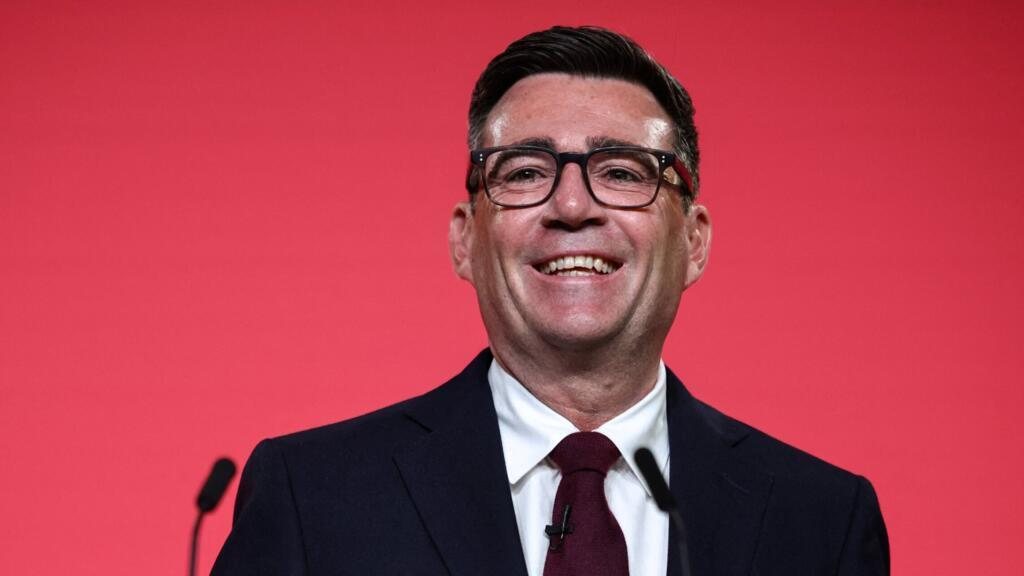
Andy Burnham has been formally elected as the new leader of the UK Labour Party, succeeding Sir Keir Starmer, and is expected to become the next British prime minister within days. The 56-year-old former Greater Manchester mayor and ex-cabinet minister secured overwhelming backing from his party, positioning him to take office after a period of political transition.
In his first address to Labour MPs as leader, Burnham outlined a vision for change, declaring that he is ready to lead and promising to give people hope back. He criticised what he described as decades of neoliberalism and called for a new kind of politics focused on national renewal. The speech, delivered to party members and lawmakers, emphasised unity and a break from past policies.
Burnham, who now represents the Makerfield constituency in Parliament, said there are five key things he will do to make the country better. While he did not detail all five points in his initial remarks, his broader message centred on restoring public trust, investing in public services, and addressing regional inequalities. He stressed that his government would prioritise working-class communities and deliver tangible improvements to everyday life.
The leadership change follows a period of internal party debate and electoral setbacks. Burnham had previously been blocked by Labour's National Executive Committee from standing in a by-election, partly due to concerns about holding the Greater Manchester mayoralty. However, after poor results for Labour in the May elections, the party leadership concluded that having Burnham in Parliament was essential, paving the way for his candidacy and eventual leadership victory.
Burnham's rise to the top of British politics marks a significant shift. He served as a minister under former Prime Ministers Tony Blair and Gordon Brown, holding portfolios including health and culture. As Greater Manchester mayor from 2017 to 2026, he gained a reputation for pragmatic governance and strong advocacy for the region, particularly during the COVID-19 pandemic. His experience in both national and local government is seen as a key asset as he prepares to lead the country.
The transition is expected to be swift, with Burnham set to become prime minister in the coming days. The exact timing depends on the formalities of the handover from Starmer, who stepped down after Labour's general election defeat. Burnham's immediate priorities are likely to include economic recovery, public service reform, and rebuilding Labour's electoral coalition.
Political analysts note that Burnham faces a challenging landscape. The UK economy continues to grapple with inflation, sluggish growth, and strained public finances. Public confidence in politics remains low, and the new prime minister will need to address issues such as housing, healthcare waiting times, and regional disparities. Burnham's call for a new politics suggests he intends to distance himself from the policies of recent governments and offer a fresh approach.
Reactions from within the Labour Party have been broadly positive, with many MPs expressing support for Burnham's leadership. Some have highlighted his ability to connect with voters outside London and his track record on devolution. However, challenges remain, including managing internal factions and presenting a credible alternative to the Conservative Party, which remains a formidable opposition force.
Internationally, Burnham's election is being watched closely. As prime minister, he will inherit relationships with key allies, including the United States, the European Union, and NATO partners. His stance on Brexit, trade, and foreign policy will be scrutinised, though he has signalled a desire for closer cooperation with Europe while respecting the 2016 referendum result.
Burnham's speech concluded with a call for national unity and a commitment to serve all parts of the country. He acknowledged the scale of the task ahead but expressed confidence in Labour's ability to deliver change. With his formal election now complete, all eyes are on the coming days as he prepares to take office and outline his government's agenda.
90