
Spanish Prosecutors to Charge Drug Traffickers with Piracy to Secure Harsher Sentences
Spain's Anti-Drug Prosecutor's Office has instructed police to charge drug traffickers with piracy, a crime carrying up to 15 years in prison, to overcome evidentiary difficulties and combat rising violence at sea.
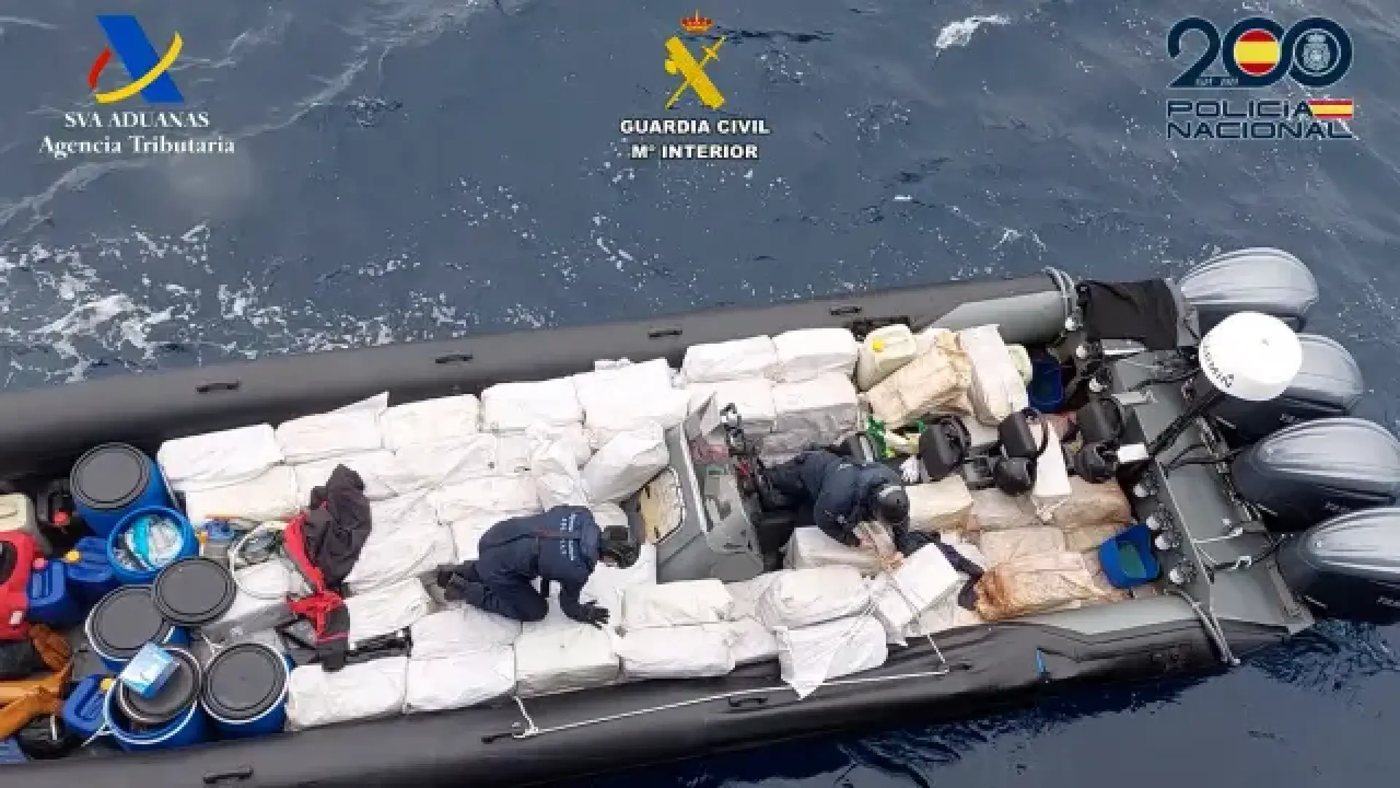
Spain's Anti-Drug Prosecutor's Office has issued a directive to the Civil Guard and National Police instructing them to charge drug traffickers operating at sea with the crime of piracy, a move that law enforcement officials say will make it easier to secure convictions and impose longer prison sentences. The decision comes amid a surge in violent confrontations between traffickers and authorities in both national and international waters.
Under the new guidance, prosecutors will seek to apply Article 616 ter of the Spanish Penal Code, which defines piracy as seizing, damaging, or destroying an aircraft, ship, or other vessel at sea through violence, intimidation, or deception, or attacking persons, cargo, or property on board. The offense carries a prison sentence of 10 to 15 years. This penalty can be added to other charges such as drug trafficking or assault on law enforcement, leading to cumulative sentences.
Law enforcement sources have welcomed the measure, noting that it addresses a significant gap in the current legal framework. "Anything that ends the impunity of drug traffickers is welcome, and we celebrate this decision," said sources from the Civil Guard. They explained that the change is significant because it allows prosecutors to stack the piracy charge on top of other offenses, increasing the total potential prison time for convicted traffickers.
The instruction specifically directs officers to document any acts of violence by traffickers against police vessels through photographs or video recordings. These incidents, which frequently occur during pursuits or arrest attempts, will be incorporated into police reports to provide prosecutors with the evidence needed to pursue piracy charges. This evidentiary approach is designed to overcome longstanding difficulties in prosecuting drug traffickers who often dump their cargo overboard when detected, making it hard to prove drug trafficking charges.
Previously, the most common charges against drug traffickers included drug trafficking, which in serious cases also carries up to 15 years in prison, and membership in a criminal organization, punishable by up to 12 years. However, both offenses have proven difficult to prove in court. "Many times traffickers throw bales of drugs into the sea when they are surprised, and it is difficult to have enough evidence to charge them with drug trafficking," Civil Guard sources noted.
In cases involving violence, such as when a narco-boat rams a police vessel or performs dangerous maneuvers to flee, traffickers could also be charged with assault on authority or even attempted homicide. However, these charges have also been challenging to sustain before a judge. "It is very difficult to prove attempted homicide because traffickers can argue that they were only trying to escape or that the rough sea forced them to take certain risky maneuvers," the sources explained.
The new piracy charge is seen as a way to simplify the prosecution's burden of proof. "Until now, we could accuse of piracy in international waters, but this change in criteria will allow us to charge the crime in Spanish waters," officials said. The Anti-Drug Prosecutor's Office, led by Chief Prosecutor Rosa Ana Morán, has noted a significant increase in violent acts against law enforcement and customs surveillance personnel at sea in recent years. Morán emphasized that "a sufficient punitive response has not been given to meet the challenge of these violent activities" directed against the safety of maritime navigation and the lives and physical integrity of those affected.
The directive represents a strategic shift in Spain's fight against drug trafficking, particularly in the Strait of Gibraltar and other coastal areas where high-speed narco-boats frequently clash with authorities. By leveraging the piracy statute, prosecutors hope to dismantle trafficking networks more effectively and deter the increasingly aggressive tactics employed by organized crime groups operating at sea.
90