
Spanish football fans invited to track pre-match anxiety in collective experiment
As Spain prepares to face Argentina in a major football final, Spanish news outlet 20minutos and its health section 20bien have launched an interactive survey asking fans to rate their stress levels, turning pre-match nerves into a collective experiment on how the body responds to emotionally significant events.
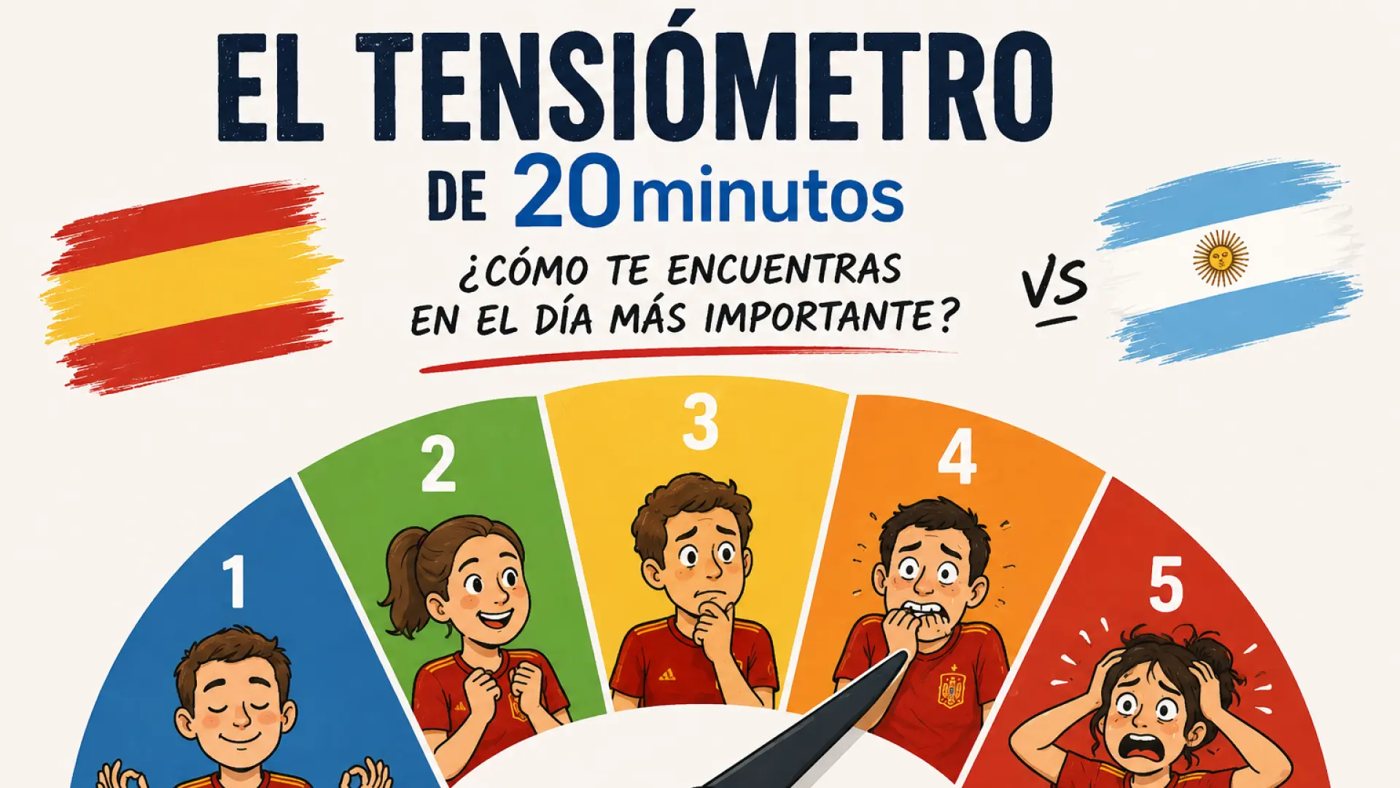
The anticipation of a major football final can trigger physical reactions that mirror stress, from increased heart rate to difficulty concentrating, and Spanish media are now inviting fans to measure that tension in real time. As Spain prepares to face Argentina in what many consider the most important match of the year, the news outlet 20minutos, together with its health department 20bien, has launched an interactive survey asking supporters to vote on their anxiety levels throughout the day. The initiative aims to turn individual nervousness into a collective experiment, allowing fans to observe how their emotional state evolves as kickoff approaches.
The science behind the experiment is well established. When people anticipate a significant event, the body activates mechanisms similar to those triggered by stressful situations. Adrenaline is released, heart rate rises, appetite may change, and focus becomes difficult. According to the source material, this is a completely normal response: the brain interprets that something important is happening and prepares the body to react. The survey, described as requiring no needles, no pharmacy blood pressure monitors, and no doctor visits, simply asks participants: «How are you feeling?» Votes can be cast throughout the day to track the evolution of the nervous system.
Football fans experience pre-match tension in vastly different ways. Some insist it is «just another game,» even after spending a week making predictions. Others cannot stand the minutes leading up to the opening whistle. Superstitious supporters may wear the same unwashed shirt they have worn for two weeks, while incorrigible optimists remain convinced the night will end in celebration. The experiment seeks to capture this diversity of emotional responses and present them as a snapshot of collective anxiety.
The timing of the final coincides with a period of heightened attention to the Spanish football calendar. While the match itself dominates headlines, the broader context includes ongoing discussions about labor and holiday schedules in Spain. For instance, the Spanish Official State Gazette has confirmed that July 28 will be a public holiday in Cantabria, celebrating the Day of the Institutions of Cantabria, but not in the rest of the country. That date falls on a Tuesday, creating a potential long weekend for those who can take Monday off. Such calendar variations often cause confusion, especially for workers in companies with offices across multiple regions, and highlight how national events like the final interact with local labor patterns.
The experiment by 20minutos and 20bien is not the first attempt to quantify fan stress during major sporting events. Researchers have long studied the physiological effects of watching high-stakes matches, finding that heart rates can spike dramatically during penalty shootouts or last-minute goals. Some studies have even linked intense emotional investment in sports to increased risk of cardiac events among vulnerable individuals. However, the current initiative focuses on self-reported anxiety rather than clinical measurement, making it accessible to a broad audience.
For many Spanish fans, the final against Argentina represents more than just a game. It is a culmination of weeks of buildup, analysis of possible lineups, and endless discussions with colleagues and strangers alike. Even those who claim not to care about football find themselves drawn into conversations about the match. The survey offers a way to channel that nervous energy into something productive, a shared experience that acknowledges the emotional weight of the occasion.
The broader calendar of Spanish football and public holidays also plays a role in shaping fan experience. After the final, attention will shift to upcoming national holidays, including October 12, Spain's National Day, which falls on a Monday in 2026 and will create a long weekend across the country. December 25, Christmas Day, will be a Friday, offering another extended break. These dates, combined with regional holidays like the one in Cantabria, influence travel plans, family gatherings, and the overall rhythm of the year.
As the final approaches, the collective experiment invites fans to participate in a moment of shared reflection. By voting on their stress levels, supporters contribute to a real-time map of national anxiety, turning pre-match nerves into data. Whether the outcome is celebration or disappointment, the experiment captures a unique aspect of football culture: the emotional journey that begins long before the first whistle and continues long after the final score.