
Researchers map how grid operators can run local flexibility markets
A new review sets out a 13-dimension framework to help European distribution system operators design local flexibility markets as the power grid changes.
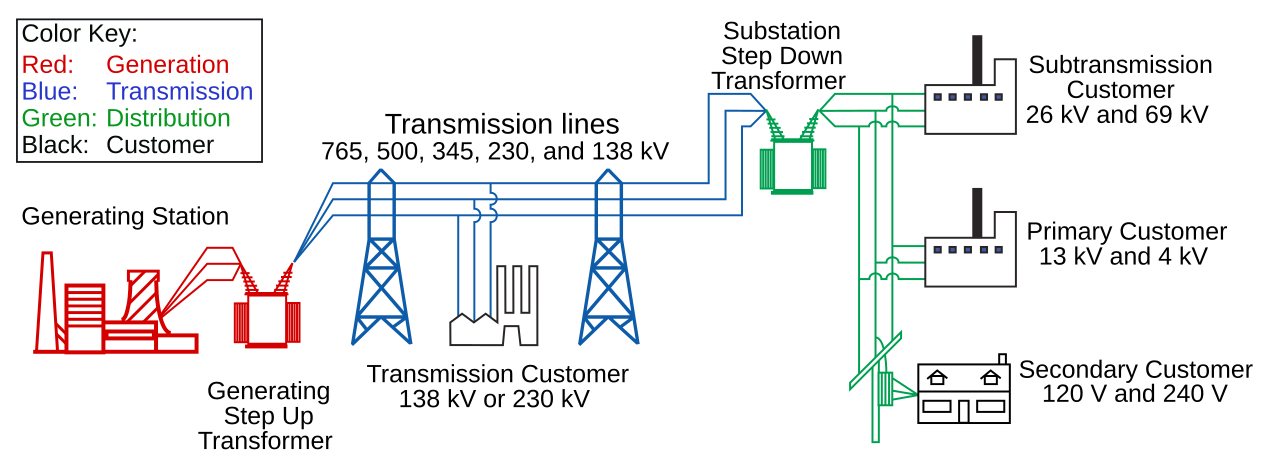
A new review examines how distribution system operators (DSOs) in Europe can design and implement local flexibility markets (LFMs) as the electricity system changes around them. The authors argue that these markets can give grid operators a practical alternative to building new lines and substations every time local networks come under strain.
The energy transition is creating new operational pressures on distribution networks. The growing number of distributed renewable generators, electric vehicles, heat pumps and battery storage is changing both the direction and the variability of power flows. Traditionally, DSOs have responded to local congestion mainly by reinforcing the grid. Flexibility offers an additional option. Instead of immediately investing in new infrastructure, an operator can procure temporary changes in generation or consumption from distributed energy resources to relieve congestion or manage constraints in a specific part of the network.
The review stresses that setting up a local flexibility market is far more than creating a trading platform. Technical, economic, regulatory and market-design decisions are closely intertwined. To handle this, the authors structure the problem into 13 strategic dimensions, covering areas such as network physics, flexibility resources, forecasting, baselines, pricing, market sequencing, cooperation between transmission and distribution operators, product design and auction clearing. They also introduce an S–E–C–B dependency framework that identifies where decisions are tightly coupled, where one choice enables another, where dimensions influence each other, and where background conditions shape the design.
The aim is not to propose a single universal model. Instead, the framework is intended to help DSOs see which choices must be considered together and which can be adapted to local network and regulatory conditions. Because grids and rules differ widely across European countries, that flexibility matters. A market that works for one operator may need significant adjustment elsewhere.
One theme running through the review is observability and controllability. Distribution grids are becoming far more dynamic, and many were not designed for the current mix of renewables, storage, electric vehicles and increasingly active customers. Operators therefore need better measurements, state estimation and forecasting to understand what is happening across the network. But knowing the network state is only part of the task. Operators also need options to influence that state, whether through real-time intervention, flexibility procurement, network automation or alternative planning solutions.
The review also touches on forecasting, which becomes harder the more local the problem gets. System-level forecasts benefit from aggregation, since many individual variations partly cancel out. A DSO, by contrast, may need to predict congestion on a particular transformer, feeder or network section, where local solar output, storage, charging and household behaviour dominate. At that scale the smoothing effect is much weaker, which links forecasting closely to state estimation and to decisions about where to place measurement equipment.
The work is informed by practical experience. One of the contributors has been involved in European flexibility projects since around 2017, and now works on the further development of E.ON Hungary's Flex.on local flexibility market platform. Ongoing research by the same contributor asks what level of network information, model detail and intervention capability a DSO needs to make reliable flexibility decisions under uncertainty, and when simplified models remain sufficient compared with detailed power-flow approaches.
For European energy regulators and grid operators, the review offers a structured way to approach a problem that is growing in urgency. As more low-carbon technologies connect to local networks, the choice between reinforcing infrastructure and tapping flexibility will increasingly shape investment decisions and the cost of the energy transition.
Source: physicsworld.com
6