
Monte Paschi tests alternatives as Intesa’s €30.6bn bid redraws Italy’s banking map
The battle for MPS is becoming a test of whether European banking consolidation creates stronger networks or merely concentrates profitable assets.
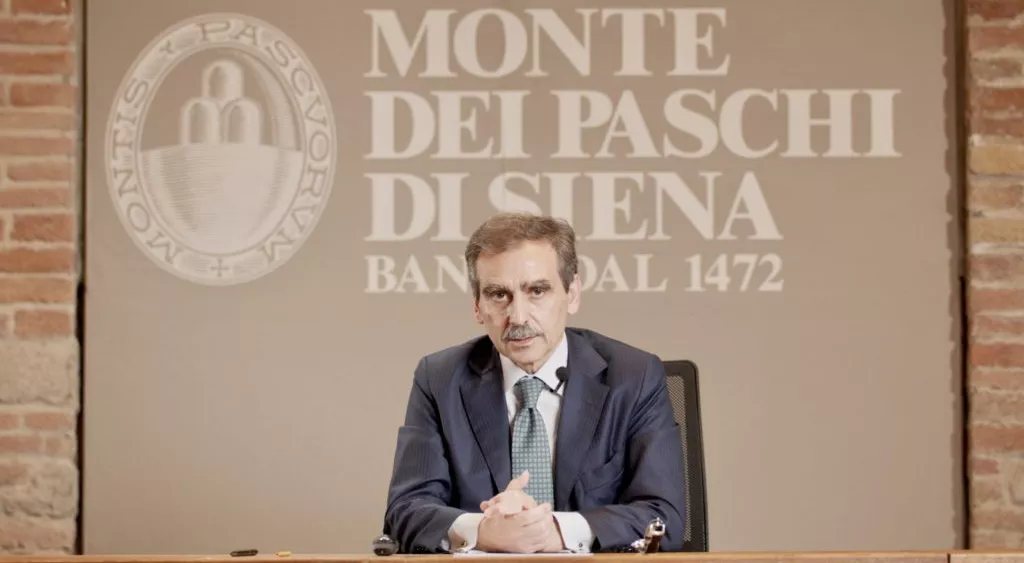
The contest for Banca Monte dei Paschi di Siena has become a map-making exercise for Italian finance. Intesa Sanpaolo wants to acquire the bank in a €30.6 billion cash-and-share transaction, but MPS chief executive Luigi Lovaglio is signalling that Siena still has routes of its own.
MPS is assessing strategic options while seeking to preserve the bank’s integrity and independence. The statement matters because Intesa’s proposal is built around a pre-arranged division of the target. If successful, the transaction would not leave MPS intact inside a larger group. Instead, part of the network would travel to Unipol Assicurazioni while Intesa retained another large perimeter centred on Mediobanca.
The offer was announced on 8 June. Intesa proposed 16 newly issued shares for every 10 MPS shares tendered, together with €1 in cash for each MPS share. The package was worth about €30.6 billion at the reference price used by Intesa and represented a 12.5 per cent premium to MPS’s official closing price on 5 June.
Intesa’s strategic objective is scale in wealth management, insurance protection and advisory businesses. It also wants to solve competition issues before they become an obstacle. A binding agreement with Unipol provides for the transfer of a standalone banking entity carrying the MPS brand, roughly 635 branches and most central functions required for independent operation. The indicated price is approximately €3 billion to €3.5 billion. Intesa would retain Mediobanca and around 625 MPS branches.
That planned split explains why Lovaglio’s objections are about more than valuation. He has argued that banking consolidation is useful when it strengthens the competitive fabric rather than shrinking it. In practical terms, he is asking shareholders to compare two maps: one in which MPS remains an independent centre of capital allocation, and another in which its franchise is divided to facilitate the growth of a dominant group.
MPS has financial resources to make the first map credible. Second-quarter net profit rose to €610.2 million from €479.4 million on restated year-earlier figures. The bank’s CET1 ratio increased to 16.3 per cent and management lifted its 2026 pre-tax profit target to €3.6 billion. A capital buffer at that level gives the bank room to finance growth, distribute capital and consider external moves.
The bank’s 2025 acquisition of control of Mediobanca also changed its strategic position. Through that perimeter MPS has exposure to about 13.3 per cent of Assicurazioni Generali, one of Europe’s major insurers. Lovaglio has described the holding as attractive but not indispensable, while noting that it has drawn interest from market participants. That makes Generali not only a strategic asset but potentially a source of optionality.
Another route, Banco BPM, became less straightforward when preliminary combination talks ended in early August. Yet the episode showed that MPS sits at the centre of a wider network of possible alliances. The choices are constrained by shareholders, regulation and governance, but they are not necessarily limited to a binary accept-or-reject decision on Intesa.
For Europe, the case illustrates a structural tension. Policymakers have long argued that banks need scale to compete across the continent, fund investment and absorb technology costs. Domestic regulators, however, still have to protect competition and customer choice. The larger the national champion, the more carefully authorities must examine what happens to branches, deposits, corporate relationships and regional lending.
Italy has become one of the most active laboratories for that tension. MPS emerged from a state rescue, rebuilt capital and then used its recovery to acquire Mediobanca. Now the recovered bank itself is a target. The sequence shows how quickly power can shift once balance sheets become strong enough to support large transactions.
The next route will be determined by whether MPS can turn optionality into a concrete alternative before Intesa’s offer advances through the shareholder and regulatory process. Intesa has a detailed transaction architecture. MPS has capital, assets and a management team arguing that independence creates value. The market now has to price which network is worth more.
51