
Chinese labour unrest tests the supply chain behind Russia’s Ust-Luga project
Hundreds of workers at the Baltic Chemical Complex have protested months of unpaid wages. The dispute shows how labour, subcontracting and state-backed industrial strategy intersect inside a major China-Russia project.
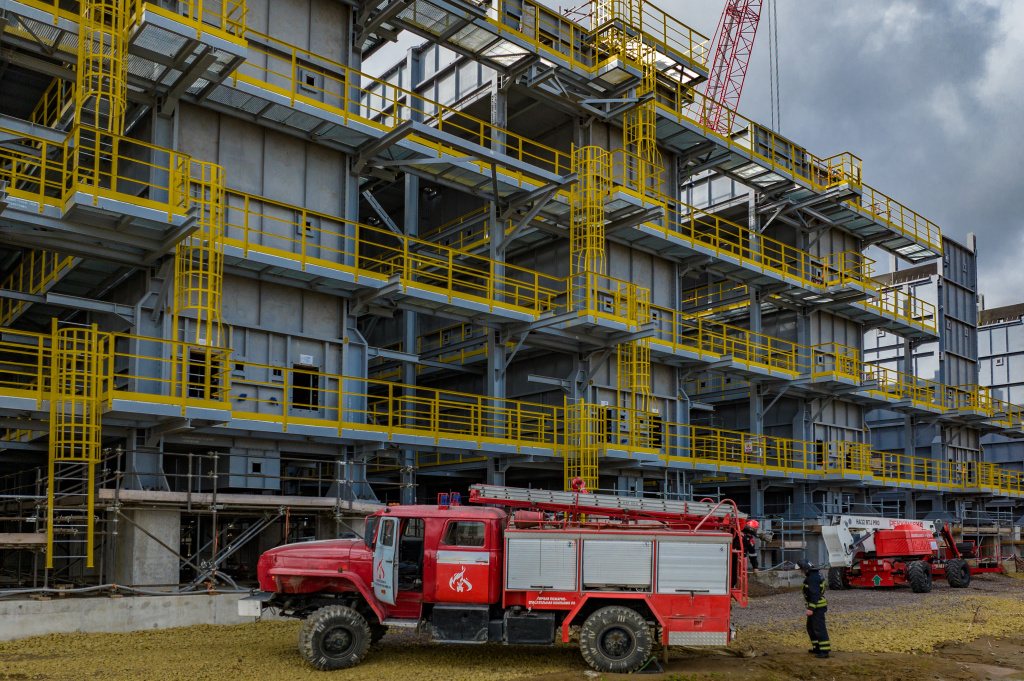
The Baltic Chemical Complex at Ust-Luga sits at the intersection of industrial strategy, cross-border contracting and Russia’s attempt to expand domestic gas processing. It now also illustrates a less visible part of that system: the labour chain. Hundreds of Chinese workers have staged strikes over wages they say were withheld for months.
China Labor Watch says the action began on 26 June 2026. On 30 June, hundreds of workers walked out again and marched to offices of China National Chemical Engineering & Construction Corporation Seven, or CC7. Some alleged that they were owed up to five months of pay.
The formal project structure places CC7 at the centre. The Baltic Chemical Complex’s official website identifies the company as EPC contractor for the facility in the Kingisepp district of Leningrad region. The plant is designed for up to 3 million tonnes of polyethylene a year and is linked to the larger Ust-Luga gas-processing cluster.
China’s State-owned Assets Supervision and Administration Commission previously described the BCC contract as one of the largest overseas deals secured by a Chinese enterprise. It was promoted as evidence of China’s capacity to deliver major petrochemical infrastructure abroad. The strike exposes the other side of that capacity: a project of this scale requires a labour and subcontracting network that is just as complex as its engineering network.
China Labor Watch says Chinese workers in Russia have reported recurring problems in 2025 and 2026, including wage arrears of three to eight months, confiscated passports, restrictions on leaving sites and subcontracting arrangements that make it difficult to identify who is ultimately responsible. At BCC, some workers also said the employer retained the only copies of their signed contracts.
These claims matter strategically because labour is a form of project finance when wages are delayed. Money that should have left the system as payroll remains available temporarily to employers or intermediaries. But that mechanism transfers liquidity risk to workers and can eventually return as a much larger operational shock.
A Chinese-language labour account called “海外家园” reported in July that some workers with return flights booked were still seeking wages and passports. It also said police arrived during one protest connected to pay and housing charges. A later version circulating on Reddit claimed thousands of workers blocked police vehicles and freed a colleague. The detailed report from China Labor Watch confirms hundreds at the June 30 protest, not that full dramatic sequence.
For a project embedded in China-Russia industrial cooperation, a prolonged labour dispute creates several vulnerabilities. It can slow work, complicate recruitment, increase scrutiny of state-linked contractors and expose gaps between headline-level bilateral cooperation and the conditions experienced by workers implementing it.
The geography matters as well. Ust-Luga is a strategic Baltic port and industrial hub. Its gas and chemical projects were designed as large export-oriented assets, requiring massive construction logistics and international labour. Local reporting has repeatedly documented foreign workers on the sites, including Chinese CC7 employees.
This makes the wage dispute more than a human-resources story. It is a stress test of how transnational infrastructure is governed after contracts are signed. State-backed companies can secure capital, equipment and political support, but execution ultimately depends on whether subcontractors, labour agents and site managers meet basic obligations.
The next phase will show whether the dispute can be contained through payment and document access or whether repeated strikes become a persistent feature of the project. For a megaproject sold on scale and strategic importance, stability at the bottom of the labour chain is now part of the strategic equation.
102