
Orange Order Marches Through Catholic Area of Portadown After Nearly 30-Year Ban Lifted
A Protestant Orange Order parade has taken place on the Garvaghy Road in Portadown for the first time in almost three decades, following a late-night court ruling that overturned a temporary injunction. Northern Ireland's First Minister Michelle O'Neill joined residents in protest, condemning the march as unwanted and sectarian.
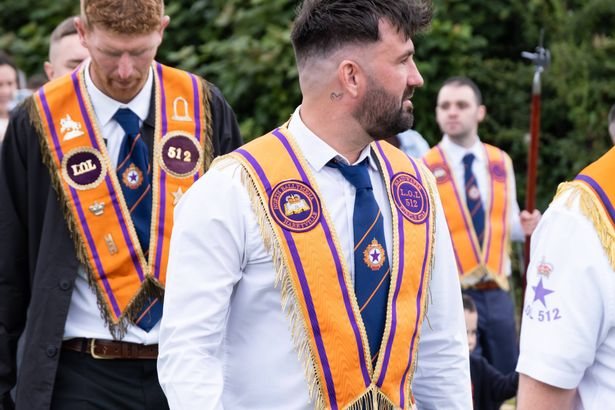
A Protestant Orange Order parade has been permitted to pass through a Catholic area of Portadown for the first time in almost 30 years, after Northern Ireland's High Court dismissed a last-minute legal challenge to stop the march. The ruling, issued in the early hours of Sunday, cleared the way for the parade to proceed along the Garvaghy Road, a route that had been banned since 1998 and which has historically been a flashpoint for sectarian tensions in the region.
The decision followed a complex sequence of legal manoeuvres. On Friday, the Parades Commission had determined that a reduced number of 35 participants could march along the road, beginning at 8am and finishing by 9:30am, with no supporters or bands permitted. Residents of the Garvaghy Road area challenged that determination, and on Saturday a temporary injunction was granted to them. However, the Court of Appeal later vacated that injunction, and the High Court on Sunday dismissed a further application to halt the parade. Lady Chief Justice Dame Siobhan Keegan said the High Court judge who had granted the injunction had «unfortunately erred in law».
Northern Ireland's First Minister, Michelle O'Neill, who is also vice-president of Sinn Féin, was among those who gathered on the Garvaghy Road early on Sunday morning to protest against the ruling. She had condemned the late-night court decision, stating: «Our message tonight is clear. There is no going back. Not tomorrow. Not ever.» Sinn Féin said it supported the residents of Garvaghy Road in opposing what it described as an unwanted sectarian march. The party's leader, Mary Lou McDonald, posted a video on social media of the gathering, in which she told protesters: «Although the forces of darkness may want to stop us creating a new united Ireland, they will fail.»
The Orange Order's annual attempts to march through the Garvaghy Road area were a recurring source of unrest before the route was banned in 1998, the year the Good Friday Agreement largely brought an end to the three decades of violence known as the Troubles. The Parades Commission's ruling on Friday overturned that long-standing prohibition, prompting an immediate legal response from residents and their representatives. Protesters began to blockade the road following the late-night court ruling, according to reports from the scene.
The march itself was subject to strict conditions: only 35 participants were allowed, no bands or supporters were permitted, and the parade had to be completed by 9:30am. These restrictions were intended to minimise the risk of confrontation, but the decision to allow the march at all has drawn sharp criticism from nationalist politicians and community representatives. The Garvaghy Road remains a predominantly Catholic enclave within the largely Protestant town of Portadown, and the route has long been symbolic of the broader sectarian divisions in Northern Ireland.
The High Court's ruling on Sunday followed an appeal by the Orange Order against the temporary injunction. The Court of Appeal's decision to vacate the injunction effectively allowed the parade to go ahead, and the subsequent High Court application by residents to stop it was dismissed. The legal back-and-forth unfolded over a matter of hours, culminating in the march taking place as planned on Sunday morning. The Parades Commission, which had originally permitted the march, had stipulated the reduced scale and early timing in an effort to balance the rights of marchers with those of the local community.
The event has reignited debate over parading rights and community relations in Northern Ireland. Sinn Féin's support for the Garvaghy Road residents reflects the continuing sensitivity of the issue, while the Orange Order has long argued that its parades are a legitimate expression of cultural and religious identity. The First Minister's direct participation in the protest underscores the political significance of the march, which comes amid ongoing discussions about the region's constitutional future and the legacy of the Troubles.
No major disturbances were reported immediately following the march, though the presence of protesters and the heavy restrictions on participants highlighted the tense atmosphere. The Parades Commission's determination and the subsequent court rulings are likely to be scrutinised in the coming days, as both sides assess the implications for future parades and for community relations in Portadown and beyond.
4