
Nepal-Tibet floods: experts warned of glacier risk months before disaster
A report reveals that Chinese and Nepali experts met months before the catastrophic floods to discuss glacier risks, but information sharing was insufficient. The death toll has surpassed 1,000, with thousands still missing.
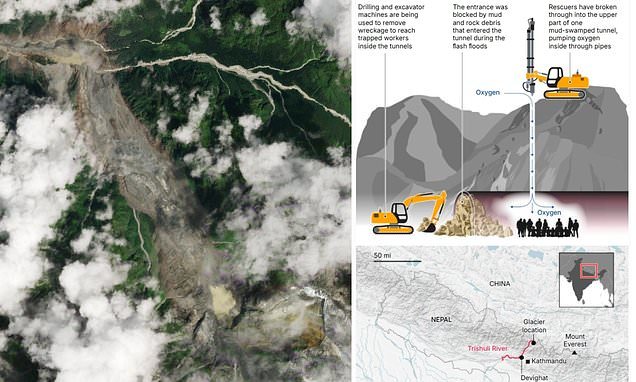
Scientists say a better early-warning system could have saved lives in the devastating floods that struck the Nepal-Tibet border region last week, as the death toll passed 1,000 and rescue efforts continued for the 4,500 people still missing.
Three months before the disaster, experts from China and Nepal met in Kathmandu on 27 May to discuss disaster risks in the border area and coordinate monitoring and response strategies for hazards such as floods, according to Reuters. The participants called for joint risk-reduction measures, including inventories of glacial lakes and hazard mapping. However, two Nepali officials told Reuters they did not receive as much information as they wanted from China on glacier risks and water levels after the meeting.
The floods, triggered by a glacier collapse, have caused widespread devastation, with entire villages washed away and infrastructure destroyed. Rescue teams are racing against time to free around 500 people trapped in hydropower tunnels, while the search for the missing continues.
Experts have warned that the glaciers involved in the disaster are at major risk of further collapse, raising concerns about additional flooding and complicating rescue operations. The lack of comprehensive data sharing between the two countries has been highlighted as a critical gap in disaster preparedness.
The meeting in May was part of ongoing efforts to improve cross-border cooperation on disaster risk reduction. Participants had specifically called for better monitoring of glacial lakes and the creation of hazard maps to identify vulnerable areas. But the limited exchange of information after the meeting left Nepali authorities without the detailed data needed to assess the imminent threat.
As the region grapples with the aftermath, the disaster underscores the urgent need for enhanced early-warning systems and closer collaboration between Nepal and China. The international community has begun to offer support, but the scale of the tragedy continues to unfold as rescue teams reach remote areas.
The full extent of the damage is still being assessed, but the floods have already become one of the deadliest natural disasters in the region in recent years. The loss of life and the ongoing rescue efforts highlight the human cost of inadequate disaster preparedness in the face of climate change-induced glacial hazards.
66