Drought Turns Forests From Carbon Sinks Into Emitters
Trees close their stomata to survive water shortages, halting photosynthesis and causing forests to release more CO₂ than they absorb, a study explains.
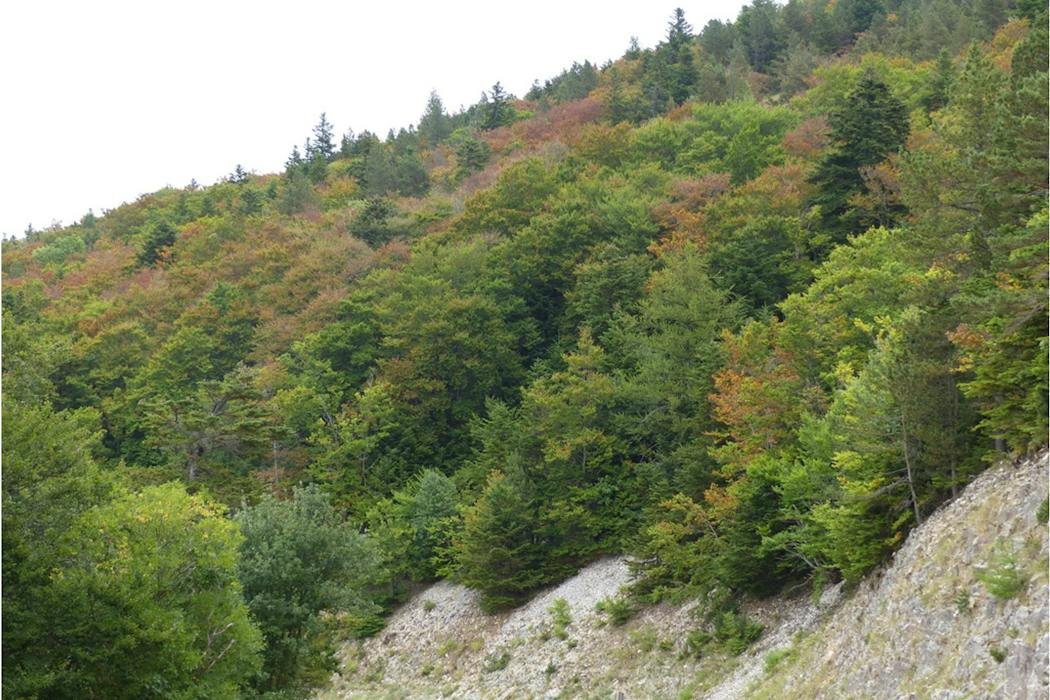
Forests that normally absorb around a quarter of the carbon dioxide emitted by human activities can reverse their role during extreme droughts, releasing more CO₂ into the atmosphere than they capture. The mechanism, described in a new analysis, hinges on the microscopic pores on tree leaves and the delicate hydraulic system that keeps trees alive under water stress.
Tree leaves act as chemical factories, using solar energy to convert atmospheric CO₂ into sugar through photosynthesis. Carbon dioxide enters through stomata, tiny slits on the leaf surface that open and close. But for every molecule of CO₂ absorbed, roughly 400 water molecules escape as vapour — a process known as transpiration. That water must be replaced from the soil, drawn upward through the tree's hydraulic network against gravity.
The driving force is evaporation at the stomata, which creates tension that pulls columns of water up like a giant straw. This tension-cohesion principle, formulated in the late 19th century by Irish botanist Henry Horatio Dixon, explains how transpiration works passively, without energy expenditure by the tree. Yet the force required to lift water to the treetops is colossal — equivalent to pumping water from a well several hundred metres deep.
Under extreme drought, that system can fail. When soil dries out and the atmosphere becomes hotter and drier, water in the tree's vessels enters a metastable state. If pressure rises further, cavitation occurs, generating air bubbles that block the flow. These gas embolisms cause the hydraulic system to collapse, and leaves dehydrate irreversibly.
Faced with this threat, trees close their stomata to conserve water. But that also shuts down CO₂ intake and halts photosynthesis. During such periods, forests continue to emit CO₂ from two sources: the consumption of sugars produced earlier and needed for metabolism, and the decomposition of trees that die from drought, releasing carbon stored over their lifetime.
The result is that a forest can cease to be a carbon sink and become a carbon source. This is alarming because droughts are becoming more frequent, and forests are central to climate change mitigation policies. Quantifying exactly how much CO₂ forests capture remains difficult, but the estimate that they absorb about a quarter of human emissions makes their stability critical.
The analysis highlights a fundamental dilemma for trees: open stomata to enable photosynthesis and growth, or close them to protect the hydraulic system from irreversible damage. Evolution has produced dynamic stomatal behaviour that responds within minutes to unfavourable conditions, but prolonged water shortage forces a choice that can tip entire ecosystems from absorber to emitter.
The findings underscore the vulnerability of the world's forests to increasingly severe droughts, with consequences for global carbon budgets and the reliability of natural carbon sinks in climate strategies.
4