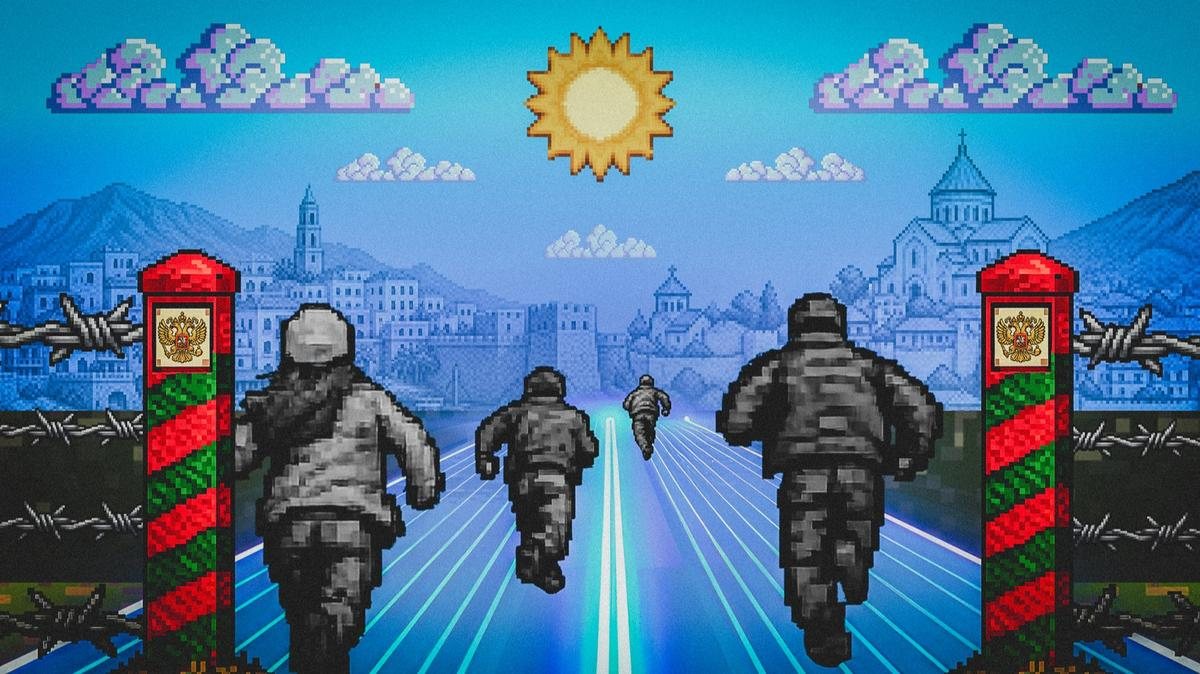
The Russian video game development industry, which before 2022 ranked among the world's most successful digital sectors, has effectively ceased to exist within Russia's borders. Following the full-scale invasion of Ukraine, the vast majority of major studios and thousands of developers relocated abroad, taking their intellectual property, revenue streams, and talent with them. What remains is a shadow of the vibrant ecosystem that once produced some of the world's most profitable mobile games.
At the heart of this transformation is Playrix, the European mobile gaming giant founded by brothers Igor and Dmitry Bukhman in the Russian city of Vologda. By 2022, Playrix had grown into the third-largest mobile game developer globally by revenue, employing 4,000 people, including 1,500 in Russia. Days after the invasion began, the Bukhman brothers donated $500,000 to the Ukrainian Red Cross and publicly opposed the war, becoming among the first Russian billionaires to do so. Within a year, Playrix had ceased all operations in Russia, relocated its employees abroad, and sold its Russian legal entity. Today, the company's website makes no mention of Russia at all.
Playrix's story is emblematic of a broader exodus. According to developers and studio owners interviewed by Novaya Gazeta Europe, the Russian game development industry was already deeply integrated into the global market before the war. Most studios derived 85 to 95 percent of their revenue from international audiences, primarily in the United States, where players spent hundreds or thousands of dollars on in-game purchases. The pandemic had given the industry an unprecedented boost, with people staying home, playing more, and spending government stimulus money on games. In 2021 alone, Russian users spent 177.4 billion rubles on games, subscriptions, and in-game content, but that represented only 2 percent of the global market.
The industry's structure was inherently international long before the conflict. Most studios operated with two legal entities: a foreign company, often registered in Cyprus, that owned the intellectual property and received payments from platforms like Apple and Google, and a Russian entity that hired developers and paid salaries under local labor law. On paper, the Russian studio was merely a contractor; in reality, the entire team, all decisions, and the product itself existed within Russia. This arrangement was particularly common among mobile game studios, which relied heavily on Facebook Ads for user acquisition. Since 2019, Russia had imposed a 20 percent VAT on advertising purchases from foreign platforms, making it financially advantageous for studios to operate from jurisdictions without such a tax.
Cyprus became the preferred destination for these foreign entities, primarily due to its favorable tax regime. The country's IP Box system allowed companies to tax income from software at an effective rate of about 2.5 percent, with corporate tax applied only to 20 percent of profits from licenses and games. Combined with Cyprus's EU membership and strong intellectual property protections, the choice was clear. Oleg Shlyamovich, CEO of children's game studio and publisher PSV Games, noted that when Google held a game development conference on the island in 2019, 38 of the 40 invited speakers spoke Russian. Shlyamovich had moved his Ukrainian business to Cyprus as early as 2014.
Before the war, the Russian game development scene was booming. Studios and publishers were opening weekly, and by one estimate, about 300 studios were operating in the country. Small teams were particularly active, with publishers like Ravenage, founded by Elena Morina, providing between $50,000 and $300,000 to help them develop prototypes for PC and console games. Ravenage had signed contracts with five studios, two Russian and three European, before the invasion. The company was conceived as an international venture from the start, but the war accelerated its complete departure from Russia.
The exodus has reshaped the global gaming landscape. Russian-speaking teams, which together occupied an estimated 5 to 10 percent of the global market, have now dispersed across Europe, the United States, and other regions. The boundary between Russian, Ukrainian, and Belarusian game development, which was always fluid, has been redrawn. Conferences, talent flows, and investment networks that once spanned the post-Soviet space have fragmented. For the studios that left, the move has been costly but necessary. Many have had to rebuild their teams, establish new legal structures, and adapt to unfamiliar regulatory environments. Yet the core of the industry — its talent, its intellectual property, and its global revenue streams — has survived, albeit outside Russia.
The consequences for Russia's domestic market are stark. With the departure of major players like Playrix and the relocation of thousands of skilled developers, the country's game development sector has lost its competitive edge. Local studios that remain face restricted access to global payment systems, advertising platforms, and talent pools. The once-thriving ecosystem of conferences, meetups, and investment has largely evaporated. For the developers who have left, the future lies abroad, where they continue to create games for a global audience that never knew they were Russian in the first place.