
Venezuela Issues Arrest Warrant for Opposition Leader Juan Guaidó
Venezuelan authorities have issued an arrest warrant for opposition leader and former interim president Juan Guaidó, who is currently based in the United States. Guaidó dismissed the move as politically motivated, escalating tensions between the government and the opposition.
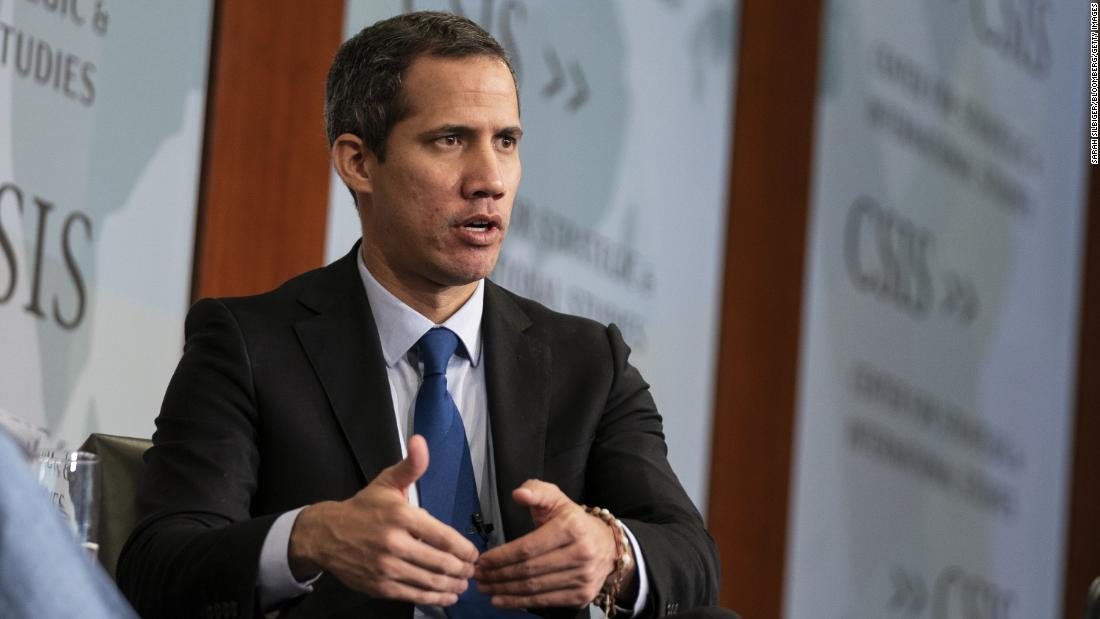
Venezuelan authorities on Thursday issued an arrest warrant for opposition leader and former interim president Juan Guaidó, who dismissed the move as politically motivated. The warrant, announced by the attorney general's office, accuses Guaidó of alleged crimes including treason, conspiracy, and usurpation of functions, according to state media reports. Guaidó, who currently resides in the United States, has rejected the charges, calling them a continuation of the government's efforts to silence dissent.
The arrest warrant marks a significant escalation in the long-running political conflict between President Nicolás Maduro's government and the opposition. Guaidó rose to prominence in 2019 when he declared himself interim president, arguing that Maduro's 2018 re-election was illegitimate. He was recognized by dozens of countries, including the United States and many European nations, as Venezuela's legitimate leader. However, his influence waned after opposition-led efforts to remove Maduro failed, and he lost control of the National Assembly in 2020.
The charges against Guaidó stem from his role in the opposition's attempts to challenge Maduro's rule, including his involvement in a failed 2020 military uprising and his management of assets abroad, such as the state-owned oil company Citgo. The government has also accused him of collaborating with foreign powers to undermine Venezuela's sovereignty. Guaidó has consistently denied these allegations, arguing that he was acting within the framework of the constitution to restore democracy.
The international community has reacted cautiously to the arrest warrant. The United States, which has been a key supporter of Guaidó, condemned the move, with a State Department spokesperson calling it a politically motivated attempt to intimidate the opposition. The European Union has also expressed concern, urging the Venezuelan government to respect the rule of law and due process. Meanwhile, Maduro's government has defended the warrant, asserting that it is a legal matter and that Guaidó must face justice for his actions.
The arrest warrant is unlikely to lead to Guaidó's immediate detention, as he is currently in the United States, where he has been living since 2022 after leaving Venezuela. However, it could complicate any potential return to Venezuela for Guaidó, who has said he plans to continue his political activities from abroad. The move also raises questions about the future of the opposition movement, which has been fragmented and weakened in recent years.
Venezuela has been in a state of political and economic crisis for over a decade, with hyperinflation, shortages of basic goods, and a mass exodus of citizens. The Maduro government has faced widespread international sanctions, including those imposed by the United States and the European Union, which have targeted key officials and sectors of the economy. The opposition has struggled to maintain unity, with internal divisions and a lack of clear leadership hampering efforts to challenge Maduro's rule.
Guaidó's arrest warrant is the latest in a series of legal actions against opposition figures in Venezuela. In recent years, several prominent opposition leaders have been arrested, detained, or forced into exile, including Leopoldo López, who was placed under house arrest, and Freddy Guevara, who sought asylum in the Chilean embassy. Human rights organizations have criticized the Maduro government for using the judicial system to persecute political opponents, a charge the government denies.
The timing of the arrest warrant is notable, as it comes ahead of planned opposition primaries to select a candidate for the 2024 presidential election. The opposition has been preparing for the primaries, which are seen as a crucial step in uniting against Maduro. However, the government has sought to obstruct the process, including by banning several opposition candidates from running. Guaidó himself has been barred from holding public office for 15 years, a decision that he has challenged in international courts.
Analysts say the arrest warrant could further polarize Venezuela's political landscape and discourage opposition participation in the upcoming elections. The international community has called for free and fair elections in Venezuela, but the Maduro government has resisted external pressure, insisting that the electoral process is a domestic matter. The United States and other countries have threatened to tighten sanctions if the government does not allow a credible electoral process.
Guaidó has vowed to continue his fight for democracy in Venezuela, despite the legal threats. In a statement on social media, he said the arrest warrant would not deter him or the opposition movement. He called on Venezuelans to remain united and to participate in the primaries, which he described as a peaceful path to change. The opposition's ability to mobilize support and overcome internal divisions will be critical in determining its chances in the 2024 elections.
The situation in Venezuela remains fluid, with the government and opposition locked in a stalemate. The arrest warrant for Guaidó is a reminder of the deep political divisions that persist in the country, and the challenges facing any effort to resolve the crisis through dialogue or elections. As the 2024 presidential election approaches, both sides are likely to intensify their efforts to consolidate power and influence, with the international community watching closely.
87