
Trump Uses July 4 Speech to Honor Military and Advance Political Agenda
President Trump marked the 250th anniversary of American independence with a speech on the National Mall that combined tributes to veterans with political messaging, while a related private initiative drew criticism over transparency and funding.
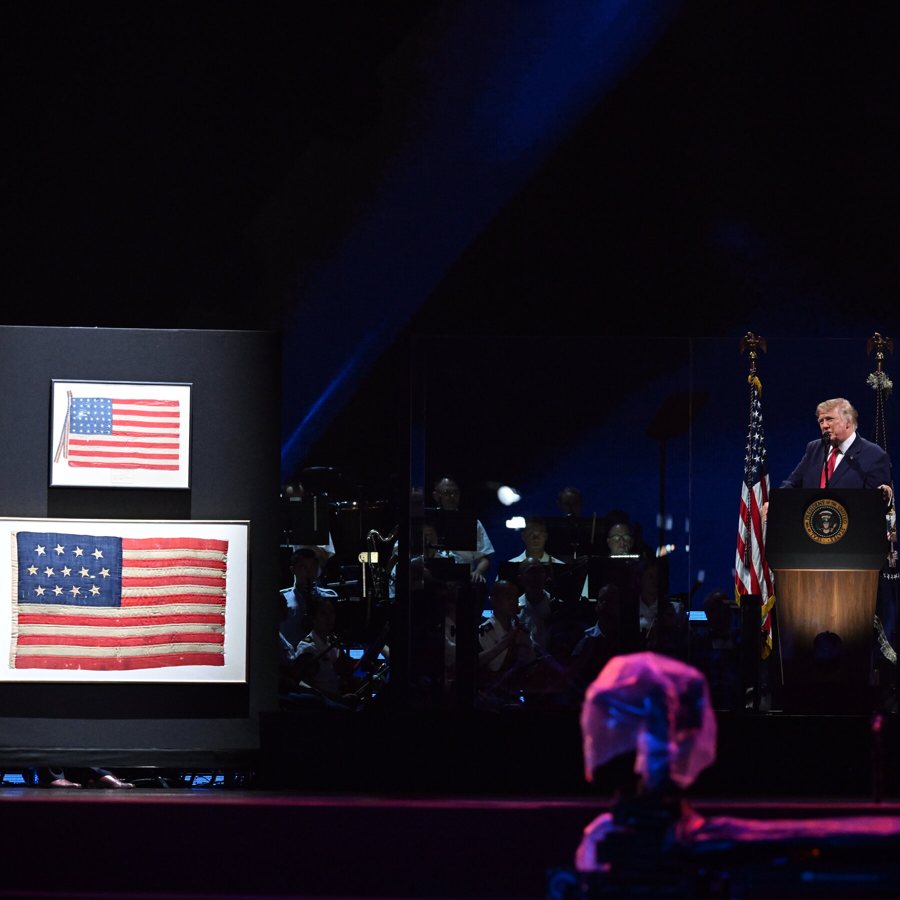
President Donald Trump concluded the nation’s semiquincentennial celebration on Saturday with a speech on the National Mall that honored military heroes while also advancing his political agenda. The address, part of the Salute to America event, capped a day of large-scale festivities in Washington, D.C., marking 250 years since the Declaration of Independence.
During his remarks, Trump reflected on the nation’s history and paid tribute to veterans and active-duty service members. However, according to NBC News correspondent Ryan Nobles, the president also used the platform to push his own political priorities, blending patriotic themes with partisan messaging. The speech came after a day that included military flyovers, a sprawling state fair stretching ten city blocks, and other displays of national pride organized by the Trump administration.
The celebrations were not limited to the capital. In Berlin, the Brandenburg Gate was illuminated in the red, white, and blue of the American flag on Saturday evening, a gesture that Berlin’s governing mayor, Kai Wegner, described as a symbol of unity and shared values. “Berlin congratulates the United States warmly on its 250th birthday,” Wegner said in a statement. German Foreign Minister Johann Wadephul added that the anniversary was a reason for celebration in Europe, noting that post-war democratic Germany was founded on the principles of the American Declaration of Independence.
Yet the Berlin display also featured the logo “Freedom 250” beneath the Quadriga statue on the gate. That label belongs to a private initiative created by executive order and placed under a nonprofit organization, staffed largely with Trump allies. The initiative’s board includes Vice President JD Vance and Health Secretary Robert F. Kennedy, along with business figures and private-sector leaders. Critics have raised concerns about the organization’s financing and transparency.
Democratic Representative Jared Huffman of California told NPR that “Freedom 250” is essentially a “shell company” run by a team of compliant managers who take their orders directly from the president. According to media reports, the firm has received up to $70 million in taxpayer funds for organizing the 250th-anniversary events, supplemented by millions in donations from Trump-aligned corporations such as Palantir, Boeing, Lockheed Martin, and United Health Group. The funding structure has drawn accusations of a lack of oversight.
The day’s events also included a visit by Trump to the Mount Rushmore Memorial in South Dakota, where he had his Air Force One fly over the monument twice, generating images that circulated widely. The National Mall was later cleared briefly due to a thunderstorm, but the main festivities proceeded as planned. The scale of the celebration—featuring military jet formations, concert stages, and a large fair—reflected the administration’s effort to make the 250th anniversary a landmark occasion.
Trump’s speech, delivered against a backdrop of flags and historical references, was seen by observers as an attempt to link the nation’s founding ideals with his own political narrative. While the president honored the military and recounted stories of American history, he also used the moment to criticize his opponents and reinforce his policy positions. The dual nature of the address underscored the ongoing polarization around the anniversary, which some saw as a unifying event and others as a partisan stage.
The “Freedom 250” initiative, meanwhile, continues to face scrutiny. The Berlin Senate Chancellery posted a photo of the illuminated Brandenburg Gate on social media, stating that the goal was to strengthen “democratic unity and resilience.” The phrase was interpreted by some as a subtle reference to concerns about the health of democratic institutions in the United States under the Trump administration. The choice to display the logo on a landmark that has historically symbolized freedom—and where Presidents John F. Kennedy and Ronald Reagan once delivered iconic speeches—added another layer of symbolism to the controversy.
As the 250th-anniversary celebrations concluded, the mix of patriotic tribute and political messaging left a complex legacy. The events drew large crowds and generated extensive media coverage, but the questions surrounding the funding and purpose of “Freedom 250” are likely to persist. For now, the anniversary served as a reminder of both the nation’s enduring symbols and the deep divisions that mark its current political landscape.