
‘They Will Hang Me’: What Putin’s Reported Remark Says About the War’s Personal Stakes
The Economist says Vladimir Putin once told people around him, “They will hang me.” The context is undisclosed, but the report raises a harder question: what happens when the leader who began a war comes to see its outcome as a matter of personal survival?
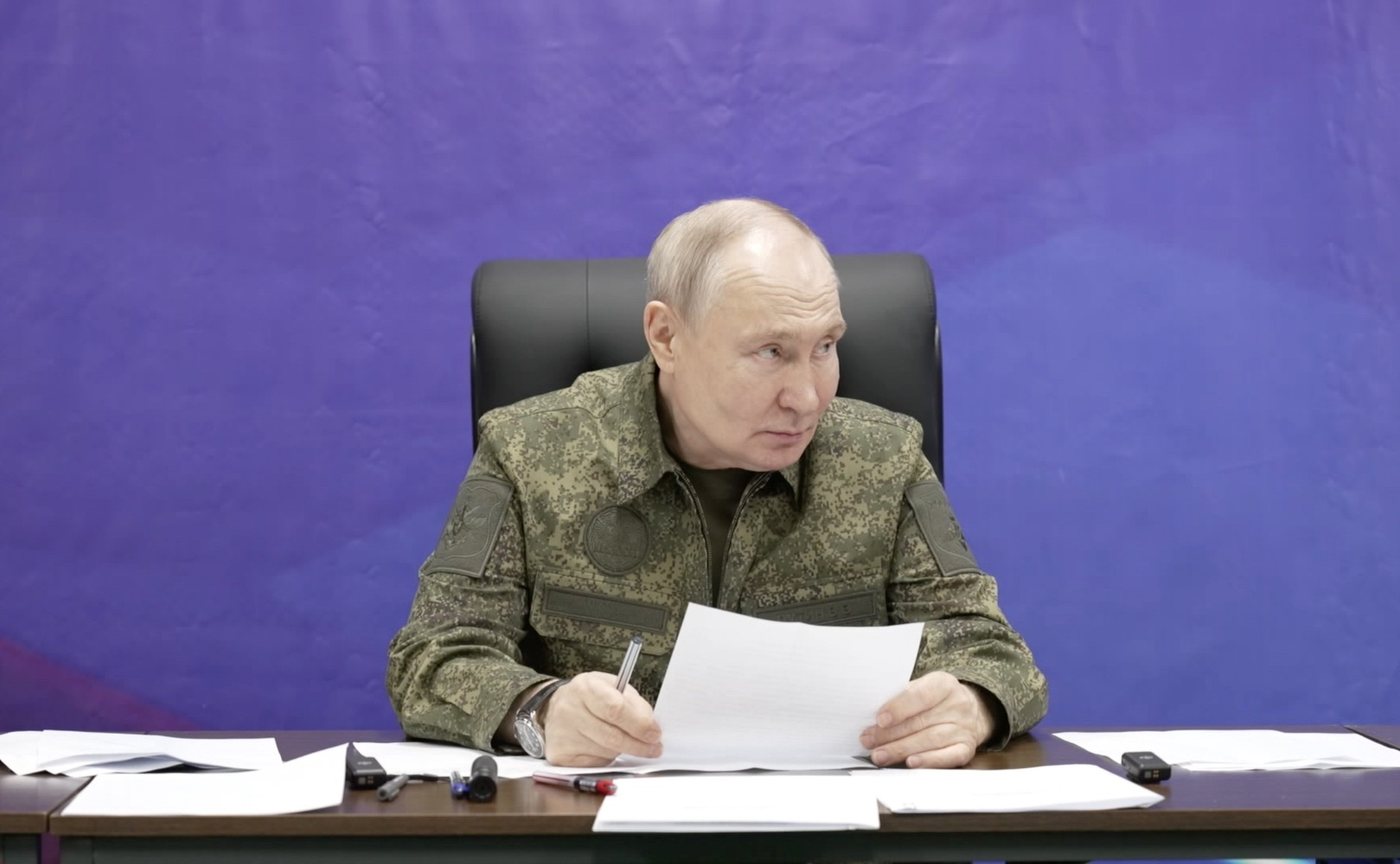
A four-word remark attributed to Vladimir Putin has put an unusually personal frame around the Kremlin’s calculations in Ukraine.
“They will hang me,” Putin reportedly told people around him at some point during the war, according to The Economist. The magazine, which published its account on 30 August, cited sources close to the Russian president. It did not say when the remark was made, what conversation produced it or whom Putin meant by “they”.
Those omissions matter. An anonymous recollection cannot tell outsiders precisely what Putin thinks, and no single quotation can establish the motive behind decisions involving a state, an army and a war now in its fifth year. Yet the report is important because of the context The Economist attaches to it: Putin may regard an end to the war without at least the capture of all of Donbas not simply as a strategic disappointment, but as a danger to his own position and personal security.
If that account is accurate, it changes the way one should read the Kremlin’s apparent difficulty in accepting an inconclusive end to the conflict. The issue would no longer be only whether Russia can present territorial gains as victory. It would also be whether the man at the centre of the system believes that admitting failure creates a threat to himself.
That is a very different political problem from an ordinary dispute over war aims.
The Economist’s sources describe a Kremlin caught between two unattractive choices. Continuing the war consumes manpower, money and political capital while delivering no decisive breakthrough. Ending it without a result that can be sold as victory could expose the gap between the scale of Russia’s sacrifice and what Moscow has achieved. According to the magazine’s reporting, further escalation is therefore being considered as a way out of the impasse, including the possible addition of roughly 300,000 to 400,000 personnel. That figure is reporting about plans and discussions, not a publicly announced mobilisation decision.
The logic is recognisable to scholars of personalist authoritarian rule. Political-science literature explicitly includes Putin’s Russia among contemporary personalist regimes: systems in which power becomes unusually concentrated around one leader rather than being dispersed among institutions capable of constraining or replacing him.
That concentration can make leaving power more dangerous. Research on authoritarian transitions has found that personal rulers and the elites most closely tied to them are often less able to obtain credible guarantees of safety after a regime change. The possible outcomes range widely — retirement and exile at one end, prosecution, imprisonment or violent removal at the other — and there is no universal script. But the risk itself can alter incentives. Studies of personalised dictatorships find that they are less likely than more collegial regimes to negotiate an orderly exit once survival is in doubt, and more likely to hold on until they are removed by force.
That does not prove that Putin is prolonging the war because he expects to be killed if it ends badly. It does explain why the reported words “They will hang me” deserve more attention than a piece of dramatic Kremlin gossip. They fit a documented political dilemma: when a ruler has fused his own authority with the regime, a national setback can become a personal threat, and a personal threat can become a reason to avoid compromise.
The human cost of that calculation is already enormous.
The Center for Strategic and International Studies estimated in July that Russian forces had suffered about 1.4 million battlefield casualties — killed, wounded or missing — between February 2022 and June 2026, including between 400,000 and 450,000 fatalities. CSIS estimated Ukrainian military casualties at between 525,000 and 625,000, including 125,000 to 150,000 fatalities. On those estimates, combined military casualties on the two sides have exceeded two million.
Those figures are estimates rather than official, mutually verified totals. Neither Moscow nor Kyiv publishes a complete accounting of military losses. But the scale is sufficient to show what is at stake when a decision at the top of the Russian state is translated into another month of attritional warfare.
Civilians continue to pay as well. The UN Human Rights Monitoring Mission in Ukraine documented at least 437 civilians killed and 2,610 injured in July alone. It said the number of civilians killed was the highest for a single month since May 2022. Missile and long-range drone attacks remained the leading cause of civilian casualties, with many of the victims far from the front line in Ukrainian cities.
This is where the personal meaning of The Economist’s report becomes politically significant without needing to speculate about Putin’s psychology. Russia launched the full-scale invasion in 2022, and the Russian presidency remains the central authority determining whether Moscow escalates, pauses or changes its demands. If the president has come to believe that a war ending short of his minimum objectives threatens him personally, then the interests of the ruler and the costs borne by soldiers and civilians become entangled in the same decision.
That is not the same as saying every Russian casualty is the product of one man’s fear, or that Ukraine’s battlefield decisions are controlled from Moscow. War has its own military dynamics, and Ukraine is fighting an invasion on its territory. It is, however, reasonable to ask whether a leader’s perceived exit risk makes the conflict harder to end — particularly when the political system gives that leader exceptional control over the decision.
The ambiguity in the quotation is therefore as revealing as the words themselves. Who are “they”? Rivals inside the elite? A public angered by a costly failure? Security figures who have built their careers around the war? Putin’s reported remark does not answer that question, and The Economist does not claim to know.
What it suggests is that the Kremlin may be thinking about defeat in terms that extend far beyond maps and negotiating positions. For a system built around a single ruler, the distinction between losing a war and losing power can become dangerously thin.
The next test will be practical rather than rhetorical. If the Kremlin proceeds with a new expansion of manpower, heavier strikes or other forms of escalation, The Economist’s account will look less like an isolated glimpse into Putin’s anxieties and more like a clue to the structure of his choices. If Moscow instead moves towards a settlement without achieving its declared aims, the reported fear will face a different test: whether the Russian political system can absorb an outcome its leader may believe it was built to prevent.
88