
Regional mayors to take key roles in UK policy decisions under No 10 North plans
Prime Minister Andy Burnham has announced that regional mayors will play a leading role in national economic policy as part of the opening of No 10 North in Manchester, describing the move as the biggest rebalancing of power the country has ever seen.
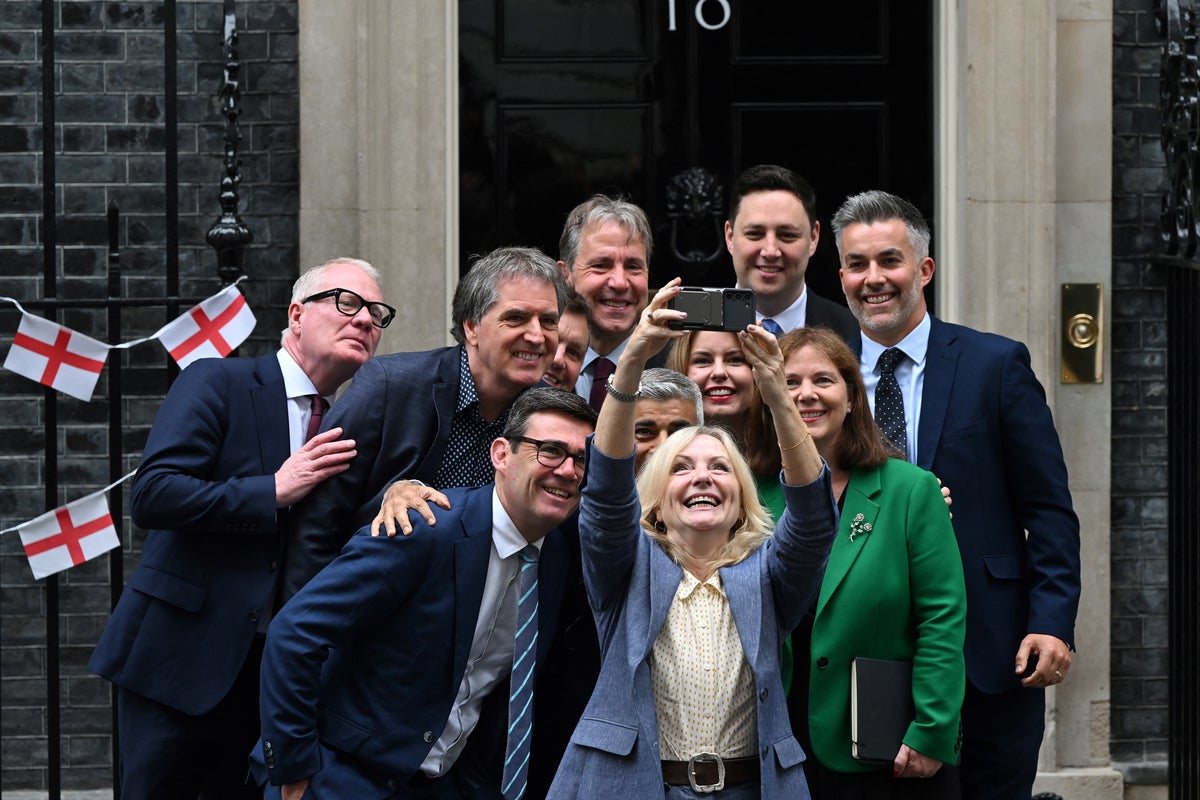
Prime Minister Andy Burnham has unveiled plans to give regional mayors a central role in shaping national economic policy, marking a significant shift in the way the United Kingdom is governed. The announcement came as the government formally opened its new branch office in Manchester, known as No 10 North, which Burnham described as «the biggest rebalancing of power our country has ever seen.» The move is intended to decentralise decision-making away from Westminster and Whitehall, bringing government closer to communities across the country.
Under the new arrangements, regional mayors will sit on a revived National Economic Council (NEC), a body first established by former Prime Minister Gordon Brown during the 2008 financial crisis. Burnham argued that the same level of urgency and collective action is now needed to drive economic growth. The NEC will bring together ministers, mayors, business leaders, and other stakeholders to coordinate policy on investment, infrastructure, skills, and productivity. The prime minister said that «no one in government loses when power is shared,» emphasising that the initiative is not about moving a few desks north but about fundamentally changing how the state operates.
The opening of No 10 North began quietly on Monday, with a small team of officials and advisers walking into an office building in Manchester to begin the work of remaking the British state. Burnham, who became prime minister after leading a campaign for greater regional devolution, has long argued that the concentration of power in London has held back other parts of the country. The new office is intended to serve as a permanent base for the prime minister and his team, allowing them to work from the north of England on a regular basis and to embed a culture of decentralisation across government departments.
The plans have been welcomed by several regional mayors, who see the move as a long-overdue recognition of the role that cities and regions play in the national economy. Greater Manchester Mayor Andy Burnham — now prime minister but previously the region's mayor — has been a vocal advocate for devolution, and his government has pledged to extend similar powers to other metro mayors. The revived NEC is expected to meet regularly in Manchester and other cities, rather than exclusively in London, ensuring that regional perspectives are heard at the highest levels of policy-making.
Critics, however, have questioned whether the initiative will lead to genuine change or remain largely symbolic. Some have pointed out that the core of the civil service and most government departments remain based in London, and that shifting a small number of officials to Manchester may not be enough to alter the fundamental dynamics of power. Others have argued that the NEC, which was effective during the financial crisis but later fell into disuse, needs a clear mandate and sufficient resources to make a real impact on economic policy. Burnham has acknowledged these concerns, stating that the government is committed to a long-term programme of reform and that No 10 North is only the first step.
The prime minister has also stressed that the benefits of the new approach will be felt across the whole of the UK, not just in the north of England. He described No 10 North as «an engine for growth throughout the whole UK,» and said that the government would work with mayors in Scotland, Wales, and Northern Ireland, as well as with combined authorities in other English regions. The aim, he said, is to create a more balanced and resilient economy, where decisions about transport, housing, skills, and innovation are made closer to the people they affect.
The announcement has generated significant interest from business groups, who see the potential for more responsive and regionally tailored economic policies. The Confederation of British Industry (CBI) and the Federation of Small Businesses (FSB) have both expressed support for the principle of devolution, while urging the government to ensure that the NEC has a clear focus on productivity and investment. Trade unions have also welcomed the move, though they have called for guarantees that workers' representatives will be included in the council's deliberations.
Burnham's government has set out an ambitious agenda for its first months in office, with No 10 North at the centre of its plans to reshape the relationship between the state and the regions. The prime minister has indicated that further announcements on devolution of powers over transport, skills, and housing are expected in the coming weeks. For now, the opening of the Manchester office represents a tangible symbol of a government that says it is serious about spreading power and opportunity beyond the capital.
75