
Nicaragua’s Daniel Ortega says country will hold no more elections
Nicaraguan President Daniel Ortega has announced the country will hold no further elections, vowing to work with the congress he controls to pass laws that will prevent the opposition from coming to power.
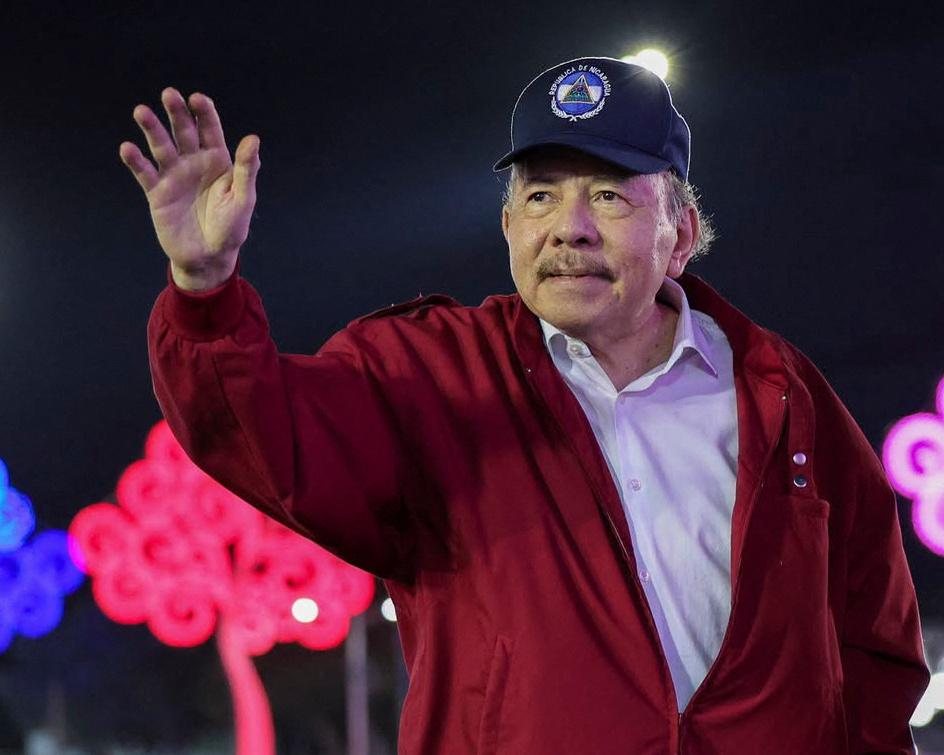
Nicaragua’s long-serving president, Daniel Ortega, has declared that the country will hold no more elections, a move that effectively eliminates any democratic path for the opposition to challenge his rule. The 80-year-old authoritarian leader, who has been in power since 2007, made the announcement in a public address, stating that he would work with the congress he controls to pass new laws designed to “build a wall” against political opponents.
Ortega’s statement marks a significant escalation in the consolidation of power in Nicaragua, a Central American nation that has seen a steady erosion of democratic institutions under his leadership. The president, a former Marxist guerrilla who first led the country in the 1980s, has increasingly cracked down on dissent, imprisoned potential rivals, and restricted civil liberties. By declaring an end to elections, Ortega has signaled that his government intends to remain in power indefinitely, without any pretense of democratic legitimacy.
The announcement comes amid a broader pattern of authoritarian measures in Nicaragua. In recent years, Ortega’s administration has shuttered hundreds of non-governmental organizations, expelled international observers, and tightened control over the media. The opposition has been systematically weakened, with many of its leaders arrested or forced into exile. The decision to halt elections entirely removes the last formal mechanism for political change, leaving Nicaraguans with no electoral avenue to express dissent or seek a transfer of power.
Ortega’s justification for the move was framed as a defensive measure against what he described as foreign interference and internal subversion. He argued that elections had become a tool for the opposition to destabilize the country, and that ending them was necessary to protect national sovereignty. However, critics view the decision as a transparent power grab, designed to entrench Ortega and his family’s control over the state apparatus. His wife, Rosario Murillo, serves as vice president and is widely seen as his successor, further concentrating power within a small circle.
The international community has reacted with alarm to Ortega’s announcement. The United States, which has already imposed sanctions on several Nicaraguan officials, condemned the move as a violation of democratic principles. The Organization of American States (OAS) has also criticized the Ortega government repeatedly, though its ability to enforce change is limited. Regional neighbors, including Costa Rica and Colombia, have expressed concern, but Nicaragua’s alliances with Russia and China have provided Ortega with diplomatic and economic support, insulating him from some external pressure.
Domestically, the announcement is likely to deepen the sense of hopelessness among Nicaraguans who have watched their country’s democratic institutions collapse. Many citizens have already fled the country, contributing to a growing diaspora. The economy, already strained by sanctions and mismanagement, faces further uncertainty as investors and international partners reassess their engagement with a government that has abandoned even the appearance of electoral accountability.
Ortega’s move also raises questions about the future of Nicaragua’s political landscape. Without elections, the only remaining avenues for change are either internal regime shifts or external intervention, both of which seem unlikely in the near term. The opposition, fragmented and largely operating from abroad, has few tools to challenge Ortega’s grip on power. Meanwhile, the government continues to consolidate control over all branches of government, the military, and the judiciary, ensuring that any potential challenge is swiftly neutralized.
The decision to end elections is not entirely unprecedented in the region. Other authoritarian leaders in Latin America, such as Venezuela’s Nicolás Maduro, have manipulated electoral processes to maintain power, but outright abolition of elections is a more extreme step. It places Nicaragua in a small category of countries where the ruling regime has explicitly rejected the principle of popular sovereignty, drawing comparisons to North Korea or Cuba, where elections are either non-existent or purely ceremonial.
Ortega’s announcement has also sparked debate about the role of international organizations and foreign governments in responding to such a clear democratic backslide. The United Nations and the European Union have issued statements of concern, but concrete actions have been limited. Sanctions have targeted individual officials, but they have not deterred Ortega’s government from pursuing its authoritarian agenda. The lack of a unified, forceful response from the international community has emboldened Ortega, who has dismissed foreign criticism as interference in Nicaragua’s internal affairs.
For ordinary Nicaraguans, the end of elections means the loss of a fundamental right that many had already come to see as hollow. Turnout in recent elections had been low, and allegations of fraud were widespread. Yet the formal abolition of the electoral process removes even the symbolic possibility of change. It also signals that the government is no longer concerned with maintaining even a facade of democracy, a shift that could lead to further repression as the regime seeks to eliminate any remaining spaces for dissent.
Ortega’s health and age add another layer of uncertainty. At 80, he is one of the oldest leaders in the region, and questions about succession have long been a topic of speculation. His wife, Rosario Murillo, is widely expected to take over, but the lack of any electoral mechanism means that the transition, if it occurs, will be decided entirely within the ruling family and party. This could lead to internal power struggles or further instability, though the regime’s tight control over the security forces makes a sudden collapse unlikely.
The announcement has also drawn attention to the broader trend of democratic erosion in Latin America. While countries like Brazil and Chile have seen democratic resilience, others, including Nicaragua, Venezuela, and El Salvador, have experienced significant backsliding. Ortega’s decision to end elections entirely represents an extreme case, but it reflects a regional pattern of leaders using legal and extra-legal means to entrench their power. The response of the international community to Nicaragua’s situation may set a precedent for how similar cases are handled in the future.
In the immediate aftermath of Ortega’s statement, there have been no major protests or public demonstrations, a sign of the effectiveness of the government’s repression. The security forces have been deployed to key locations, and independent media have been warned against reporting on the announcement in a critical manner. The regime’s control over information means that many Nicaraguans may not even be fully aware of the implications of the decision, or they may feel powerless to respond.
Ortega’s declaration that Nicaragua will hold no more elections is a stark reminder of the fragility of democratic institutions and the lengths to which authoritarian leaders will go to maintain power. It closes the door on any hope of a peaceful, democratic transition in the near future and leaves the country’s citizens with few options for change. The international community now faces the challenge of how to respond to a government that has explicitly rejected the basic tenets of democracy, with no clear path forward.
80