Burnham Weighs Early Election to Secure Income Tax Mandate
Andy Burnham is reportedly considering an early election to obtain a mandate for income tax rises, as Treasury finances deteriorate and the upcoming budget is complicated by the US-Iran conflict.
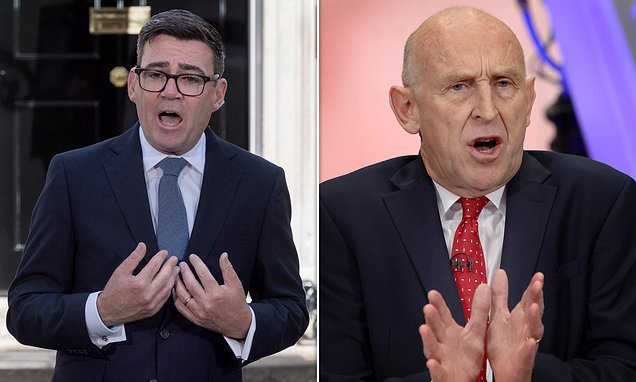
Andy Burnham is reportedly plotting an early general election in a bid to secure a public mandate for increasing income tax, according to political sources. The move comes amid what has been described as a meltdown in the Treasury over the state of the UK's public finances, with the government facing difficult choices on tax and spending.
The Prime Minister is said to be weighing the option of going to the country sooner than expected to seek explicit approval for a tax rise, which would break a manifesto commitment. The strategy would frame the election as a referendum on fiscal responsibility, allowing Burnham to argue that only a fresh mandate can legitimise higher taxes on income.
The Treasury is understood to be in a state of crisis as it grapples with a worsening fiscal outlook. The upcoming budget, scheduled for next month, has been made harder by the conflict between the US and Iran, according to a cabinet minister. Bridget Phillipson, a minister in Burnham's government, warned that the war is adding pressure to the public finances, complicating the Chancellor's calculations.
Phillipson also said she did not expect Burnham's past criticisms of US President Donald Trump to be an issue when the two leaders meet. Burnham is expected to meet Trump early next week at the UN General Assembly summit in New York. The pair have already spoken twice by phone since Burnham entered Downing Street.
The prospect of an early election has fuelled speculation about the government's economic strategy. Burnham has long been an advocate for greater fiscal devolution and public investment, but the need to balance the books has forced a rethink. An income tax rise would be a significant political risk, but allies argue that a clear mandate would provide cover for a controversial decision.
Opposition parties have seized on the reports, accusing the government of preparing to break its promises on tax. The Treasury has not commented on the internal discussions, but the Chancellor is expected to outline further measures in the budget. The fiscal picture has been clouded by global uncertainty, including the US-Iran conflict, which has pushed up energy prices and disrupted trade.
Burnham's meeting with Trump at the UN will be closely watched, as the two leaders discuss a range of international issues. The Prime Minister's past remarks about Trump have been a source of tension, but Phillipson insisted that the relationship remains workable. The encounter could also have implications for the UK's economic ties with the US, particularly if the conflict escalates.
With the budget looming, the government faces a delicate balancing act. An early election would require careful timing, and any tax rise would need to be justified to a sceptical public. Burnham's allies believe that a clear mandate is essential to push through unpopular measures, but the opposition is likely to frame it as a desperate gamble.
The coming weeks will be crucial in determining whether Burnham opts for an early poll. The Treasury's fiscal projections, the outcome of the UN summit, and the trajectory of the US-Iran conflict will all shape the decision. For now, the Prime Minister appears to be keeping his options open, as he seeks to navigate a challenging economic and political landscape.