
Badenoch Accuses Burnham of Fiddling While Europe Risks Burning
The Conservative leader says the Prime Minister is dodging hard decisions on defence and welfare, warning that delay carries strategic costs as threats to Europe mount.
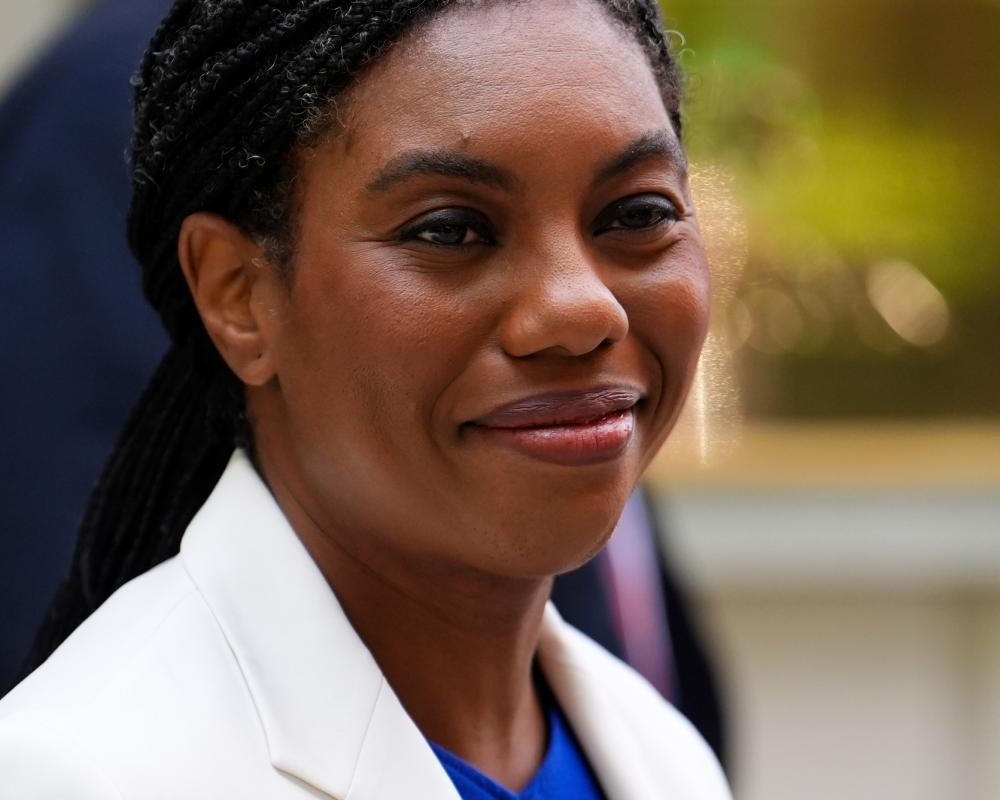
Kemi Badenoch has accused Andy Burnham of «fiddling while Europe is at risk of burning», sharpening her attack on the Prime Minister over defence spending and welfare reform. In comments to The Telegraph, the Conservative leader said difficult choices cannot be postponed through «dither and delay», and repeated her demand that the welfare budget be cut to pay for higher defence spending.
Badenoch framed the charge around character as much as policy, saying Burnham «may be a people pleaser» but that governing requires decisions that will not be universally popular. Her intervention places the trade-off between social spending and military readiness at the centre of the political argument, at a moment when European security is under sustained pressure.
The Conservative leader has made increased defence spending a recurring theme, arguing that the current fiscal path leaves the armed forces underfunded relative to the threats they face. By tying that case to welfare savings, she is setting up a direct challenge to the government's spending priorities and inviting a fight over which commitments should give way.
Her language also carries an implicit criticism of the pace of decision-making in Downing Street. The phrase «dither and delay» is intended to suggest that the Prime Minister prefers consensus and popularity to the harder work of choosing between competing demands on the public purse. That framing is likely to be contested by ministers, who have argued that defence budgets are already rising and that welfare reform must be handled carefully to protect the most vulnerable.
The intervention comes amid heightened concern about Russian aggression and the wider threat environment facing Europe. Burnham has separately faced accusations of playing fast and loose with UK security, adding a second line of attack to the Conservative leader's critique. Together, the two charges are designed to portray the Prime Minister as insufficiently serious about the dangers facing the country and its allies.
For the government, the political risk is twofold. If it resists cuts to welfare, it leaves itself open to the charge that it is not funding defence adequately. If it moves toward reductions, it invites criticism over the impact on low-income households and the practical difficulty of delivering savings at the scale required. Badenoch's comments are calibrated to keep both options uncomfortable.
The debate also reflects a broader shift in British politics, where the affordability of the welfare state and the credibility of the defence posture are increasingly treated as linked questions rather than separate policy silos. That linkage gives the opposition a simple message: money spent on one priority is money unavailable for another, and the choice cannot be avoided indefinitely.
Whether the attack gains traction will depend on how voters weigh security against social provision, and on the government's ability to show that its current plans are sufficient. For now, Badenoch has succeeded in forcing the argument onto ground she prefers, using a vivid phrase to argue that the cost of delay may be measured not only in budgets but in strategic risk.